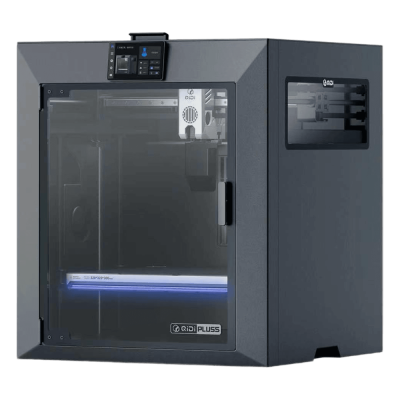
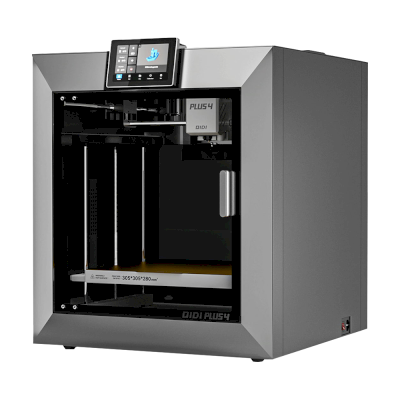
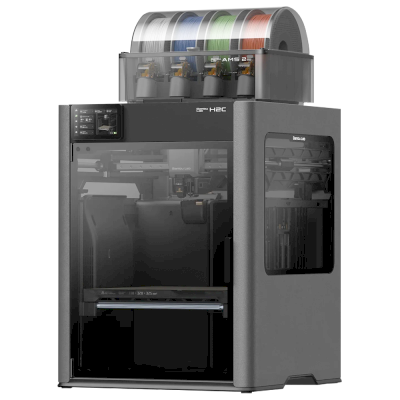
The Plus5 is Qidi's mid-size enclosed Klipper CoreXY: a 320 x 320 x 300 mm plate, a 370 °C hotend, a 65 °C actively heated chamber and HEPA plus carbon filtration, with the QIDI Box for multi-colour in the Combo. It is for makers and businesses that print engineering materials such as nylon, PC and carbon-filled filaments.
Does the QIDI Plus5 3D printer work with SimplyPrint, OctoPrint, Mainsail and Fluidd?
Each way of connecting it, what it needs, and how to set it up.
SimplyPrint Client
Compatible
The SimplyPrint Client's QIDI integration supports the Plus5, including the QIDI Box: SimplyPrint shows each slot's filament and maps a print's filaments to the slots.
What you need: A computer or Raspberry Pi on the same network that stays on, running the SimplyPrint Client
The Plus5 connects through Klipper, but much of the printer's information is missing and the QIDI Box isn't supported. Use the SimplyPrint Client instead.
What you need: Nothing extra: the printer runs Klipper as it ships
Ships with Klipper: OctoPrint only runs on top of it, through the OctoKlipper plugin
What works with SimplyPrint
Connected through SimplyPrint Client, SimplyPrint supports most of what it offers on the QIDI Plus5: the camera and AI failure detection, remote printing, skipping objects, temperature and movement control, filament mapping for its multi-material unit and AutoPrint. Not available through SimplyPrint Client: download the file before the print starts. The table below compares the two ways of connecting it to SimplyPrint.
Every SimplyPrint feature, for each way of connecting it to SimplyPrint
Connected to SimplyPrint through
SimplyPrint feature
SimplyPrint Client
Compatible
Klipper (Moonraker)
Compatible
Monitoring
Live status and progress
Yes
Yes
Webcam
Yes
Yes
AI failure detection
Yes
Yes
Time left
Yes
Yes
Layer progress
Yes
Yes
Temperatures
Yes
Yes
Printing
Starting a print
Yes
Yes
Pause, resume and cancel
Yes
Yes
Skip objects
Yes
Yes
Files
Print sliced 3MF files
Yes
Yes
Printer control
Change temperatures
Yes
Yes
Moving with the controls
Yes
Yes
Homing
Yes
Yes
Extrude and retract
Yes
Yes
Change print speed
Yes
Yes
Fan speed
Yes
Yes
Baby stepping
Yes
Yes
Send G-code
Yes
Yes
Calibration
Change filament
Yes
Yes
Bed leveling
Yes
Yes
Z-Offset Calibration
Yes
Yes
Multi-material
Map filament to multi-material slots
Yes1
No
Sync loaded filament from the multi-material unit
Yes1
No
Automation
AutoPrint
Pro
Yes
Yes
Download the file before the print starts
No
No2
Connected to SimplyPrint through SimplyPrint Client
Compatible
Monitoring
Live status and progressYes
WebcamYes
AI failure detectionYes
Time leftYes
Layer progressYes
TemperaturesYes
Printing
Starting a printYes
Pause, resume and cancelYes
Skip objectsYes
Files
Print sliced 3MF filesYes
Printer control
Change temperaturesYes
Moving with the controlsYes
HomingYes
Extrude and retractYes
Change print speedYes
Fan speedYes
Baby steppingYes
Send G-codeYes
Calibration
Change filamentYes
Bed levelingYes
Z-Offset CalibrationYes
Multi-material
Map filament to multi-material slotsYes1
Sync loaded filament from the multi-material unitYes1
Automation
AutoPrint ProYes
Download the file before the print startsNo
Connected to SimplyPrint through Klipper (Moonraker)
Compatible
Monitoring
Live status and progressYes
WebcamYes
AI failure detectionYes
Time leftYes
Layer progressYes
TemperaturesYes
Printing
Starting a printYes
Pause, resume and cancelYes
Skip objectsYes
Files
Print sliced 3MF filesYes
Printer control
Change temperaturesYes
Moving with the controlsYes
HomingYes
Extrude and retractYes
Change print speedYes
Fan speedYes
Baby steppingYes
Send G-codeYes
Calibration
Change filamentYes
Bed levelingYes
Z-Offset CalibrationYes
Multi-material
Map filament to multi-material slotsNo
Sync loaded filament from the multi-material unitNo
Automation
AutoPrint ProYes
Download the file before the print startsNo2
Works
Depends
Not supported
Needs a multi-material unit
SimplyPrint doesn't support this through this connection yet.
What slicer to use for the QIDI Plus5
None of the slicers in SimplyPrint's cloud has a ready-made profile for the QIDI Plus5, but it takes standard G-code: start from a similar printer's profile and set the bed size, height and nozzle to match.
We only list slicers you can use in the SimplyPrint cloud, so there may be others for the QIDI Plus5.
Cloud-Based Slicer for QIDI Plus5
All supported slicers - directly in your browser with SimplyPrint's online cloud slicer. No installation required. Slice your QIDI Plus5 models from any device, anywhere in the world!
Automatic Profile Updates: Profiles are automatically checked and fetched from the slicer GitHub repositories every day, as well as from our own open-source community-driven slicer profile database. This ensures you always have access to the latest profiles.
Note: Other slicers, such as Simplify3D, ideaMaker, SuperSlicer and KISSlicer, aren't in our cloud, so we don't track their profiles. They may still work well with your QIDI Plus5: check the slicer's own documentation or forums for a profile. You can also contribute profiles to our open-source slicer profile database on GitHub.
The app for the QIDI Plus5
Use SimplyPrint as the app for your QIDI Plus5: watch and run it from your phone or any browser, slice in the cloud, and keep it next to your other printers. It's free to start. QIDI's own app is QIDI Maker.
There's no plate swapper or auto-ejection kit for the QIDI Plus5 in SimplyPrint yet, but AutoPrint can still keep it printing: once the plate is clear, it starts the next job from your queue.
Enclosed printers push their prints out
The QIDI Plus5's bed only moves up and down inside its enclosure, so instead of swapping plates, a push-off routine lets the toolhead push the cooled print off the plate and out through its front door, which has to be open while it runs. Some printers won't print with the door open (the Prusa CORE One has a door sensor), so check yours first.
Ways to automate it
Push prints off with the toolheadOn a CoreXY printer, a G-code routine can push the cooled print off the front of the plate before the next job starts.
Your own ejection G-codeWrite the routine that clears your plate, and AutoPrint runs it after every print.
Disclaimer:
We strive to keep this information as current and accurate as possible, but cannot guarantee its completeness or reliability. Our data is based on user submissions and manufacturer references.
What filament can the QIDI Plus5 print?
Filament compatibility for the QIDI Plus5: the materials QIDI lists for it.
Filament
Suitability
Notes
PLA
Great
On the maker's list of materials for this printer.
PETG
Great
On the maker's list of materials for this printer.
TPU & flexibles
Great
On the maker's list of materials for this printer.
ABS & ASA
Great
On the maker's list of materials for this printer.
Nylon (PA)
Great
On the maker's list of materials for this printer.
Polycarbonate (PC)
Great
On the maker's list of materials for this printer.
Carbon-fiber & glass-filled
Great
On the maker's list of materials for this printer.
Tip: this is a general guide from the printer's specs - always check your filament's recommended settings. With SimplyPrint you can save a profile for each spool and track exactly what filament you have in stock.
Best filament for the QIDI Plus5
Filaments the QIDI Plus5 prints well, QIDI's own first, then the best known.
Editor's Choice. Praises the heated chamber, HEPA filtration, polished hardware and UI, and very little setup, with clean prints in engineering filaments such as PPS-CF. Tested without the QIDI Box, which the reviewer still considers unreliable, and dislikes the awkward rear filament loading.
“The QIDI Plus5 goes toe-to-toe with Bambu Lab’s H2 series for nearly half the price.”
ModBot · October 17, 2026
Sees the 320 mm Plus5 as the middle ground between Qidi's Q2 and Max 4, with solid results from glass-filled TPU to ABS and detailed PLA. Issues: the CoreXY motion developed a squeak, filament profiles lack a plain ABS, and a filament sensor failed to trigger once, ruining a long print.
Aurora Tech · October 1, 2026
Qidi-sponsored review (disclosed). Rates surface quality, accuracy, retraction and first layer as top-notch and the chamber and bed as very fast to heat, a clear step up from the Plus4. Cons: no dual extruder for support materials, a slow QIDI Box, minor firmware mismatches and awkward switching between very different filament temperatures.
When to choose the QIDI Plus5
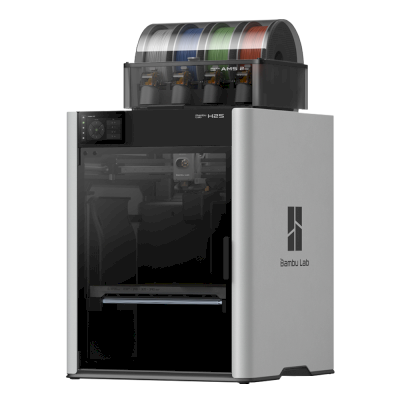
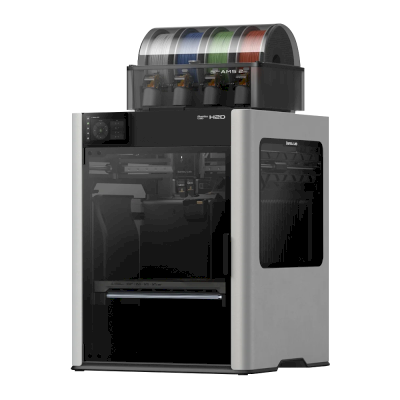
Choose the Plus5 for engineering materials in a polished, enclosed machine: Tom's Hardware made it an Editor's Choice and says it goes toe-to-toe with Bambu Lab's H2 series for nearly half the price. ModBot places it between the smaller Qidi Q2 and the larger Max4, so pick by plate size. Don't buy it for multi-colour PLA: Tom's Hardware still considers the QIDI Box unreliable and Aurora Tech found it slow, so a Bambu Lab P2S with the AMS or a tool changer such as the Snapmaker U1 suits colour work better. It has no second extruder for support materials (Aurora Tech), which the Bambu Lab H2D has.
Pros
A 65 °C heated chamber, a 370 °C hotend and a 120 °C bed for nylon, PC, carbon- and glass-filled filaments and PPS-CF (Qidi); Tom's Hardware got clean PPS-CF prints.
A three-stage filter with H12 HEPA and activated carbon (Qidi).
Very little setup and polished hardware and interface (Tom's Hardware); Aurora Tech rates surface quality, accuracy and first layers top-notch.
Load-cell auto levelling, a 1080p AI camera, and Wi-Fi, Ethernet and USB (Qidi).
Works with SimplyPrint through the SimplyPrint Client, which also shows and maps the QIDI Box's slots.
Cons
The QIDI Box is the weak part: Tom's Hardware considers it unreliable and Aurora Tech found it slow.
Filament loads awkwardly from the rear (Tom's Hardware).
ModBot's unit developed a squeak in the motion system, and a filament sensor failed to trigger once, ruining a long print.
No dual extruder for support materials, and switching between very different filament temperatures is awkward (Aurora Tech).
Who it suits
SchoolsGood fit
Enclosed and filtered with very little setup, and SimplyPrint can hold student prints for approval; keep students to PLA and PETG, since its strengths are engineering materials.
HobbyistsGood fit
Strong value for nylon, PC and composites; a weaker pick for colourful PLA with the QIDI Box.
BusinessesGreat fit
A heated, filtered chamber, Ethernet and engineering-grade results for nearly half the price of Bambu Lab's H2 series, per Tom's Hardware.
Print farmsGood fit
Enclosed and Ethernet-connected, and SimplyPrint controls it through the SimplyPrint Client, but ModBot's missed filament-sensor trigger is a warning for long unattended runs, and no plate-clearing kit is in our sources.
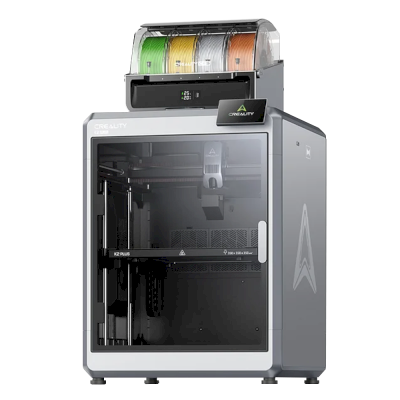
Printers from the same maker, of a similar size, printing the same engineering materials or multi-material like it, that you can buy today. Compare up to four side by side, with their specs and how each connects.
Also sold as the QIDI Plus5 Combo, with its multi-material unit.
About QIDI
Who makes the QIDI Plus5, and how open QIDI leaves you: whether its printers run without its cloud, take any filament and slicer, and can be repaired. Each area is rated from public sources.
Openness: Mostly open (4.2 of 5)
Mostly open
Walled gardenOpen
QIDI Tech is a Chinese 3D printer maker formed in 2014. It sells enclosed, Klipper-based CoreXY printers such as the compact Q2 and the larger Plus4 and Max4, and develops the open-source QIDI Studio slicer and the QIDI Link app.
QIDI is mostly open: its printers are standard Klipper machines you can run fully on the local network, with published source and plenty of spare parts. The phone app and the store-only privacy policy are the weak spots.
Firmware and custom firmware ●●●●●
QIDI printers run QIDI's editions of Klipper and Moonraker with Fluidd. QIDI publishes them and per-model firmware packages on GitHub under GPL (for example the Q2 in January 2026 and the Max4 in August 2026) and answers issues there.
[1][2][3]
Local control and integrations ●●●●●
QIDI printers run Klipper and Moonraker with Fluidd on the printer, and QIDI Studio connects to them on the local network by IP without an account. QIDI publishes its Moonraker edition on GitHub, and other software can use Moonraker's documented API. Only the QIDI Link phone app needs an account and QIDI's cloud.
[4][5][11][12]
Third-party filament, slicers and parts ●●●●●
Third-party filament works; QIDI Studio is open source, and as Klipper and Moonraker printers they work with other Moonraker-compatible software. Hotends and nozzles are QIDI parts made per model.
[6][1][7]
Repairs and spare parts ●●●●●
QIDI's store lists many individual parts, including motherboards, eMMC modules, fans, extruders, hotends and Wi-Fi cards, and its wiki has replacement guides such as the Plus4 hotend.
[7][8]
Data and privacy ●●●●●
Local use needs no account. QIDI Link requires one and says which server it uses (Aliyun in China, AWS elsewhere). The published privacy policy covers the online store, not the printers or the app.
[5][9]
Community and documentation ●●●●●
Firmware is released and issues are taken on GitHub, and QIDI keeps a wiki per model with manuals, maintenance and troubleshooting guides.
[1][4]
From SimplyPrintOur own experience working with QIDI. It isn't part of the rating.
QIDI is one of the few printer makers we work with directly: they occasionally send us new printers, and put us in touch with their developers when we need them.
Pros
Runs fully on the local network through Fluidd, with no account needed.
Klipper and Moonraker sources and firmware updates are published on GitHub.
Many individual spare parts, down to motherboards and eMMC modules.
Open-source slicer and open filament choice.
Cons
The QIDI Link app needs an account and QIDI's cloud.
The privacy policy covers only the online store, not the printers or app.
Hotends and nozzles are QIDI-specific parts.
Track record
August 2026: QIDI published the firmware repository for the Max4 on GitHub under GPL-3.0.
[2]
January 2026: QIDI published the Q2's Klipper-based firmware on GitHub under GPL-3.0, with update packages and an issue tracker.
[1]
Researched from 12 sources, last checked October 18, 2026. Show sources
Yes. You can connect the QIDI Plus5 to SimplyPrint via SimplyPrint Client or Klipper (Moonraker), then slice, queue, start and monitor prints from your browser or the mobile app.
How do I connect the QIDI Plus5 to SimplyPrint?
Follow our step-by-step setup guide for the QIDI Plus5. It shows how to connect it via SimplyPrint Client or Klipper (Moonraker), what you need for each, and which to pick.
What slicer should I use for the QIDI Plus5?
Cura, PrusaSlicer and OrcaSlicer all work with the QIDI Plus5, and you can run any of them in SimplyPrint's online browser slicer - no install needed, on any device.
Can I use OrcaSlicer with the QIDI Plus5?
Yes, but OrcaSlicer has no built-in profile for the QIDI Plus5 that we know of: start from a similar printer's profile and set the bed size, height and nozzle to match.
What filament can the QIDI Plus5 print?
QIDI lists PLA, PETG, TPU & flexibles, ABS & ASA, Nylon (PA), Polycarbonate (PC) and Carbon-fiber & glass-filled for the Plus5.
Does the QIDI Plus5 work with OctoPrint or Klipper?
The QIDI Plus5 works with Klipper (Mainsail and Fluidd), and SimplyPrint connects to it through them - so you get cloud access, a queue and camera monitoring on top.
What is the QIDI Plus5's bed size and build volume?
The QIDI Plus5 has a 320 x 320 mm print bed and prints up to 300 mm tall, a build volume of about 320 x 320 x 300 mm. See the full specifications table above for bed type, temperatures and more.
When did the QIDI Plus5 come out?
QIDI launched the Plus5 on August 5, 2026.
Can the QIDI Plus5 eject prints automatically?
There's no kit for it that we support yet, but SimplyPrint's AutoPrint can push prints off with the toolhead, or run your own ejection G-code, and then start the next job from your queue.
Where can I buy the QIDI Plus5?
From QIDI's own store, which has shops for the EU, the UK, the US and everywhere else. The links on this page go to those stores; some are affiliate links, so we may earn a commission at no extra cost to you.
Affiliate disclosure: Some links on this page are affiliate links. We may earn a commission if you make a purchase, at no extra cost to you. As an Amazon Associate, we earn from qualifying purchases.
 China
 SimplyPrint Client
 Klipper (Moonraker)


 PrusaSlicer
 OrcaSlicer
 BambuStudio
 ElegooSlicer
 CrealityPrint
 Cura
 Kiri:Moto



 Best for USA: QIDI's store for the US
 QIDI for the EU
 QIDI for the UK