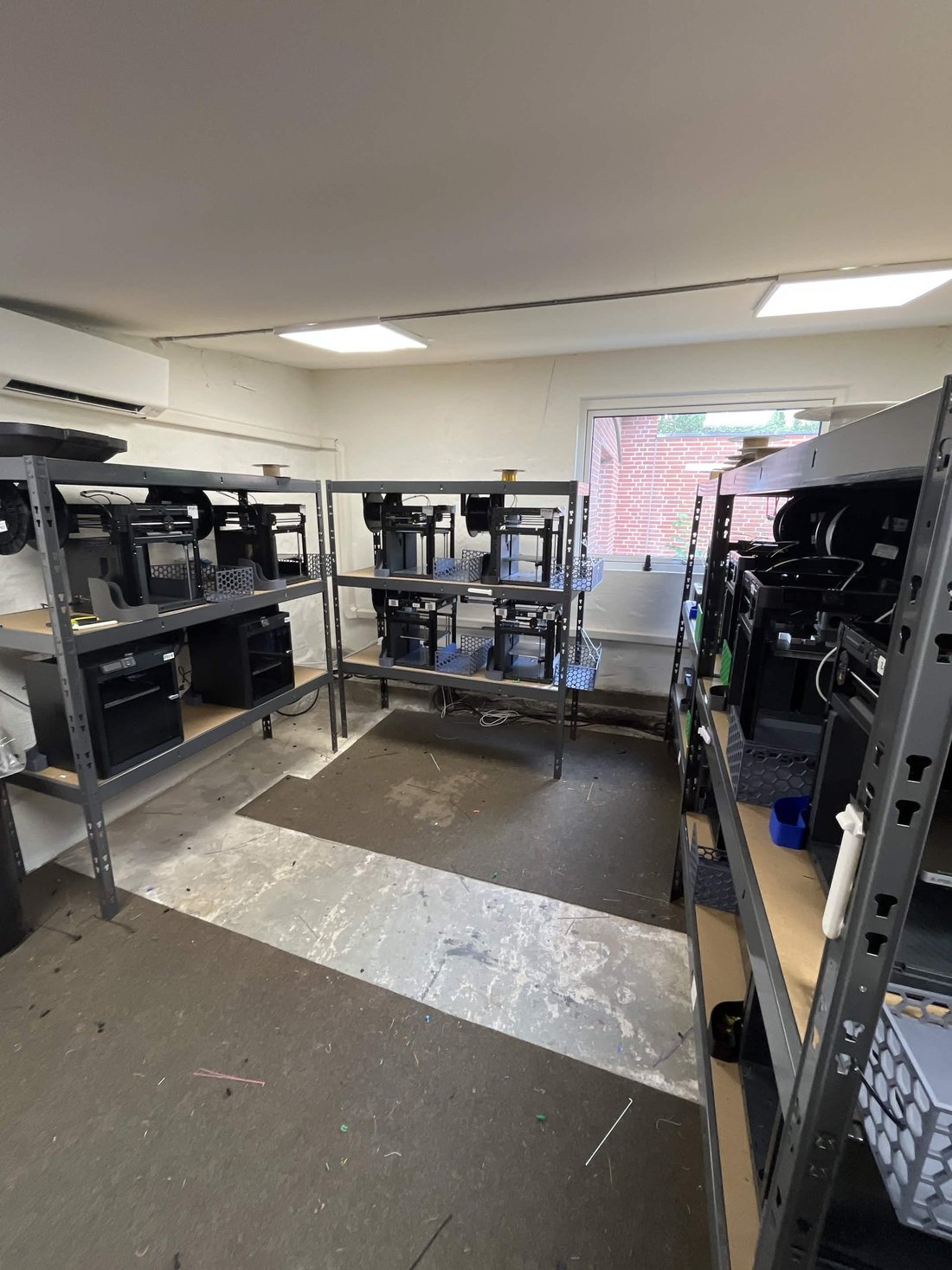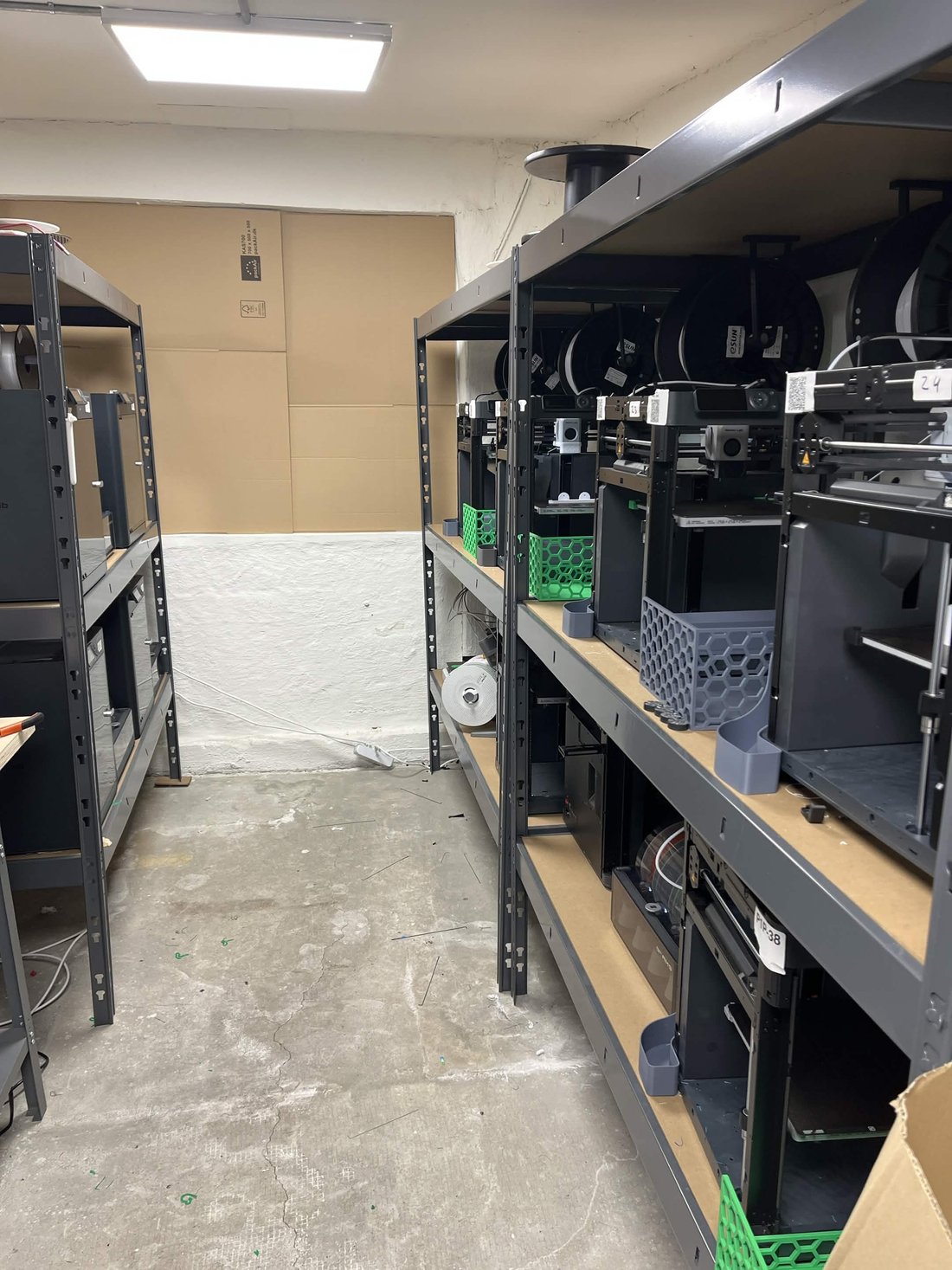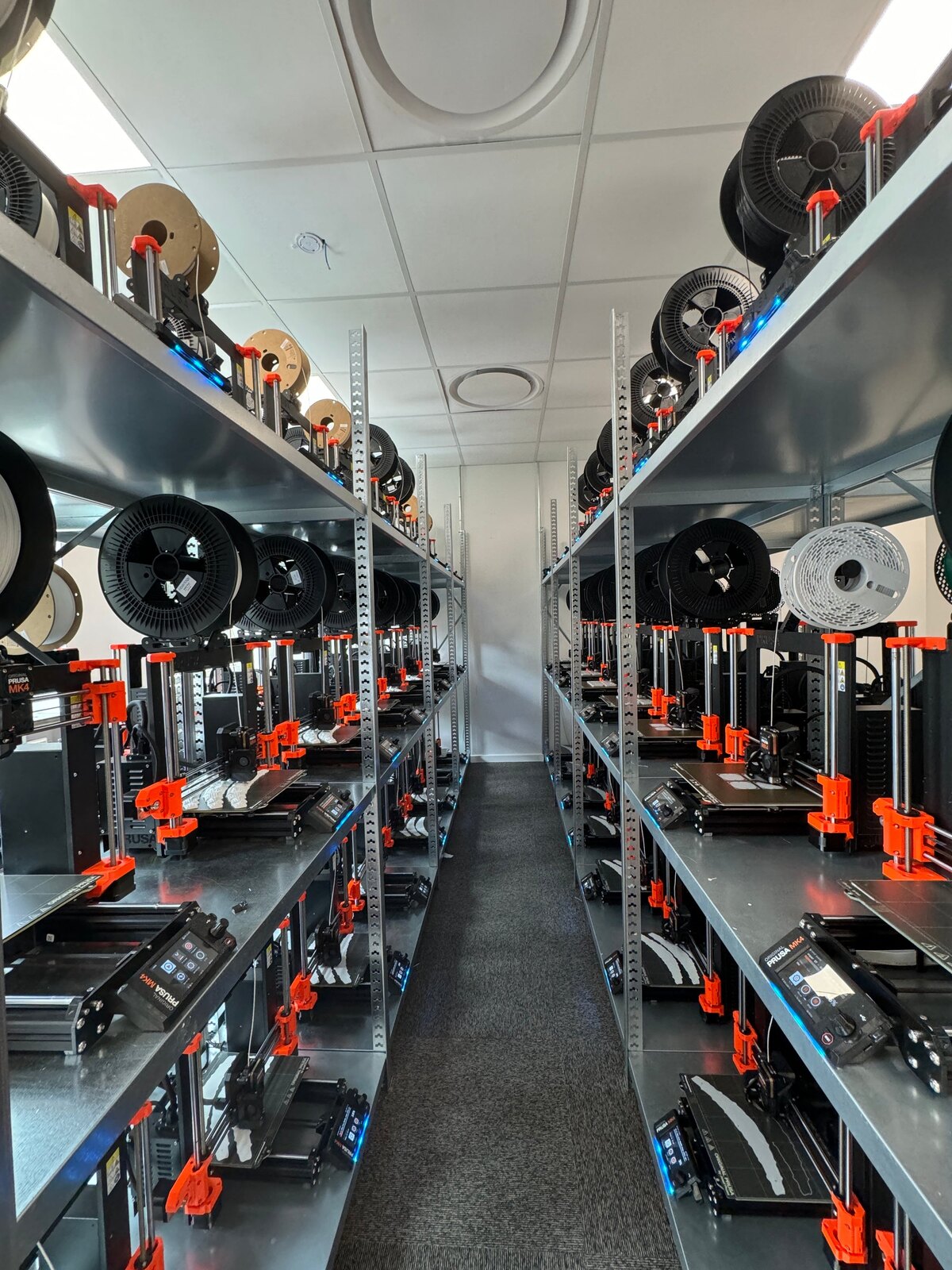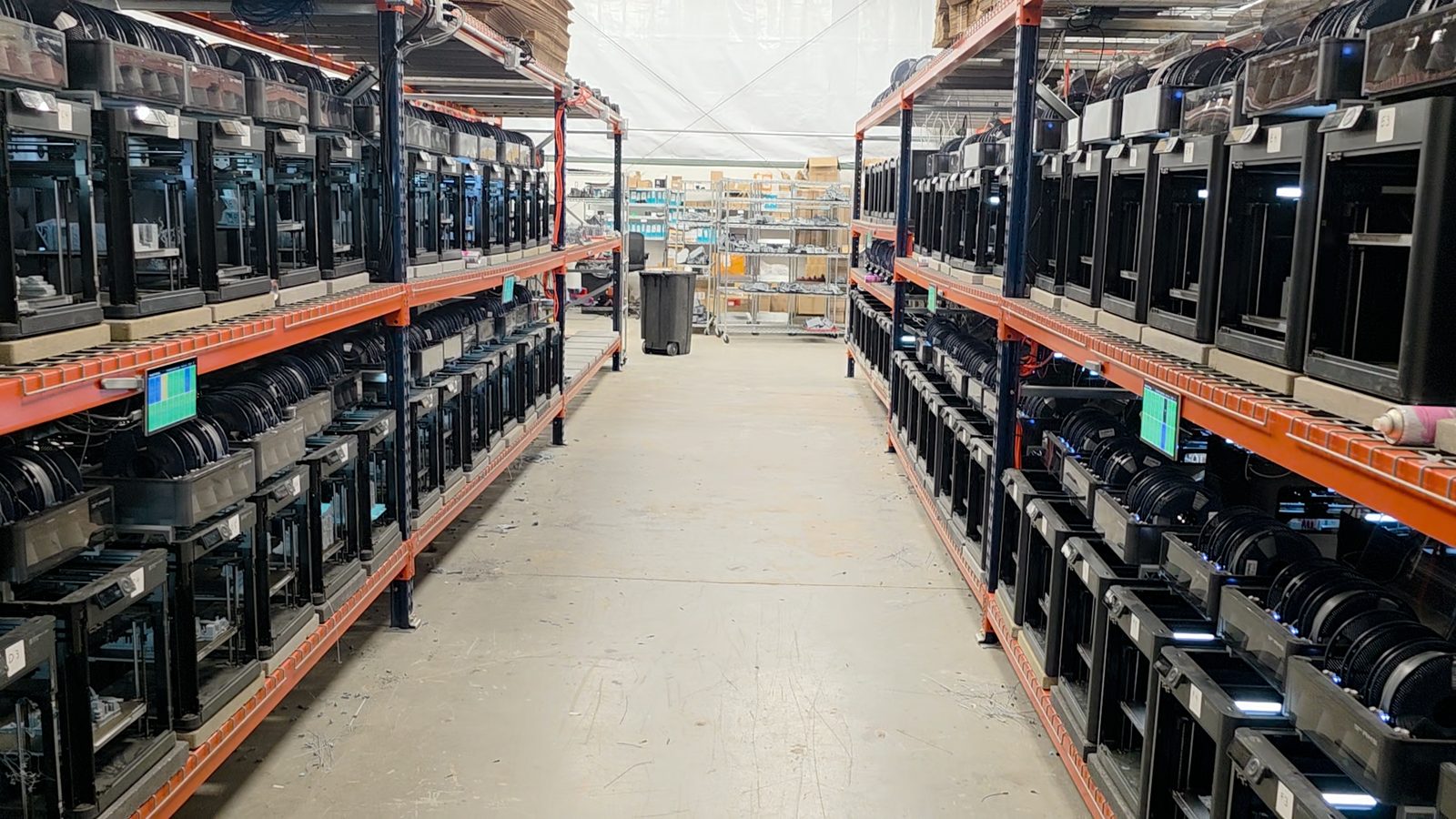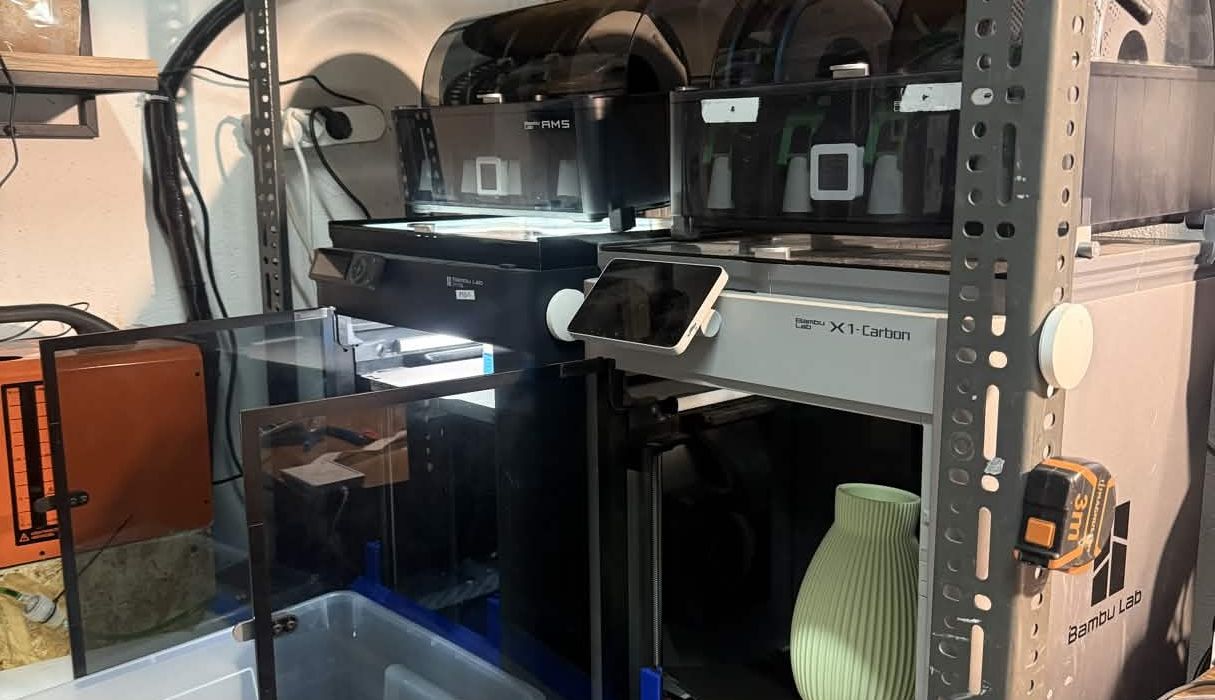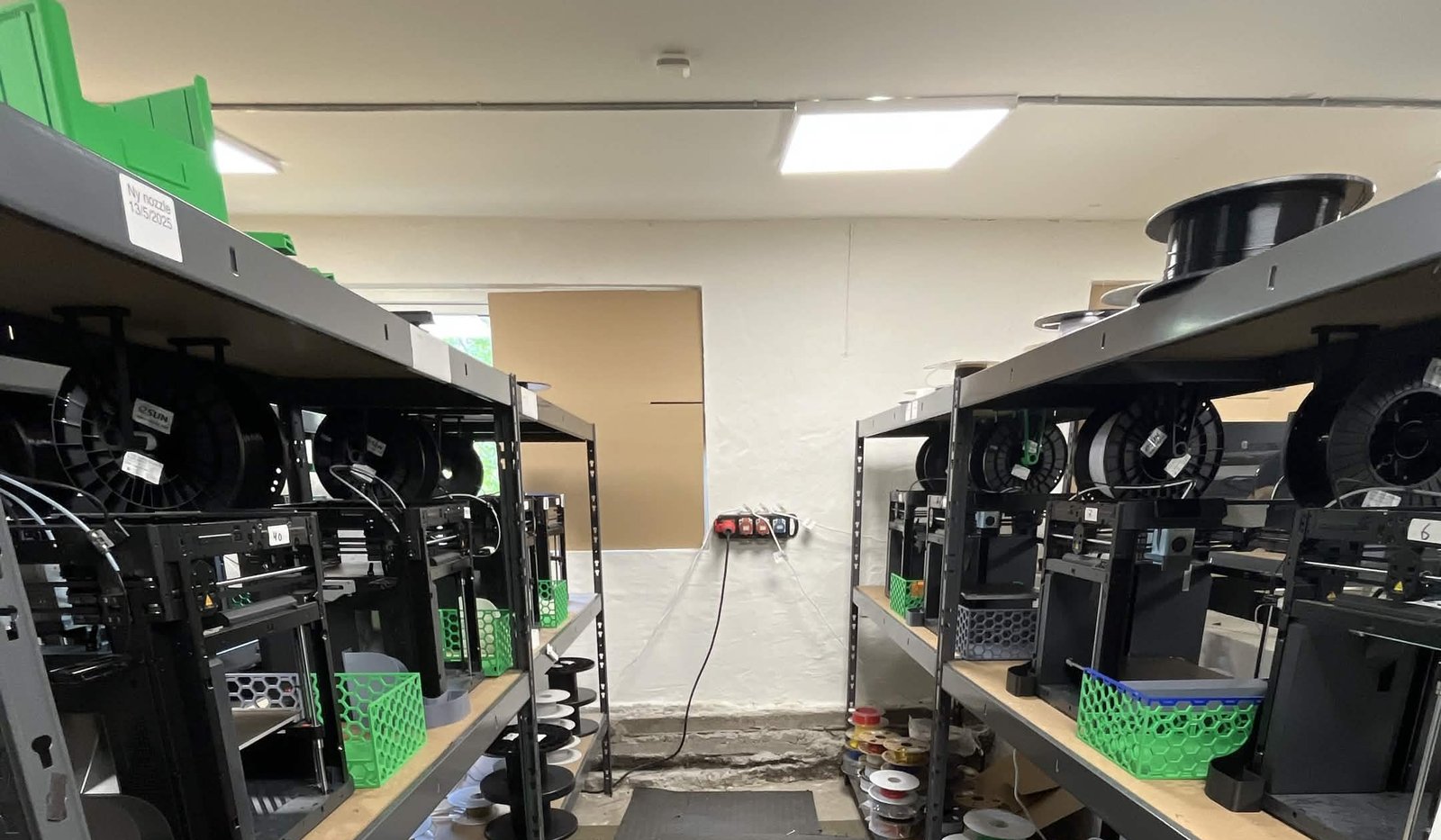
Weshape is a two-person print farm in Kolind, Denmark, run by two founders who are, as it happens, both named Mads. They came from e-commerce, started 3D printing in the sheds of their houses, and turned it into a made-to-order business under one simple promise: we print what you need. The unusual part is how they built it. Most farms grow first and automate later. Weshape automated first, because they had to.
We started in the sheds of our houses with a couple of Prusa printers and kinda went from there. We have always had the approach that the farm should be able to run even when we are not there, as we also had "real" job commitments. Hence, we already started looking into automation from when we had 5 printers and built most of the business around this premise.
Automation came first, not last#
That order of operations is the whole story. With day jobs to keep, "the farm should run when we're not there" wasn't a nice-to-have they bolted on at scale - it was the founding constraint, designed in at five printers. Everything since has been built to hold that line.
Our current business model would not support a non-automated setup, as it would simply be too costly in terms of hours needed to run the farm.
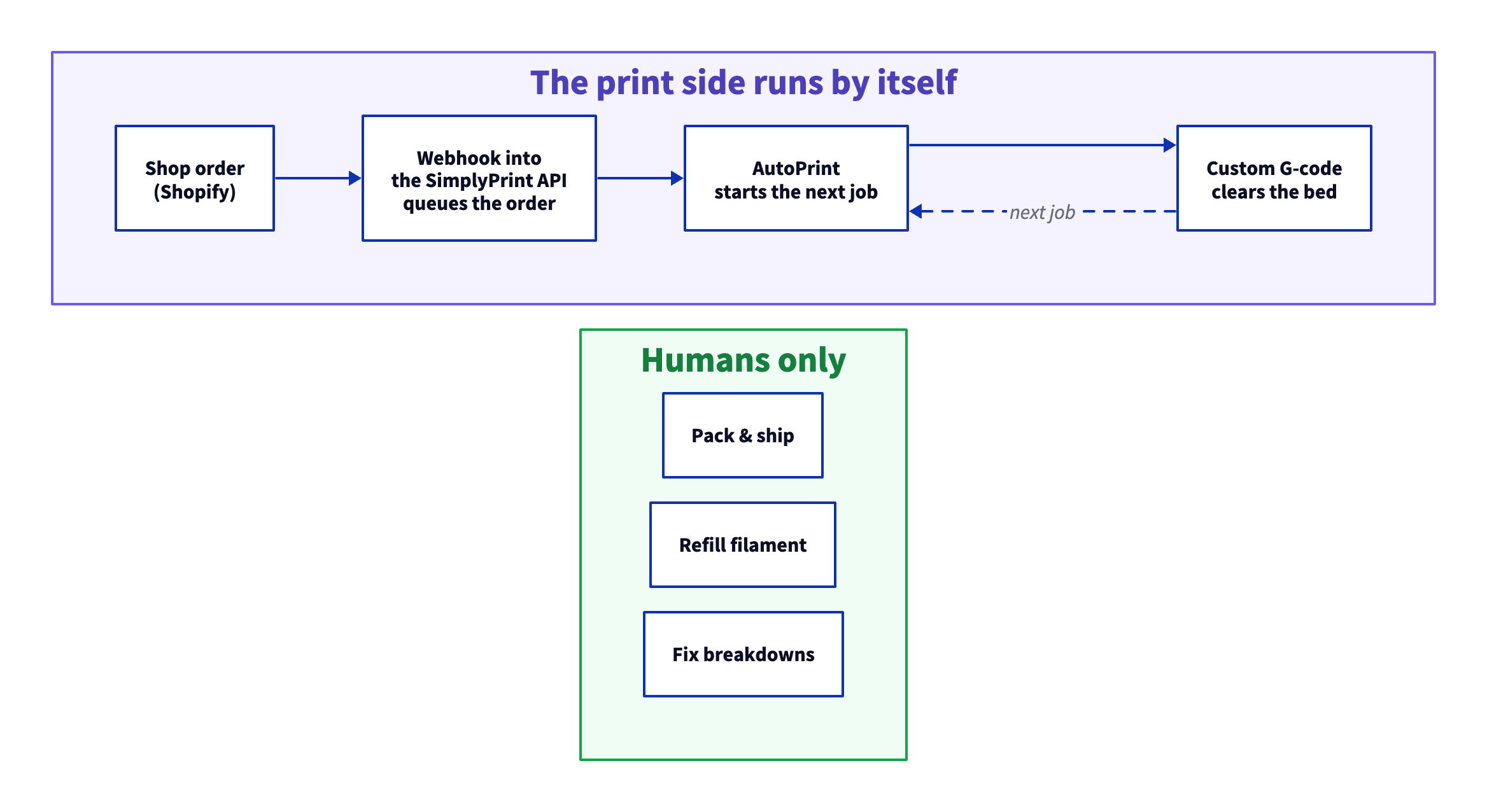
The loop: an order in, a printed part out, no hands#
On a standard order, nobody touches a printer. The order arrives, the software queues it, a machine starts, the bed clears itself, and the next job begins. The founders describe the pipeline plainly:
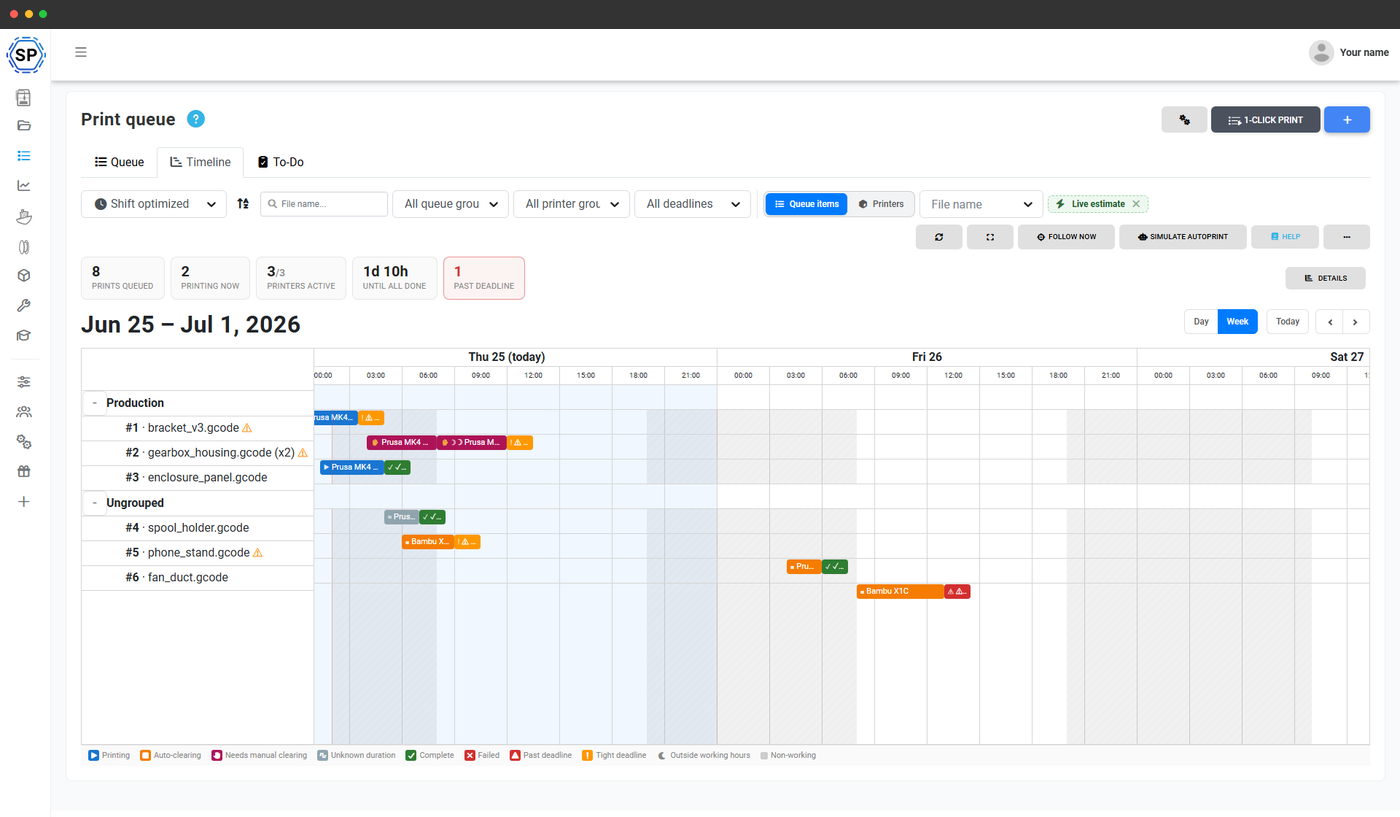
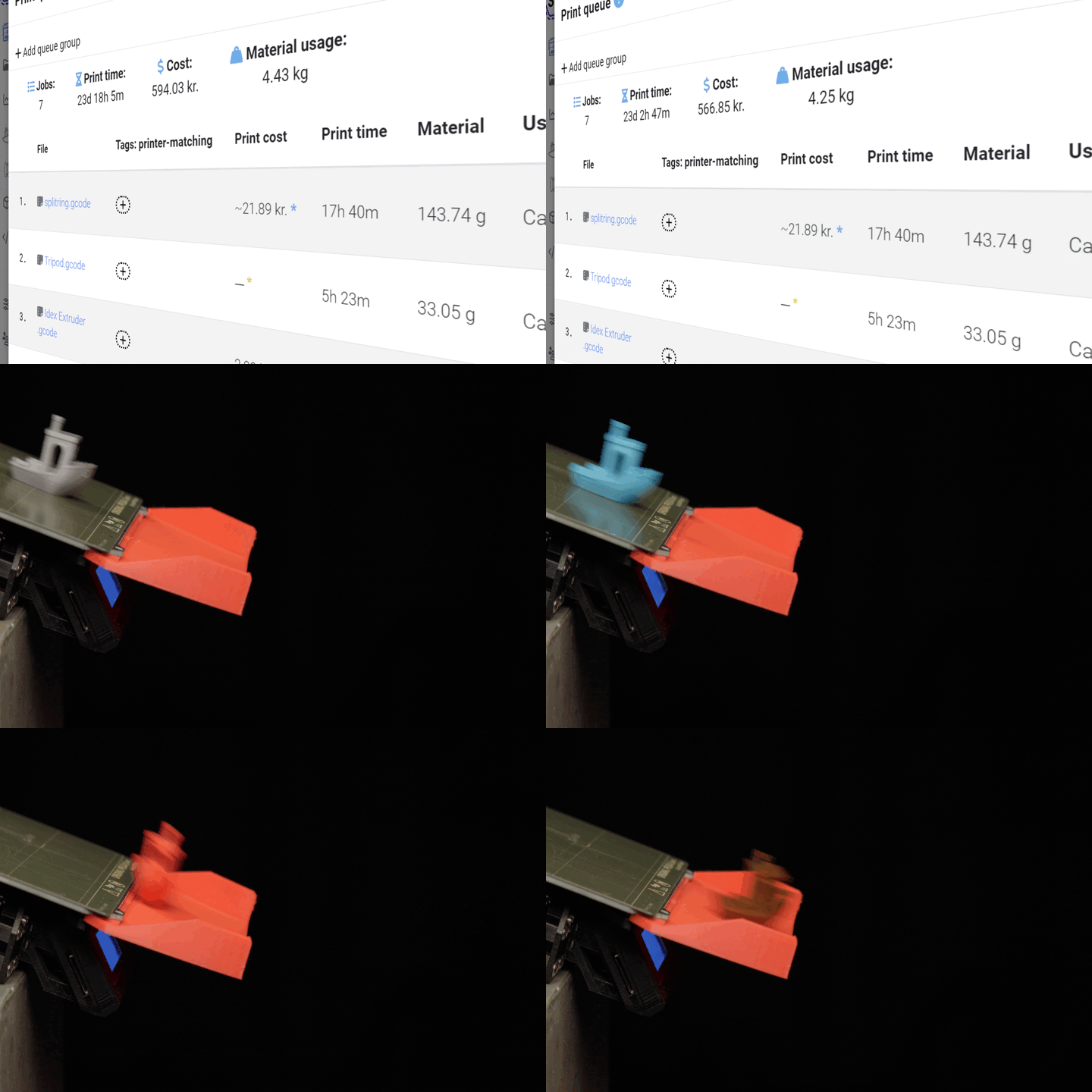
On a standard order we have full automation covering: order queueing (a webhook feeds into the SimplyPrint API), print start (the AutoPrint feature in SimplyPrint), and bed clearing (a custom G-code setup in the bed-clearing feature). This means we try to run a more standard e-commerce workflow, where we can focus on the packaging and fulfilment side when we are at the farm.
What's left for a person is deliberately small, and physical:
There are of course still farm management tasks, such as loading in filament and print breakdowns, but most of the farm can run through the weekend without any supervision.
The API is the part that grew with them#
Weshape has been a customer since 2022, and the feature they point to first isn't a button in the panel - it's the API. It's what lets a farm with its own quirks bend the software to its exact workflow instead of the other way around, and it has kept up as they've grown.
One of the most impactful features in SimplyPrint has been the API access, which has been implemented and expanded in the time we have been with SimplyPrint. We sometimes have some unique challenges, and the API gives us an effective way to make it fit our exact use-case.
What the automation lets them not do#
The payoff isn't only speed. It's what two people are freed up to do instead. One of them has gone full-time, but the point of the setup was never to replace people with printers - it was to stop people spending their hours babysitting them.
One of us is now full-time, but it still frees up time for us to focus on developing the business instead of "just" running the farm.
It also changes the economics of what's worth taking on. When every print costs human minutes, small orders quietly become money-losers. When they don't, the whole long tail opens up.
Handling of small order sizes would not be feasible without our current level of automation.
These days someone is physically at the farm most business days, but the reason is shipping orders and handling the occasional breakdown, not starting prints or clearing beds. The machines don't wait for a person to keep going.
They productized the pipeline: Weshape Fulfilment#
The clearest proof that the automation holds is that they now sell it. Weshape turned their own lights-out workflow into Weshape Fulfilment, an EU print-on-demand service for other shops: you sell, they print, pack and ship the order under your name, no inventory on your side. Their Shopify store links in minutes, orders sync automatically, and the system is built to absorb more volume without more work, which is only possible because the printing was hands-off to begin with.
The weekend test#
Every automation claim eventually meets the same honest question: does it actually run when nobody's watching? For Weshape, the answer is the part of the week most farms can't cover.
The farm typically runs itself over the weekends, such that we still have some family time.
TL;DR#
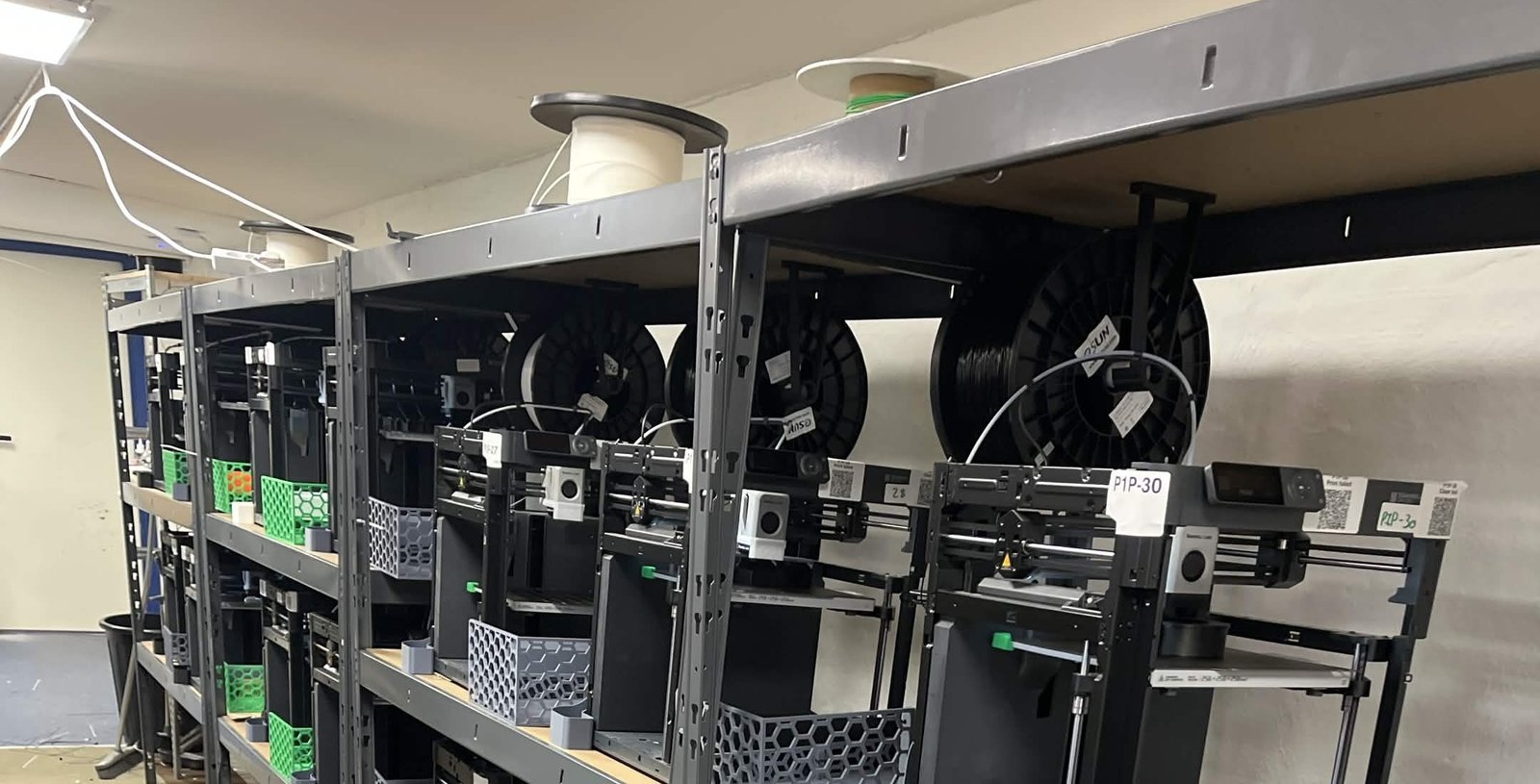
Weshape is a two-person Danish print farm built, from five printers onward, to run without its owners. The print side is fully automated: a webhook drops each Shopify order into the SimplyPrint API, AutoPrint starts the next job, and custom G-code clears the bed, so around 50 Bambu Lab printers run nights and weekends unattended. That frees two people to build the business instead of babysitting machines, makes small orders worth taking, and works so reliably they sell the same pipeline to other shops as an EU print-on-demand service.