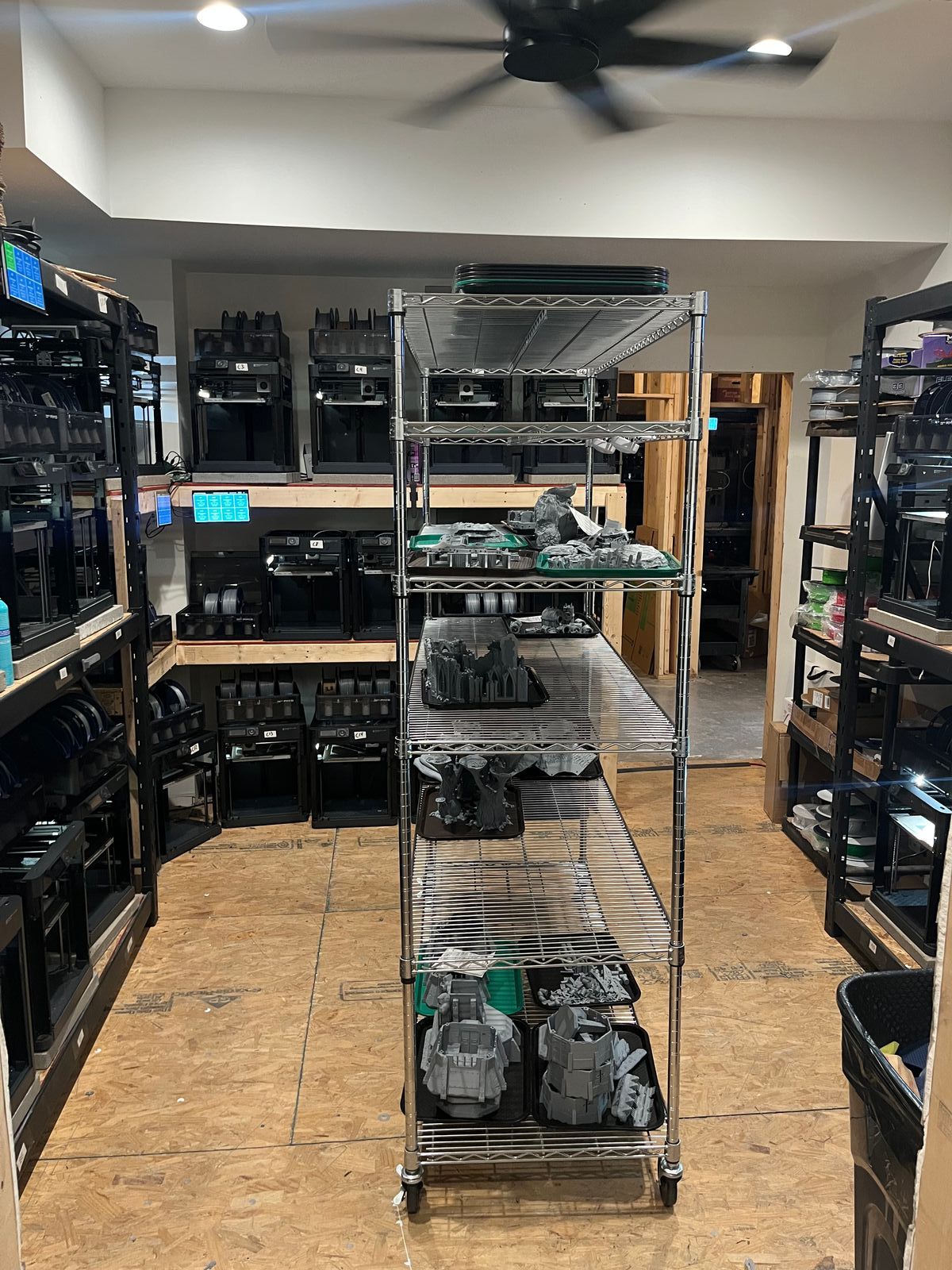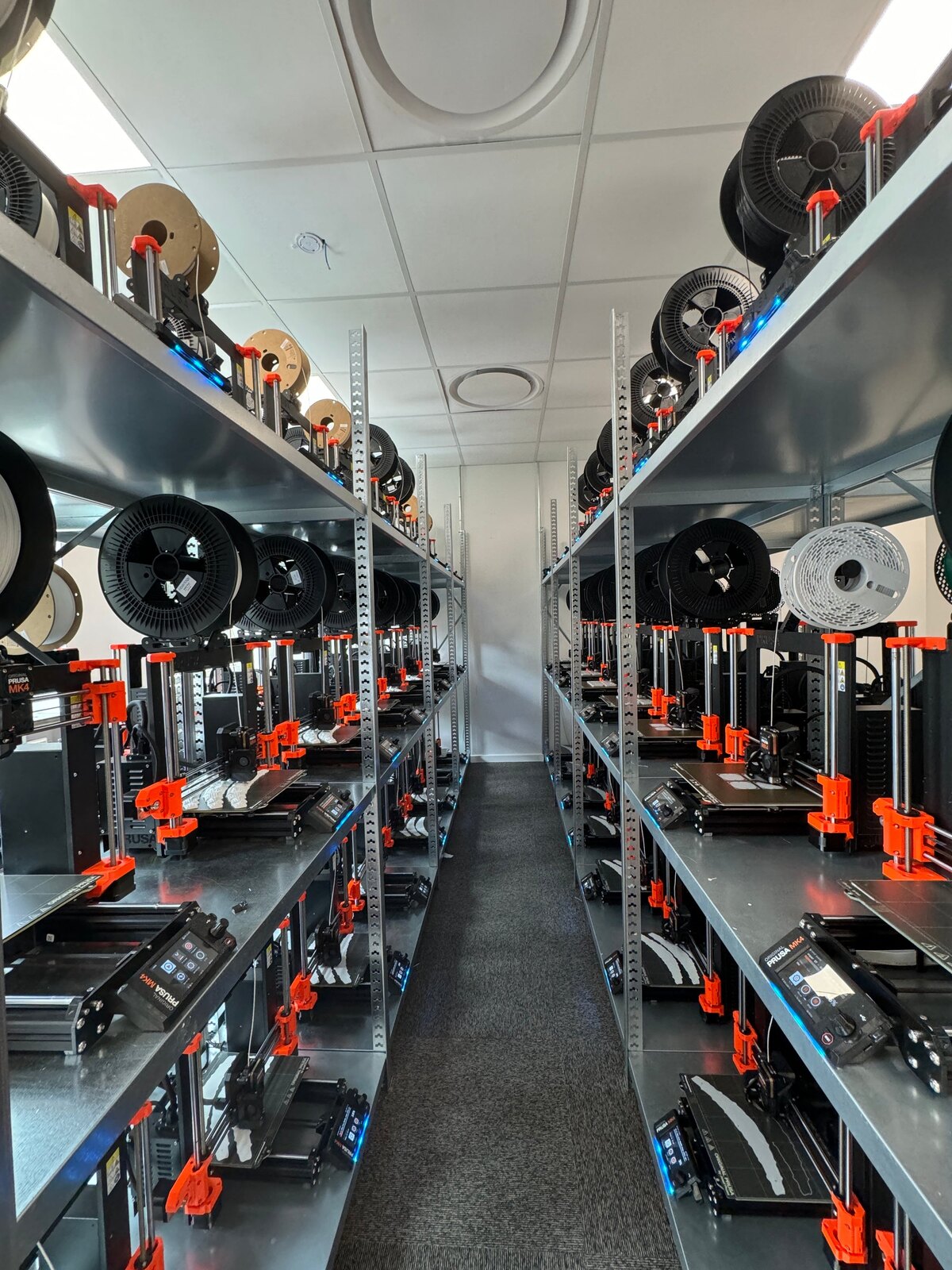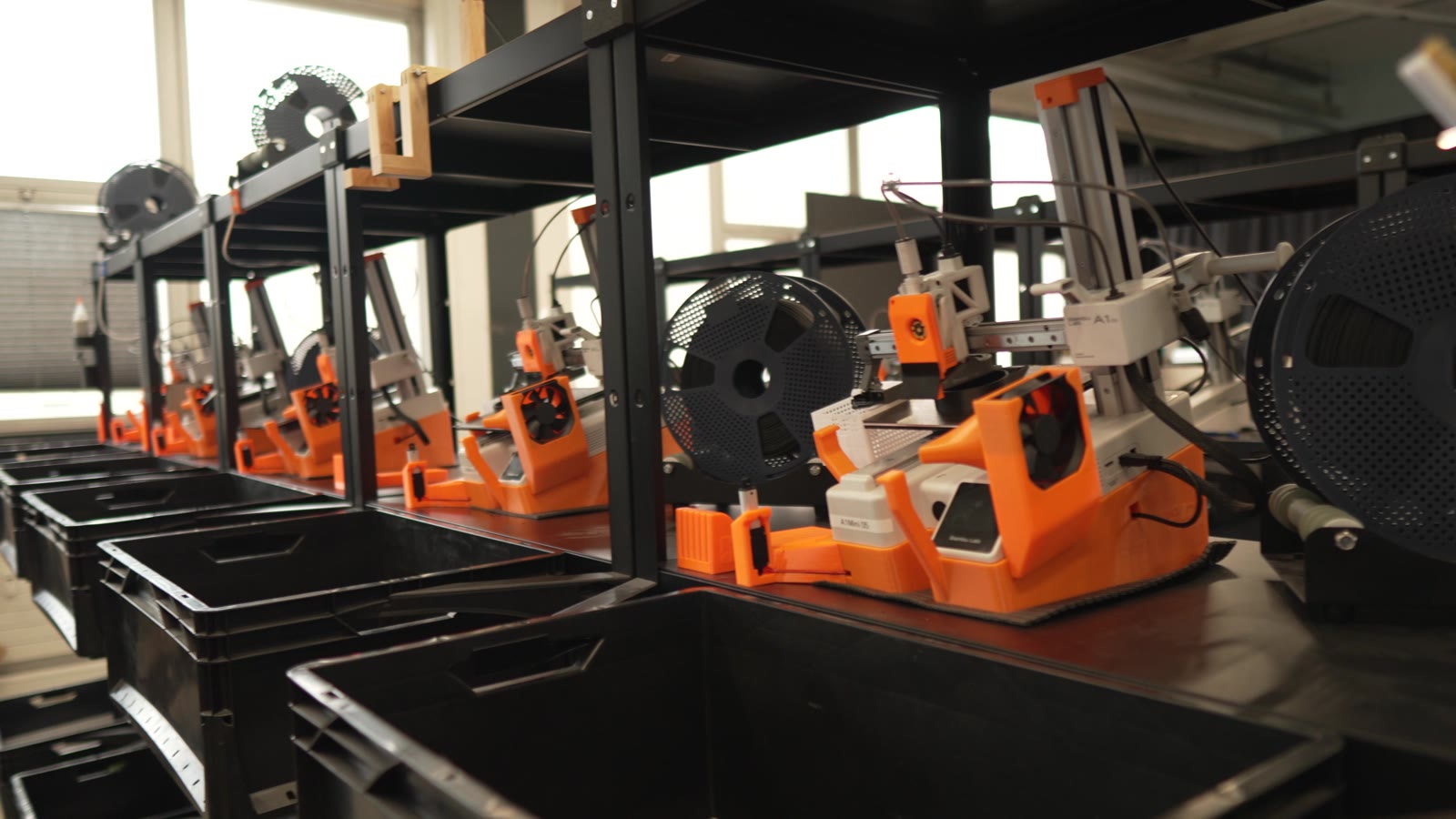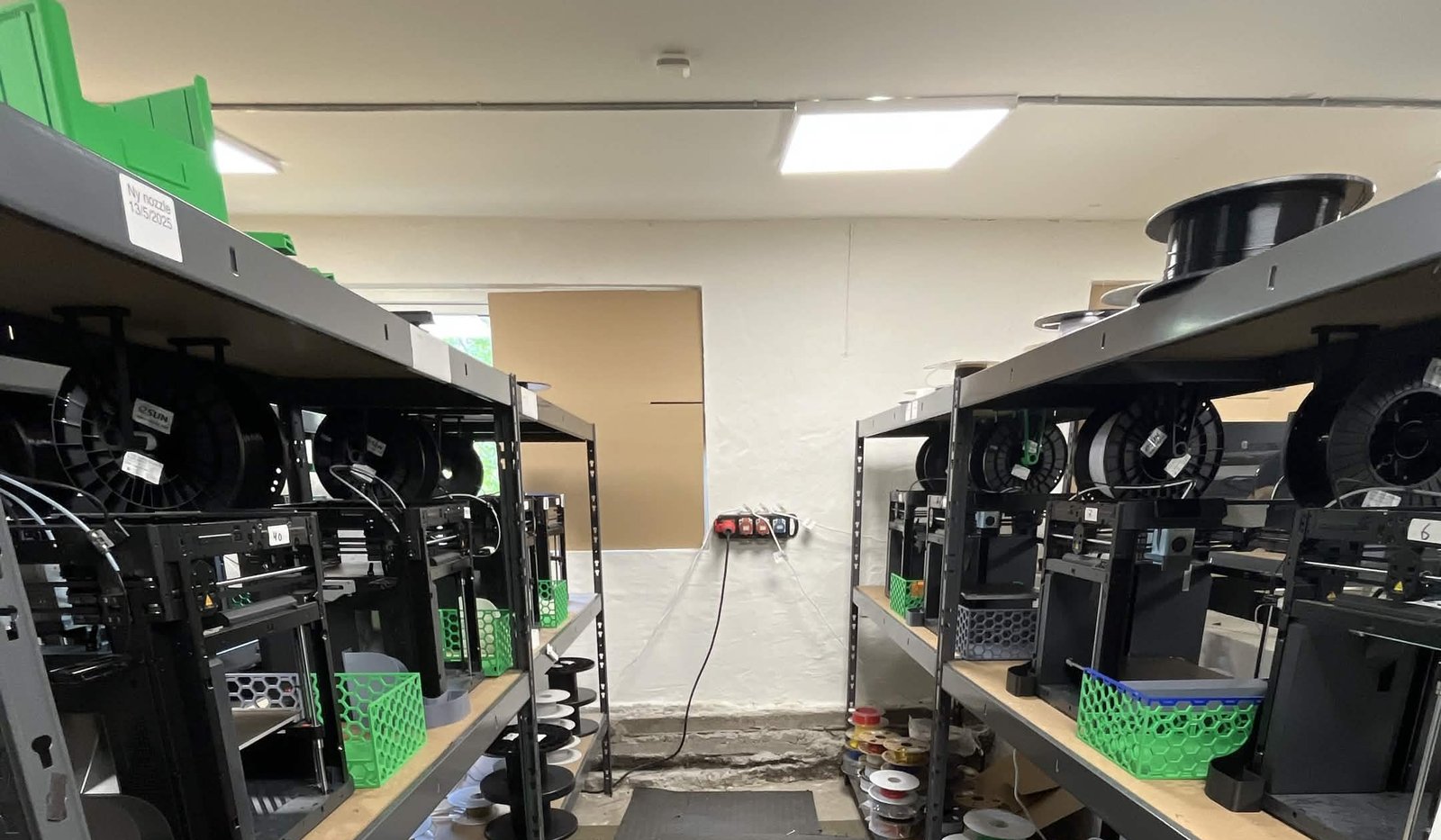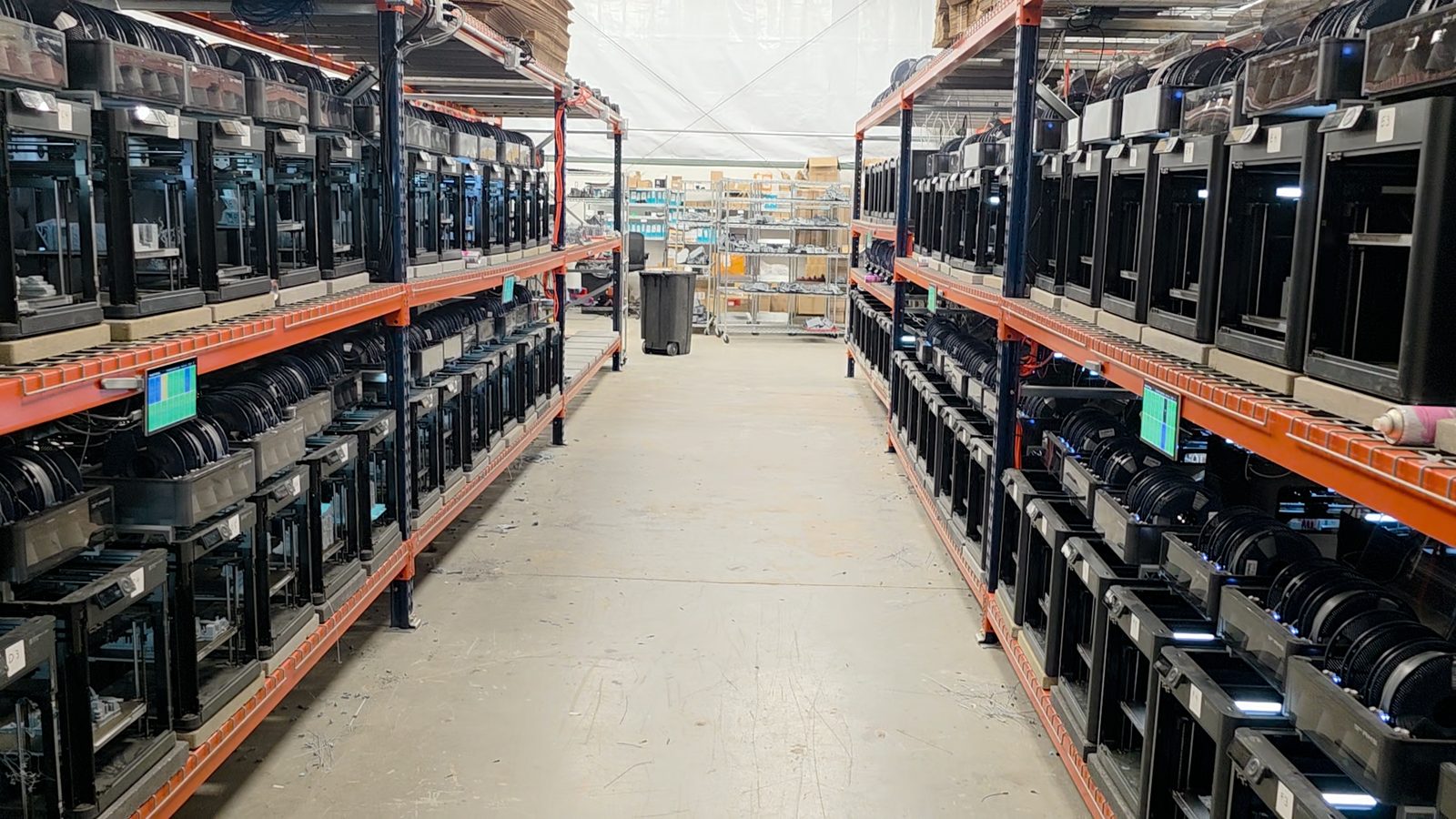
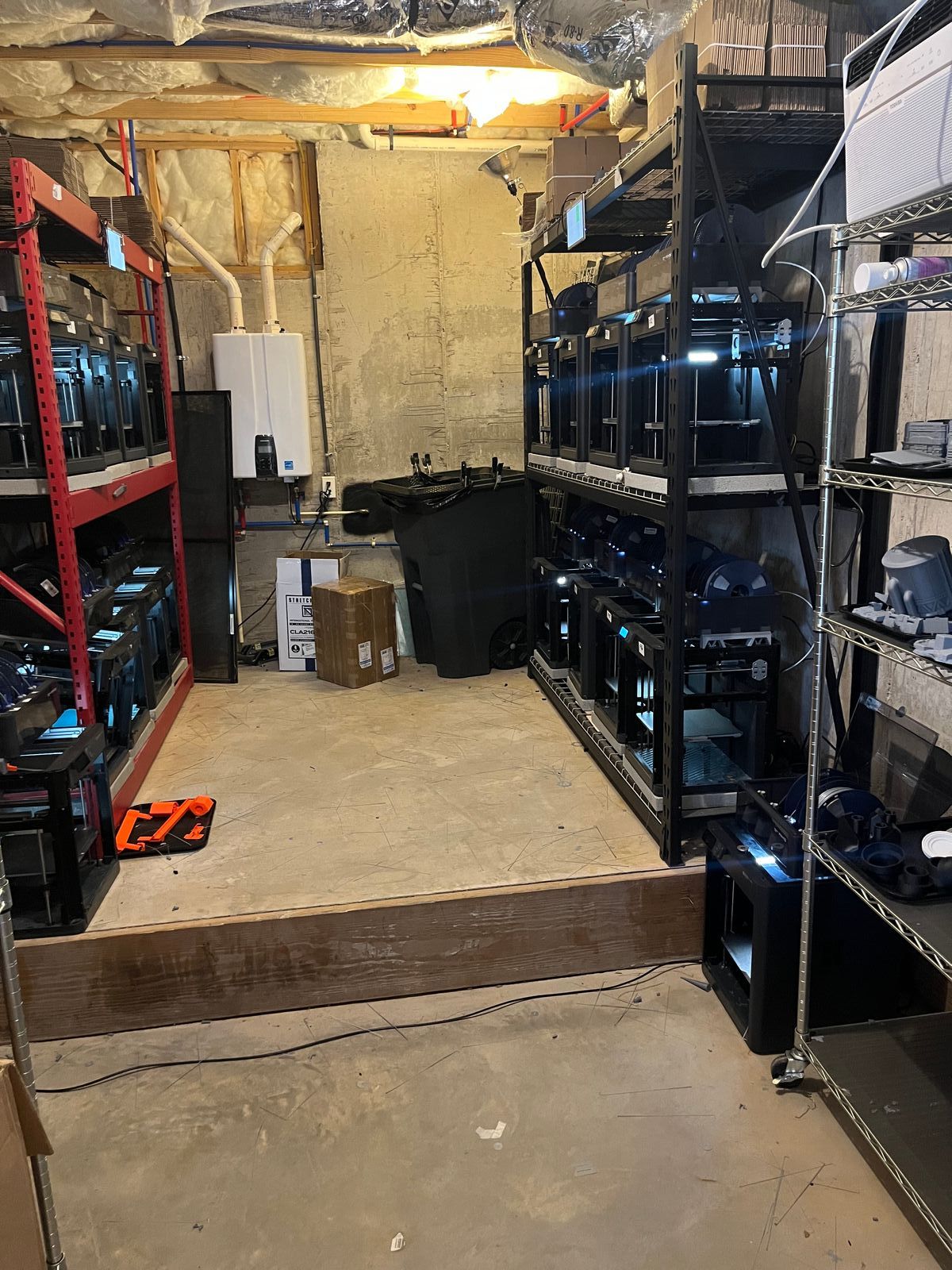
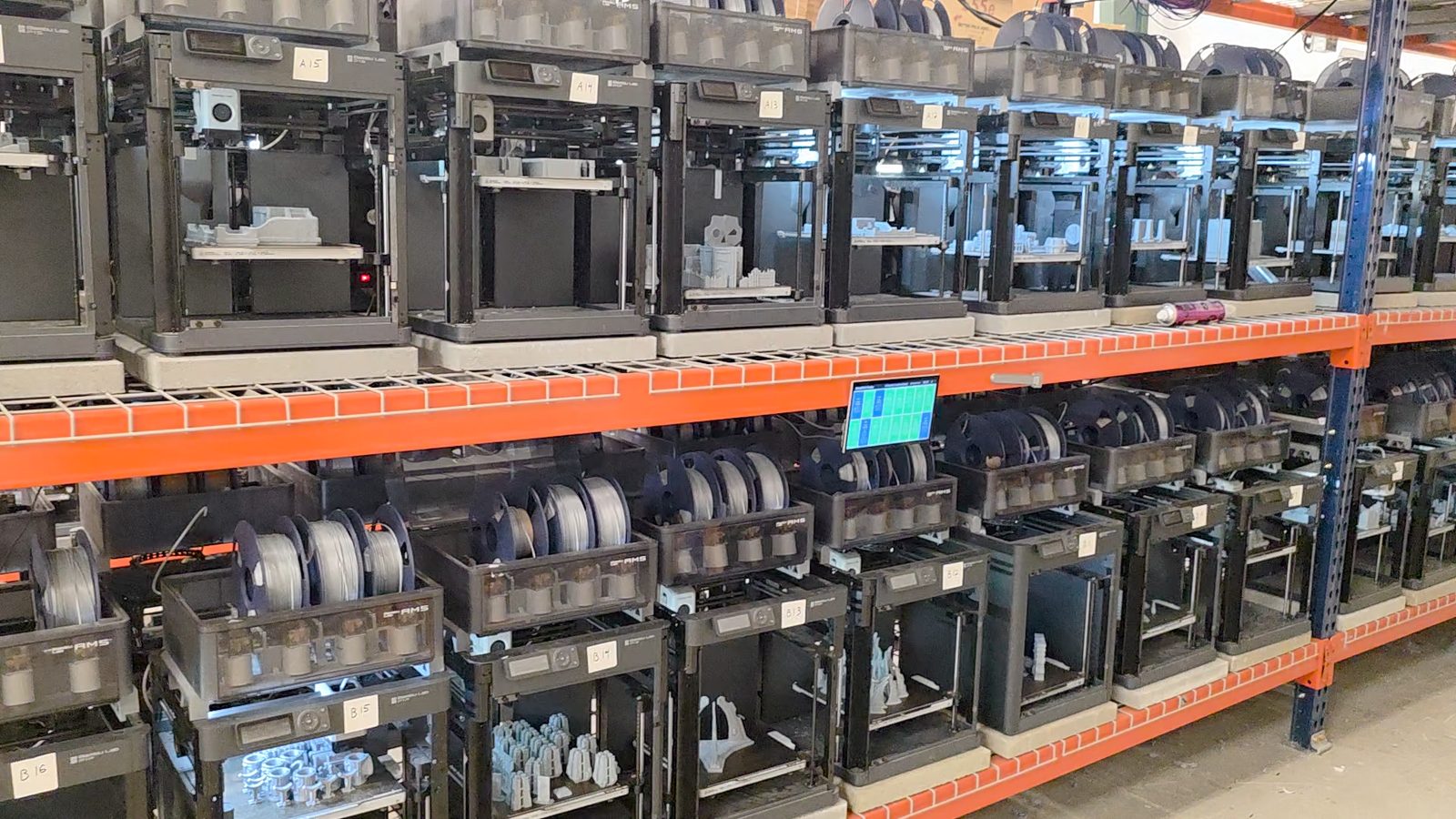
Tabletop Terrain makes the scenery that miniatures fight over: buildings, hills, bunkers, the terrain a tabletop wargame is played on. LJ started it as a side hustle, printing in a basement. Today it is 17 people fulfilling made-to-order orders out of a 650m2 (about 7,000 sq ft) warehouse, on a floor that runs roughly 150 Bambu Lab P1 and H2C printers.
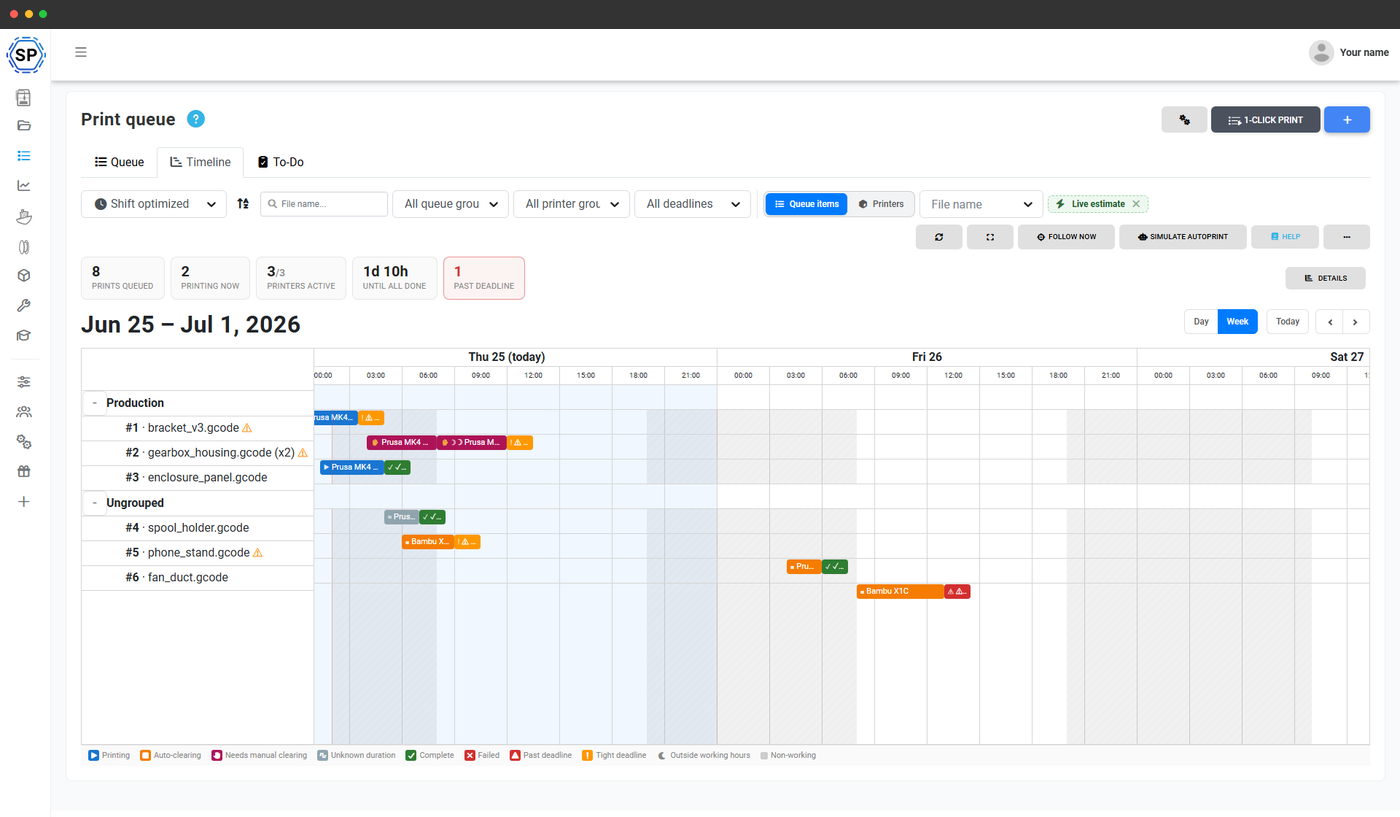
The number that matters most about that growth is not the printer count. It is that the same platform ran the basement and runs the warehouse. LJ joined SimplyPrint in 2022 and printed the same day, on a single print queue - and that queue is still the spine of the operation at 30x the size.
The challenge: it was all in his head#
The bottleneck early on was never the printers. It was him. He was moving files to machines by hand and holding the plan for what got printed, in what order, for which customer, in his head. That works at a few orders a day. It does not work at the volume he was heading toward.
What pulled him onto SimplyPrint was one thing:
I wouldn't have to keep stuff in my head anymore.
The turning point: a basement farm that kept growing#
The early days were the usual scrappy mess of failed orders and one machine at a time, until a glass print plate shattered in his hands and pushed him onto his first Prusa MK3S. He added another, then another, back when a new printer meant a long wait. The basement filled up. So did the next space.
He never had to swap the system to keep growing. As the floor went from a handful of printers to dozens to ~150, the queue scaled with it. Jobs that once went out one machine at a time now go out with one click across the whole fleet, so he is not babysitting individual printers.
Now I'm babysitting people. I haven't worked on the printers in years.
Scaling: a Shopify order, start to shipped#
The work runs on a rhythm now, and the queue is the spine. Orders land on the website, and a couple of times a day LJ batches them into SimplyPrint, where everything is organized by order number so a customer's order stays one trackable unit from the moment it enters the queue.
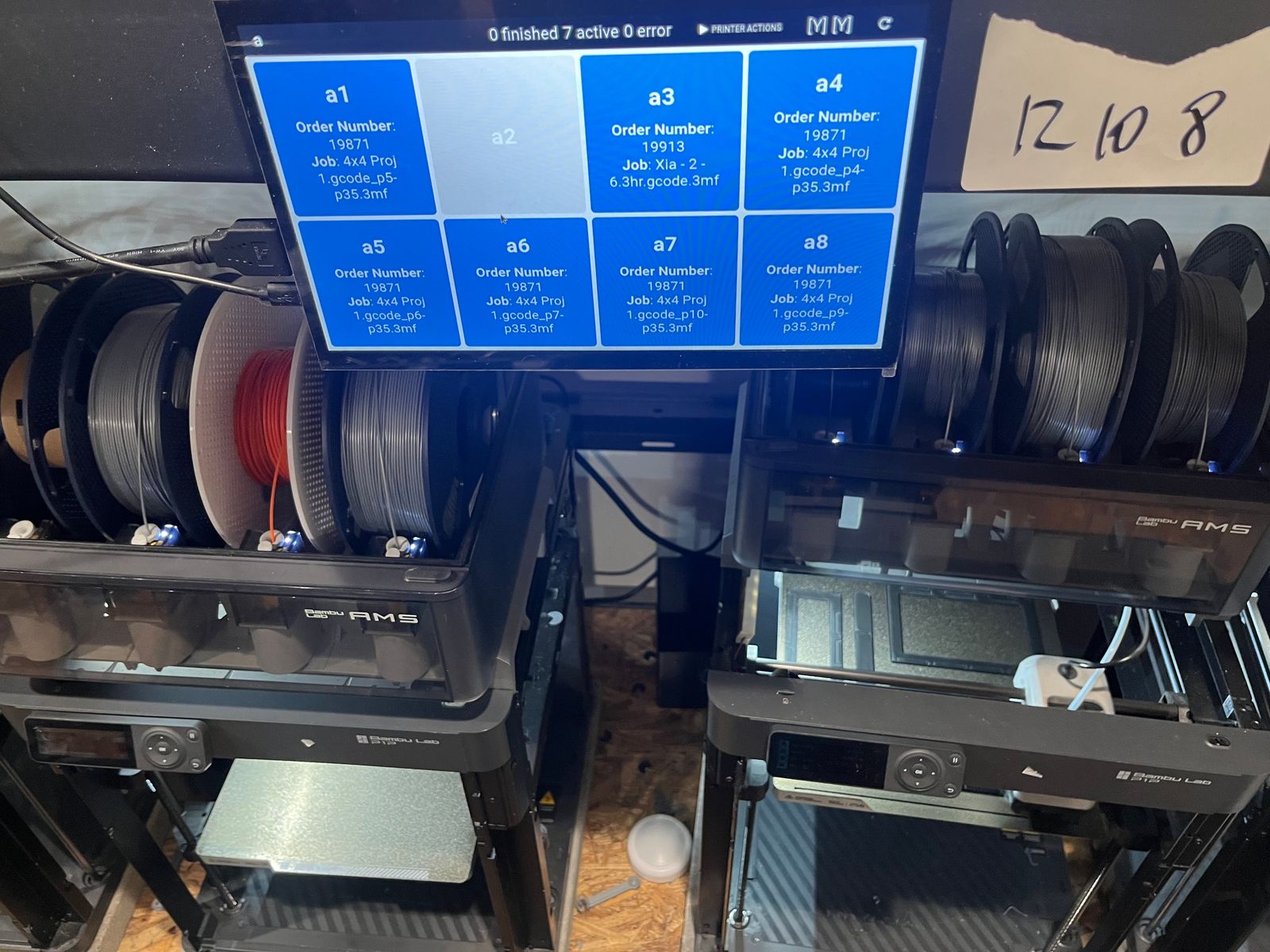
His team works off the display screens on the wall: each slot shows which order number is on which printer, so when a print finishes an operator can pull it and match it to the right packing slip. Before an order ships, someone checks the print history by order number to confirm every part was actually made. The fleet is mixed by design, and that suits how LJ thinks about the tooling:
They're not just building a Bambu Lab app. They're building a printer app. It doesn't matter if you have a Prusa MK3, a Prusa XL, or a P1P - you can use the same system for all of it.
The results: from 20 open orders to 300#
The scale is real: ~5 printers became ~150, one person became 17 (seven of whom work in SimplyPrint every day), and the account has logged more than 143,000 completed prints since 2022. The daily load is around 40 orders, and a single recent order was 70 plates on its own.
But the line that says the most about what changed is the one about his own nerves:
I used to get nervous at 20 orders in progress. Now we regularly are sitting between like 200 and 300.
Maintenance is somebody else's full-time role now - "Cole's full-time job is just keeping the printers running" - and most of the team has been there for years. Running the operation the old way is not something LJ will entertain. As he puts it, going back by hand is "not a printer problem, it is a time-in-the-day problem." There are not enough hours in the day to do what one queue does, which is why "trying to do it now without SimplyPrint would be insane."
TL;DR#
Tabletop Terrain scaled from a basement and ~5 printers to a 650m2 warehouse and ~150, and from one founder to 17 people, running every made-to-order order through one SimplyPrint queue since 2022 - by order number, started with one click, and verified against print history before it ships. More than 143,000 prints and counting.