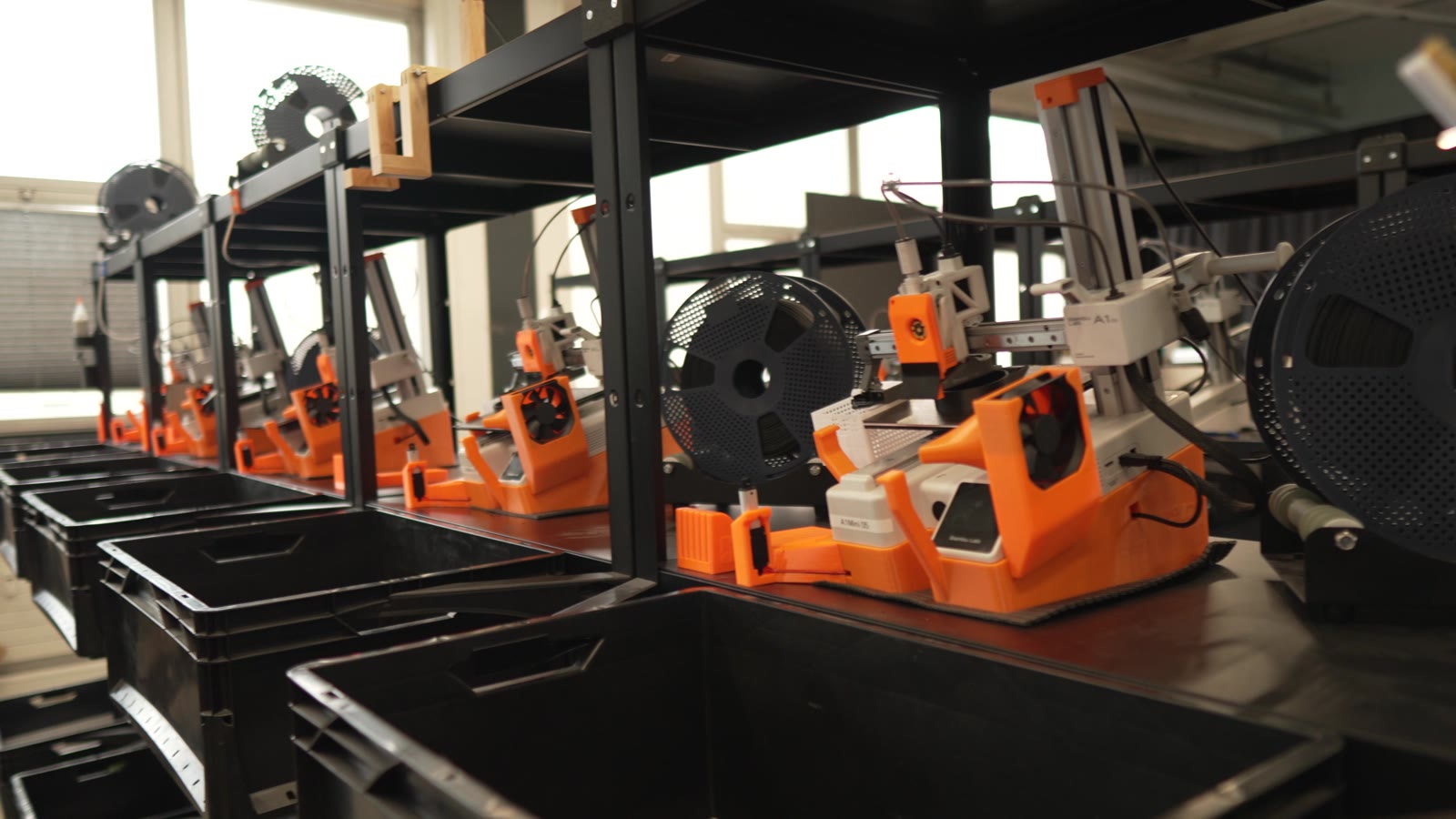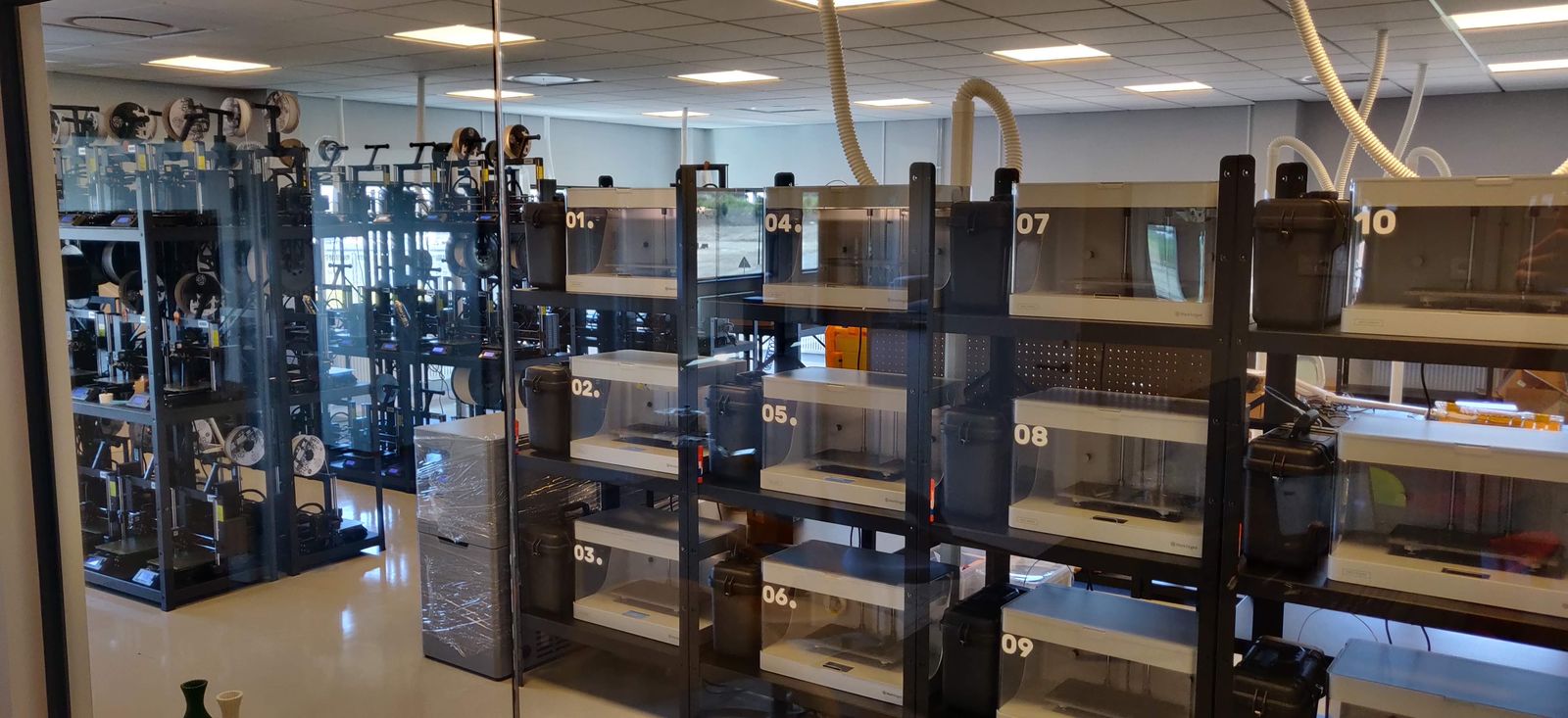
lostboyslab was one of the first big, well-known 3D print farms. But for founder Stefan Larsson, the printers were never the point. He runs the place less like a factory and more like a think tank for a single question: how should manufacturing actually work in a circular age - recycled materials, made locally, with a record of where everything came from.
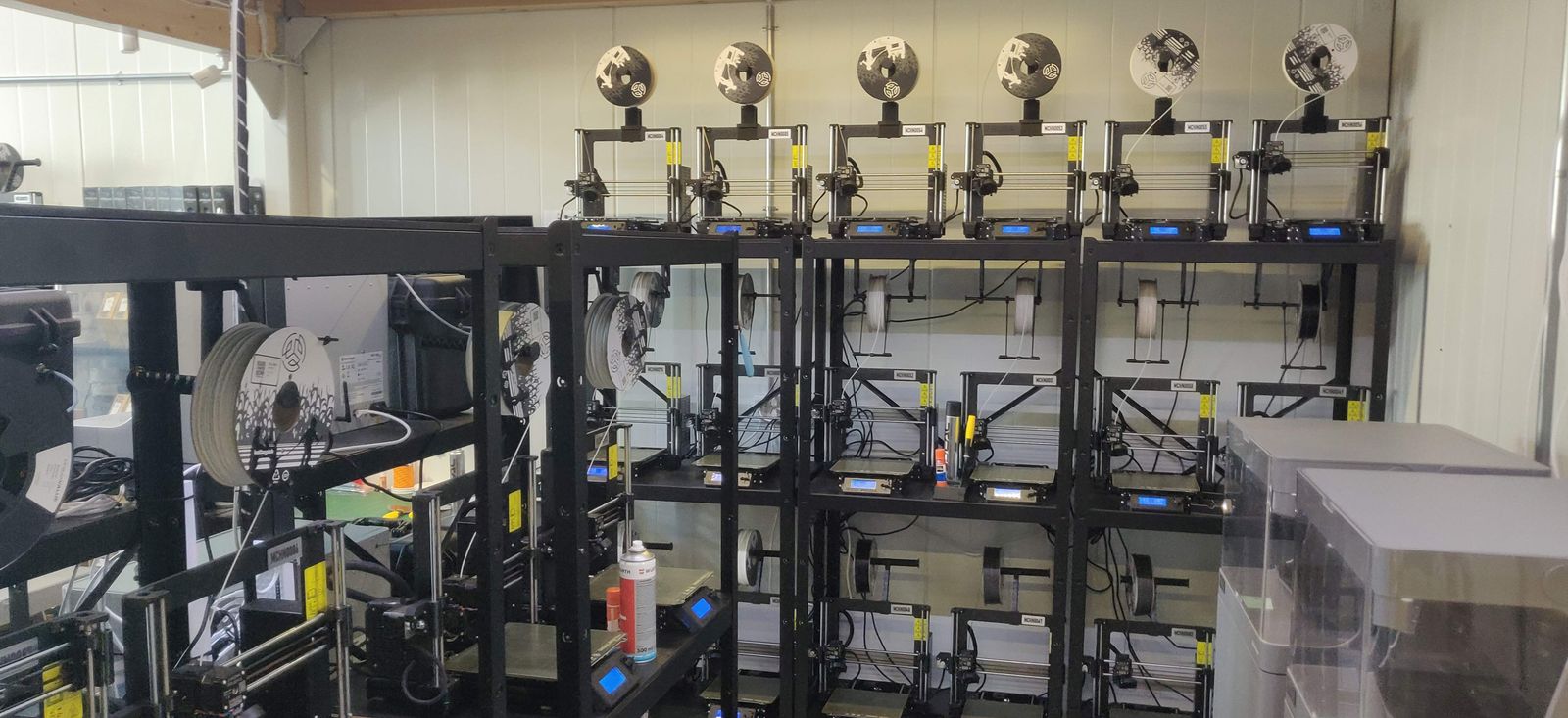
A think tank, not a volume shop#
That posture shows in how they work - many machine brands, many materials, many countries, and a willingness to learn the hard way.
lostboyslab has always been more of a think tank than a factory. We didn't want to just print parts. We wanted to figure out how manufacturing should actually work in a circular age.
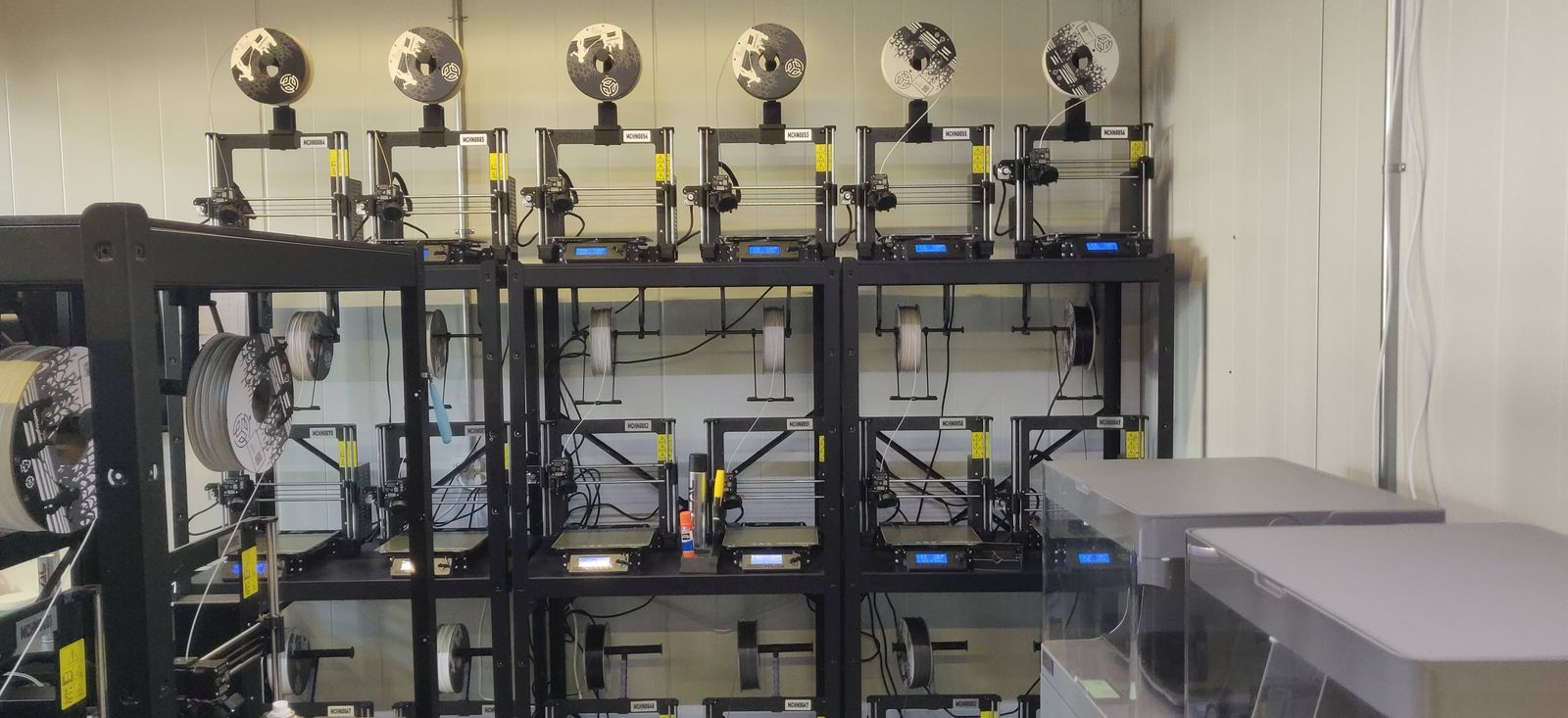
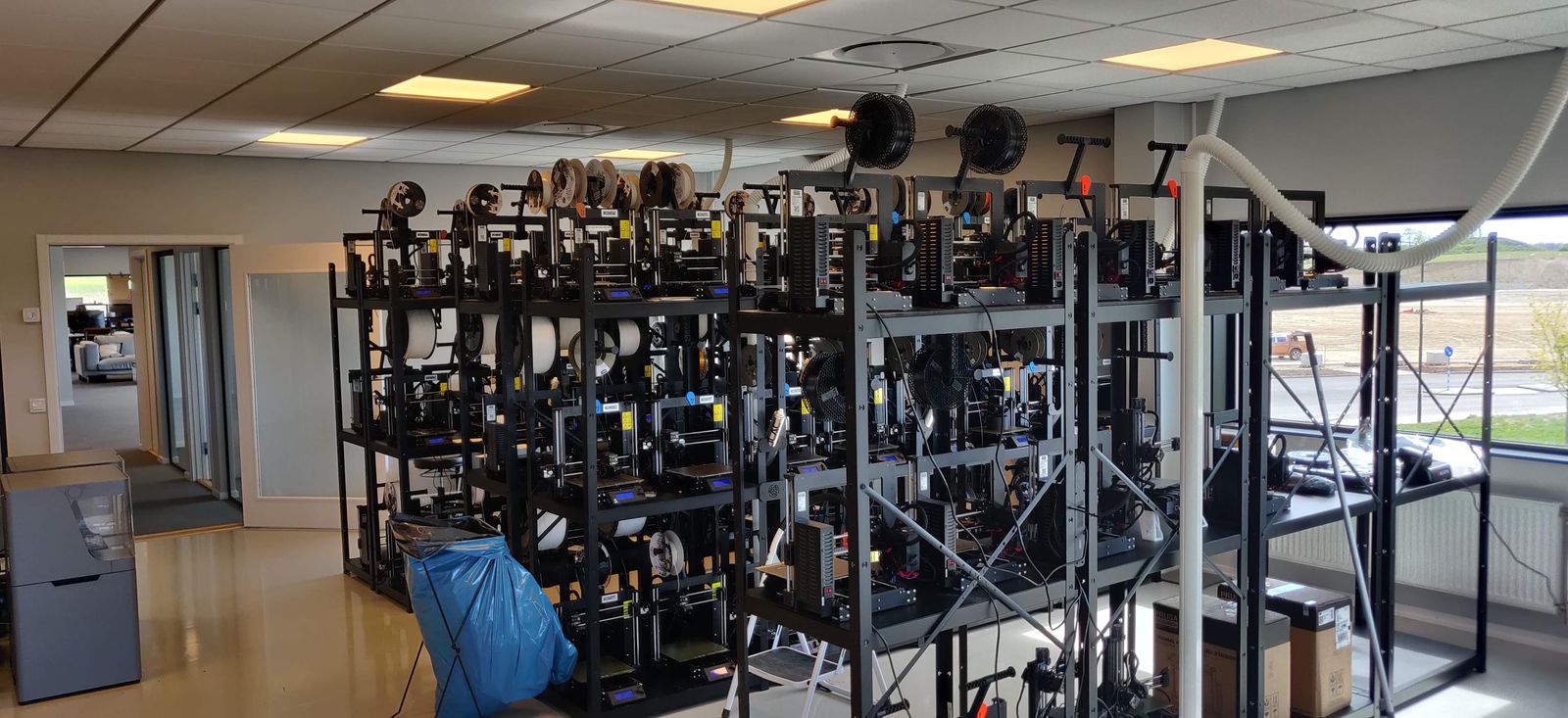
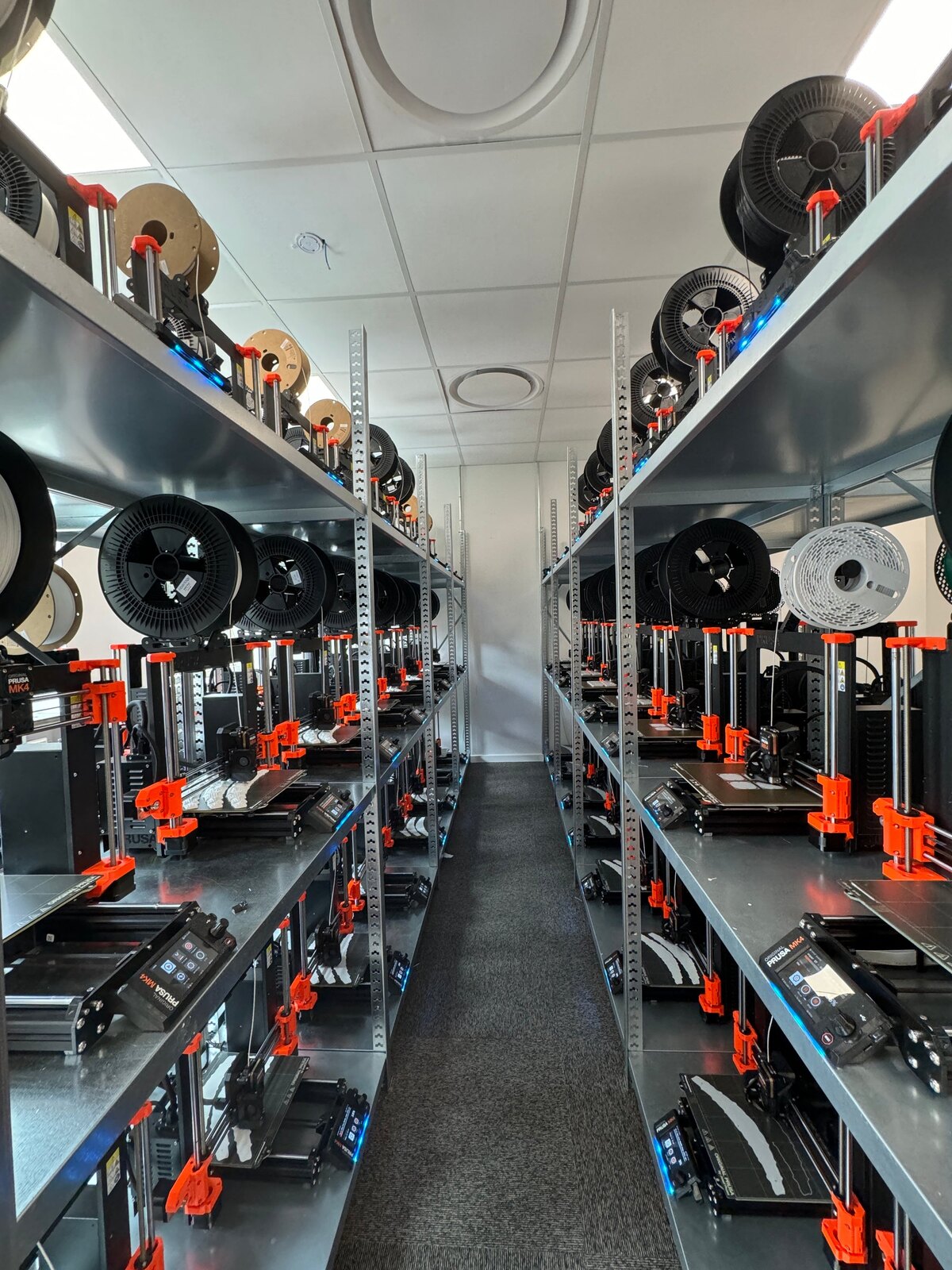
We test all of it. Prusa, Markforged, Voron, Modix. Our own recycled PLA and PETG, Addnite, Reflow. Printing in the heat of a US summer behaves nothing like a humid day in Sweden, and you only learn that by doing it.
What a circular farm makes#
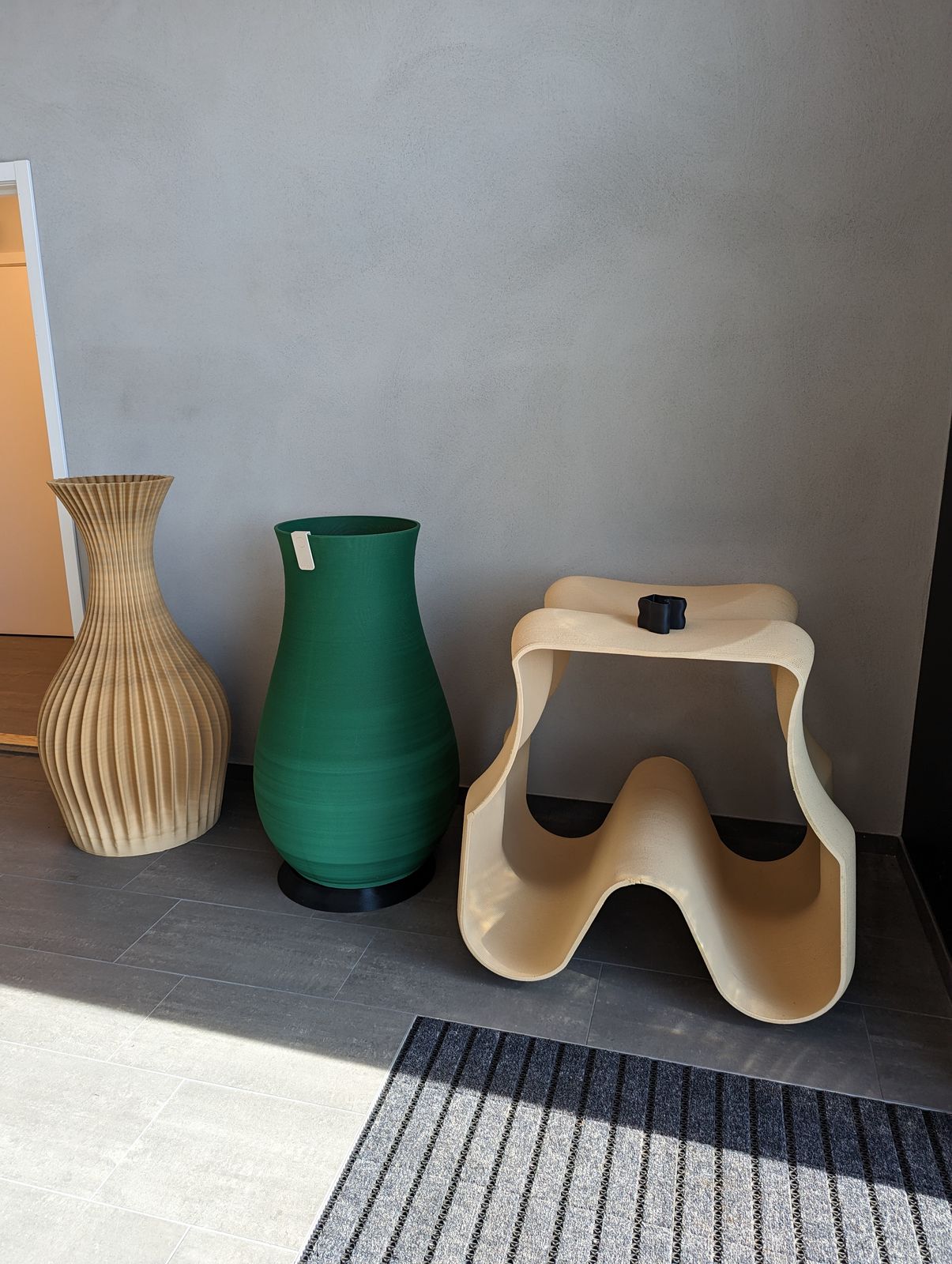
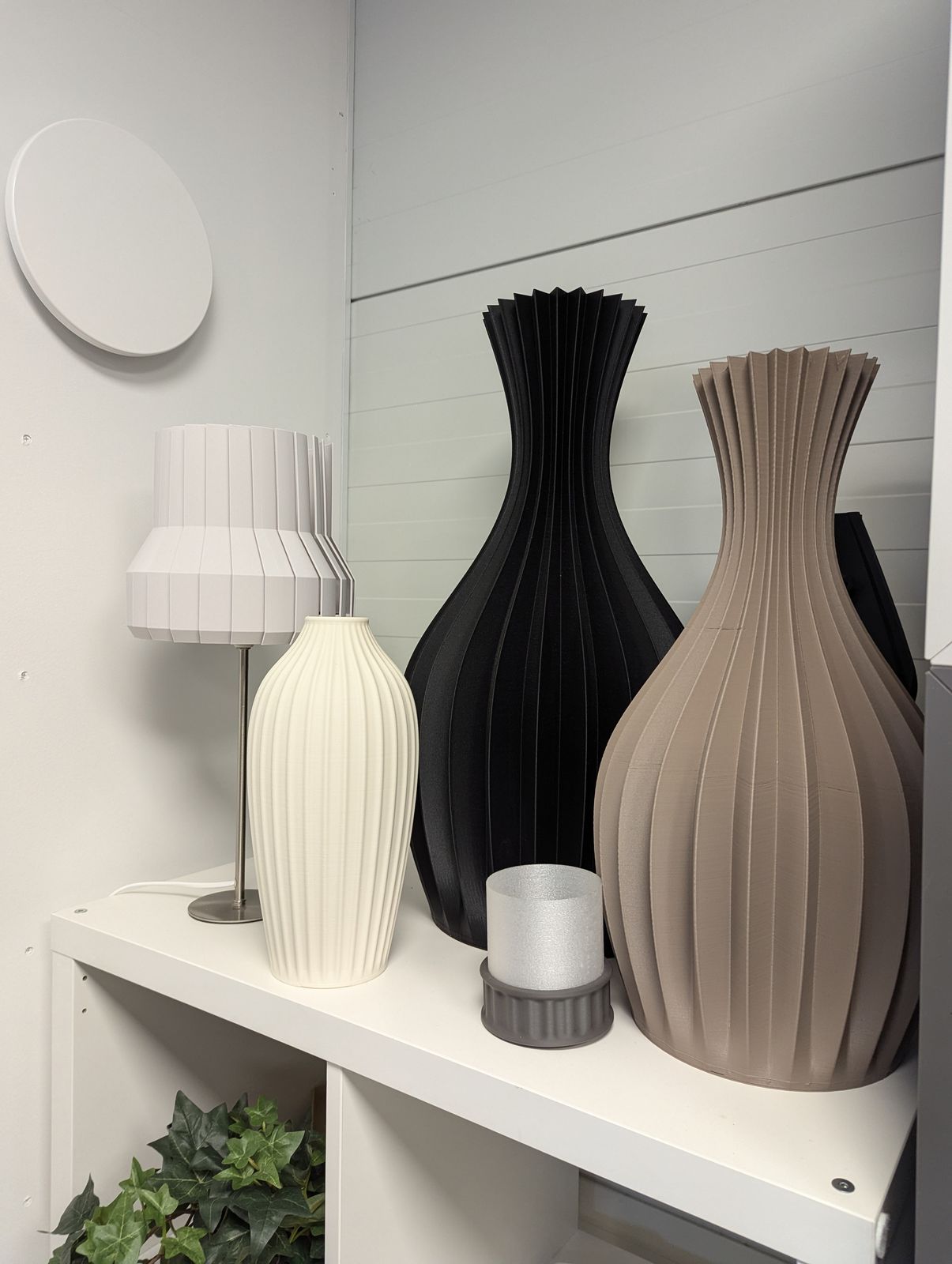
What ships ranges well past brackets and prototypes. The Style Collection turns out stylish Scandinavian home decor - fluted vases, lamps, planters - and the farm makes bigger statement pieces too, including furniture printed in recycled wood pellets on The Industry's large-format Magnum machine.
The Infinite Acoustics speakers are pure design work - the cabinet shaped for the right sound, not just a printed shell.
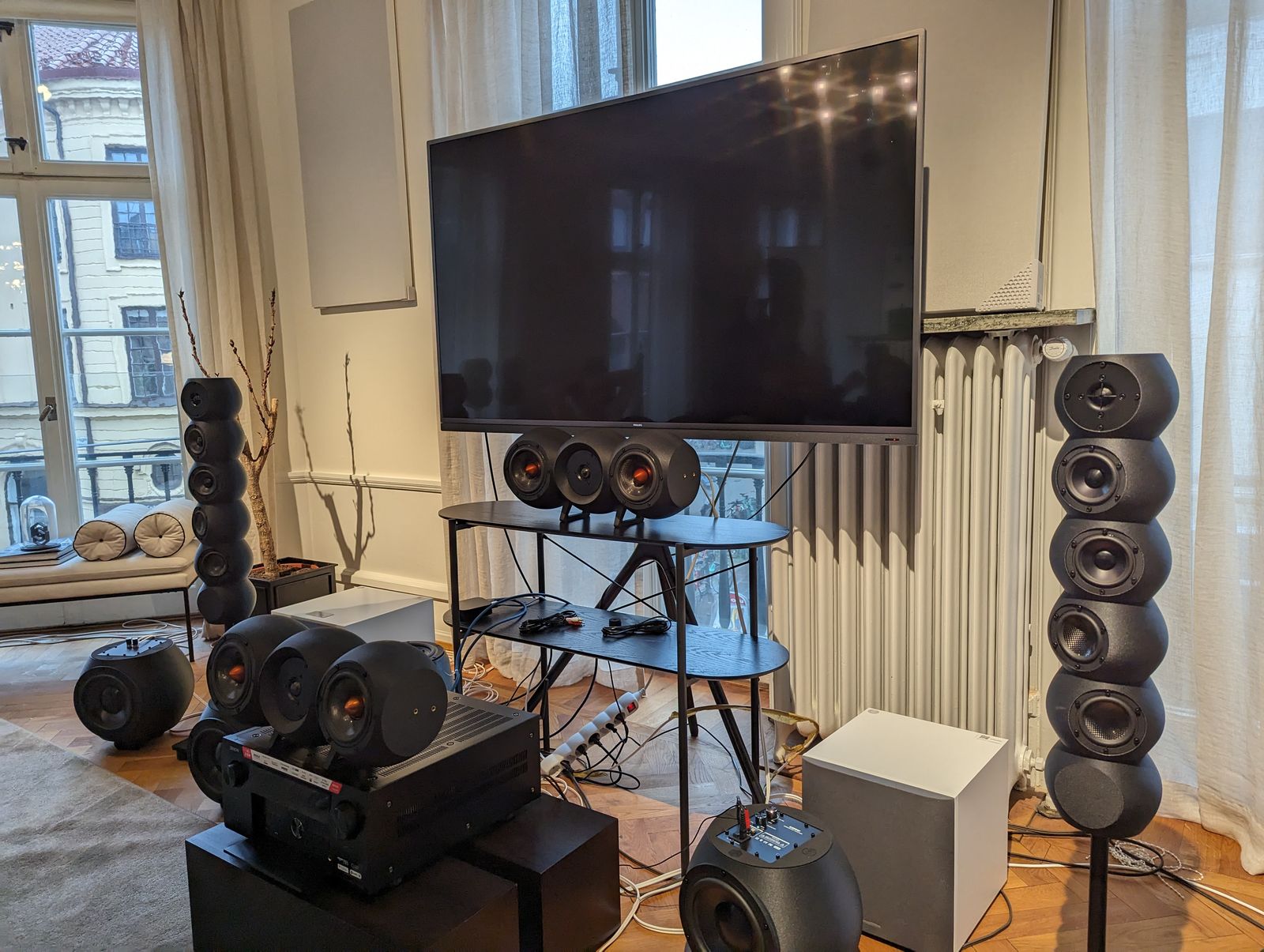
A product is not just the print. It's the case, the magnets, the velvet inside, the foam, the finish printed on top. That is what turns a printed part into something real.
Many of their designs are shared openly on Printables.
A digital product passport for every part#
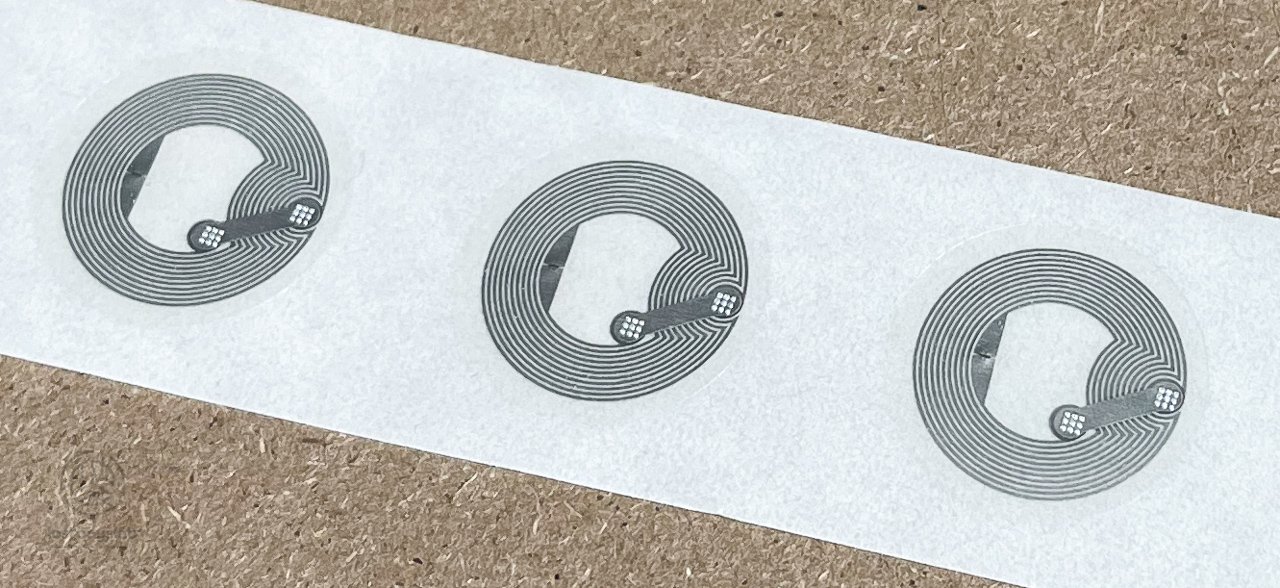
Every product gets a unique identity. An NFC tag embedded in the part lets anyone tap a phone and read its record - the material, the origin, the emissions - and follow it from the day it was printed to the day it is recycled and taken apart. Stefan started building these digital product passports years before they began turning into EU regulation.
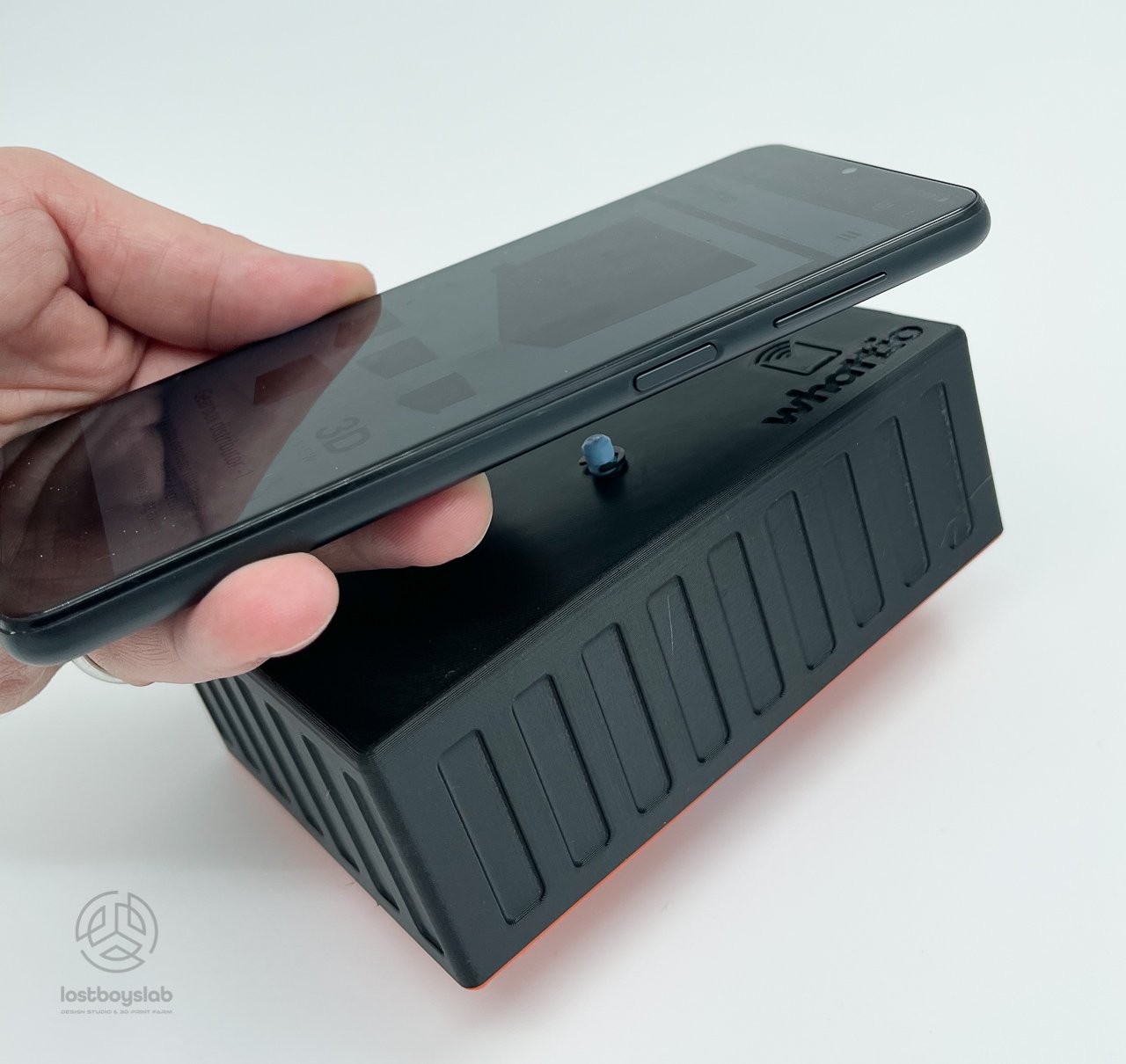
A passport should be a carrot, not a whip. It's how a customer reaches your support, your spare parts, the next life of the product. We started building them years before the regulation arrived.
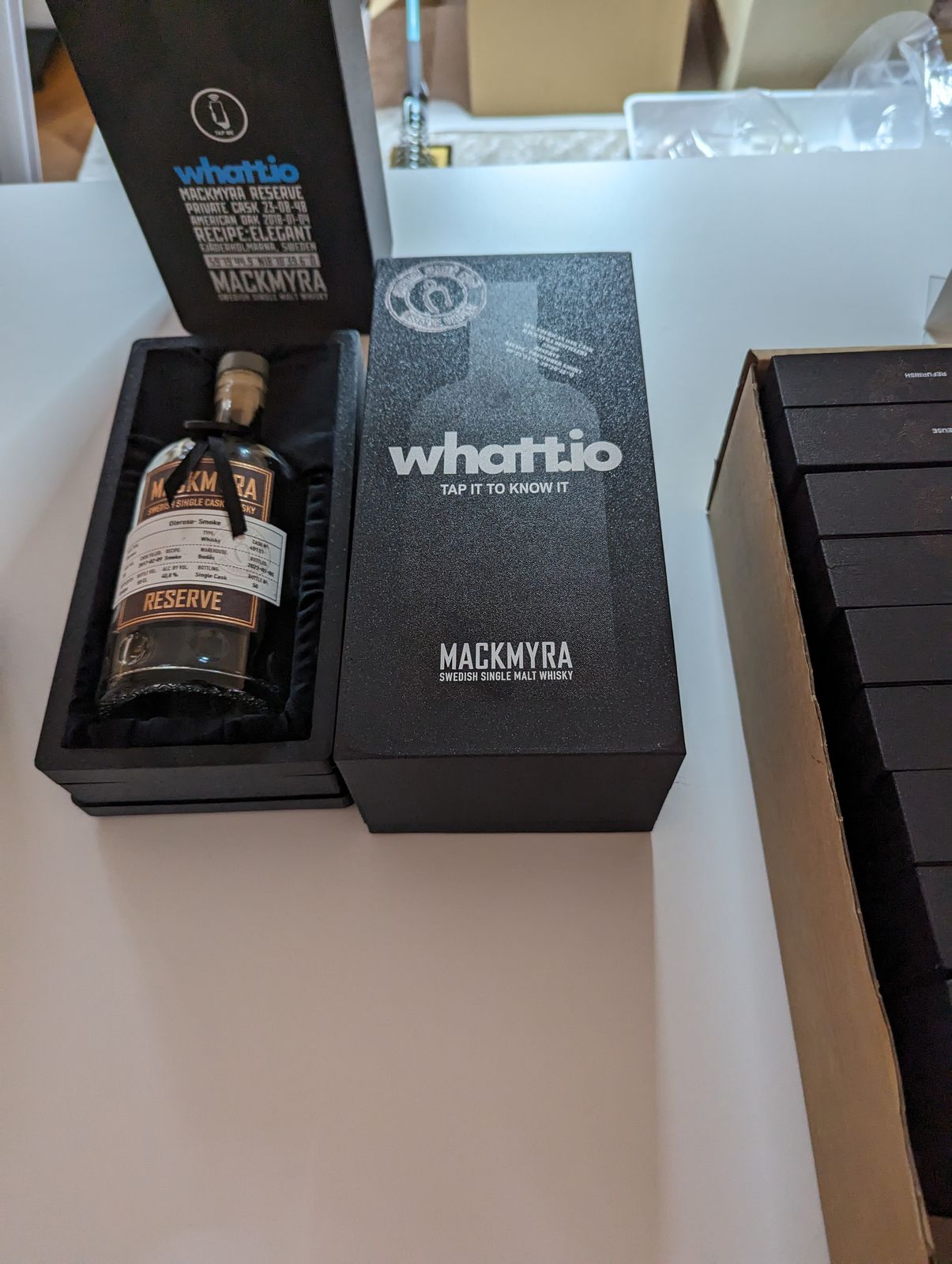
It gets personal, too. For a run of 57 Mackmyra Reserve whisky bottles, each numbered bottle got its own passport in a printed case - tap it and you can leave a tasting note, so the case becomes a guest book that belongs to that single bottle.
The Nordgreen Guardian watch box carries the same idea: a product designed to last, that can tell you exactly what it is made of.
Local, on demand, on three continents#
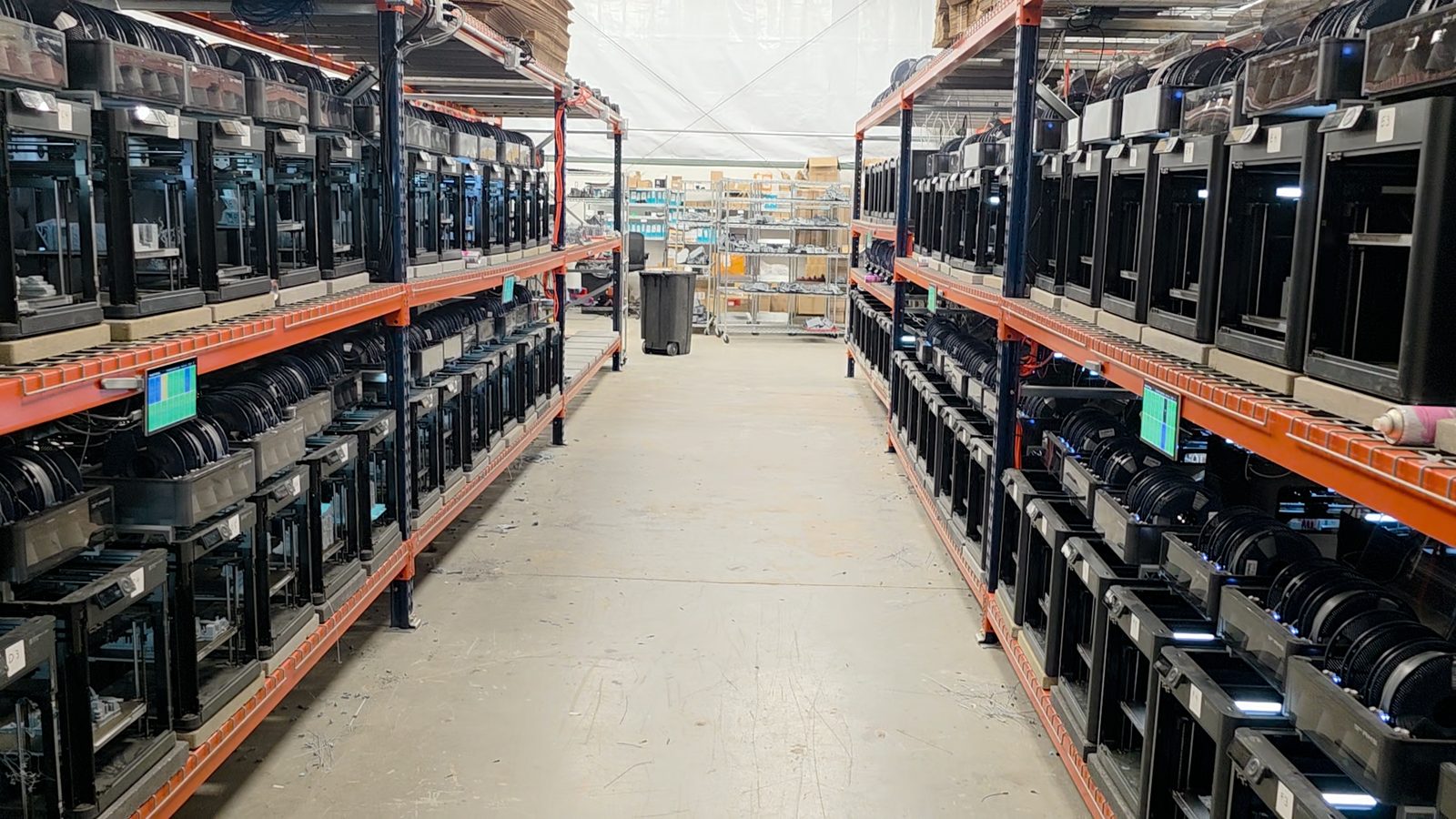
There are three farms now - Sweden, Dubai, and the US - so things get made near the customer instead of warehoused and shipped around the world. In Stefan's framing, that is the biggest lever on a product's footprint, because the transport, not the machine, is where most of the carbon hides.
You should only make what you need. Everything else stays a digital file and gets produced locally, on demand. It's like going back to the local farmer for your apples - we're simply back in that era, just with 3D printers.
Our carbon footprint is low, and the biggest part of it was never the machines or the material. It's the transport in between. So we build the farm next to the customer.
Where SimplyPrint comes in: running three farms as one#
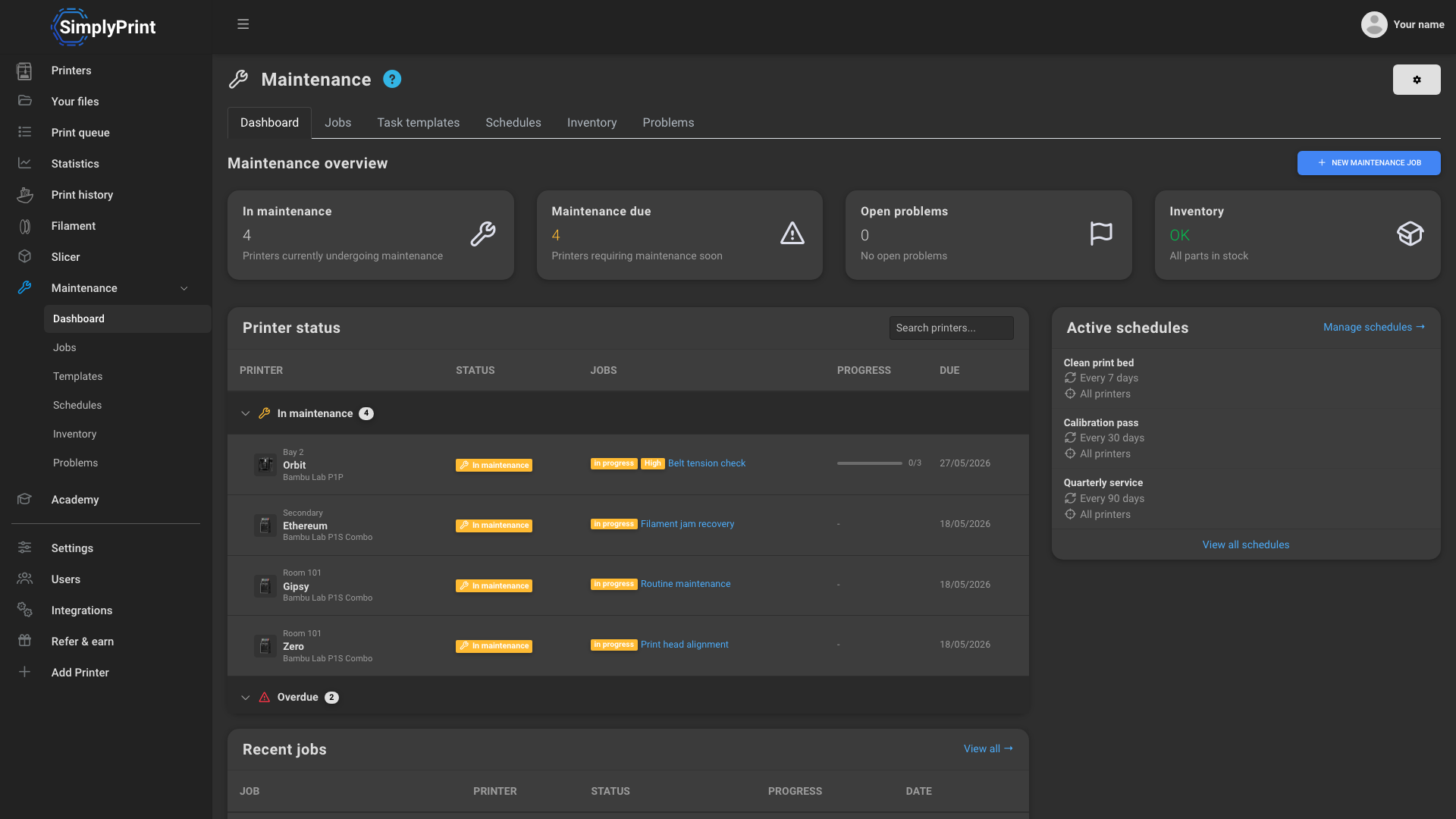
lostboyslab has used SimplyPrint since Stefan first met the team at the AM Summit in Denmark in 2020 - we travelled up to the Malmo farm soon after - and what they needed to track materials helped shape the Filament Manager itself.
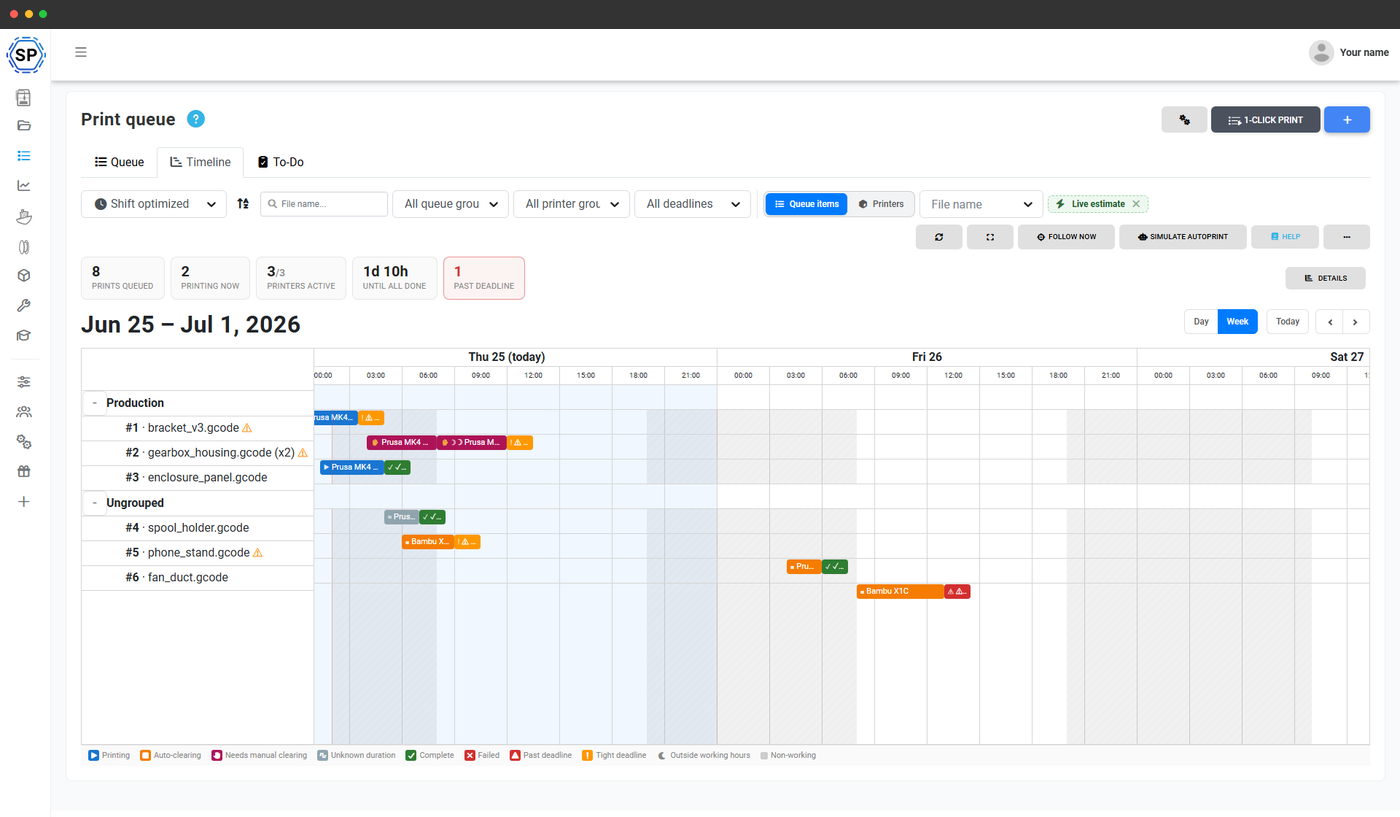
Each farm is set up as its own location - its own print queue, its own filament stock - so Stefan can oversee Sweden, Dubai and the US from one account, watch what every printer is doing, and start a job overseas without leaving Malmo.
Each farm is its own setup in SimplyPrint - its own queue, its own filament stock. I can switch between Sweden, Dubai and the US, see what every printer is doing, and start a job in the Dubai farm while I'm sitting in Sweden.
The Filament Manager is still the backbone. With an NFC tag on every spool, the farm knows the exact spool behind every part - not just the type of material.
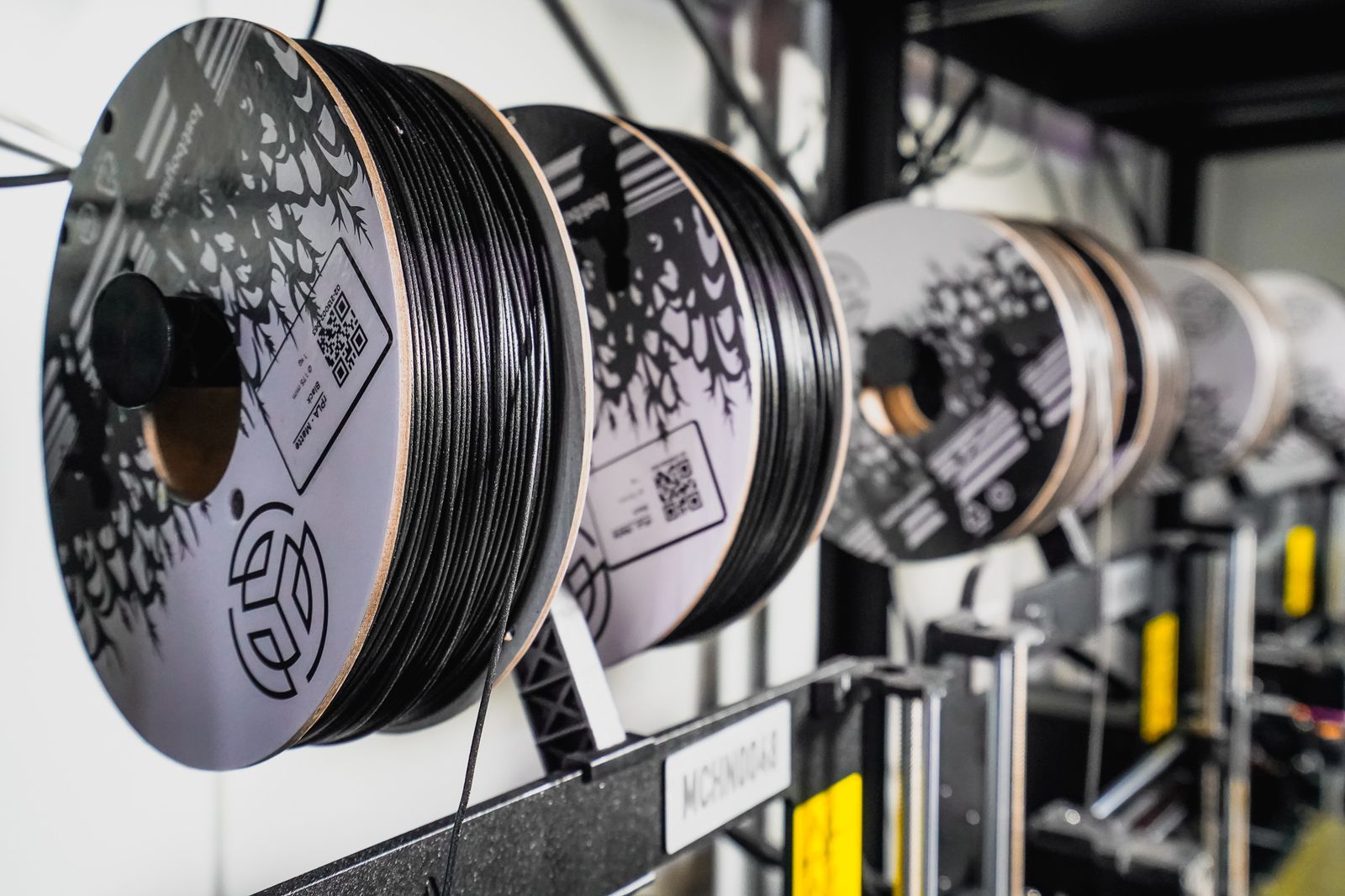
Without an NFC tag on every spool, across roughly a hundred printers on three continents, traceability is just a slogan. SimplyPrint is how we make it true.
And because they print in costly, self-produced recycled material, catching a failure early matters. Stefan leans on SimplyPrint's AI failure detection to stop a bad print before it wastes a whole spool of it.
When you print in your own recycled material, a failed print is expensive - the material and the hours both. The AI catches it early, and across a hundred printers that adds up to real money.
Where it's going#
We're building the blueprint for local, circular manufacturing - fully traceable production, made where it's needed. The print farm was where we proved it could work.
TL;DR#
lostboyslab, founded by Swedish circular-manufacturing entrepreneur Stefan Larsson, is one of the first big print farms - and it runs as a circular-manufacturing think tank rather than a volume shop: recycled materials, CO2 tracking, local on-demand production across three continents (Sweden, Dubai, the US), and a digital product passport for every part. It has used SimplyPrint since 2020 to run all three farms as separate locations from one account, with the Filament Manager tracking the exact spool behind each print and AI failure detection protecting costly self-made recycled material.