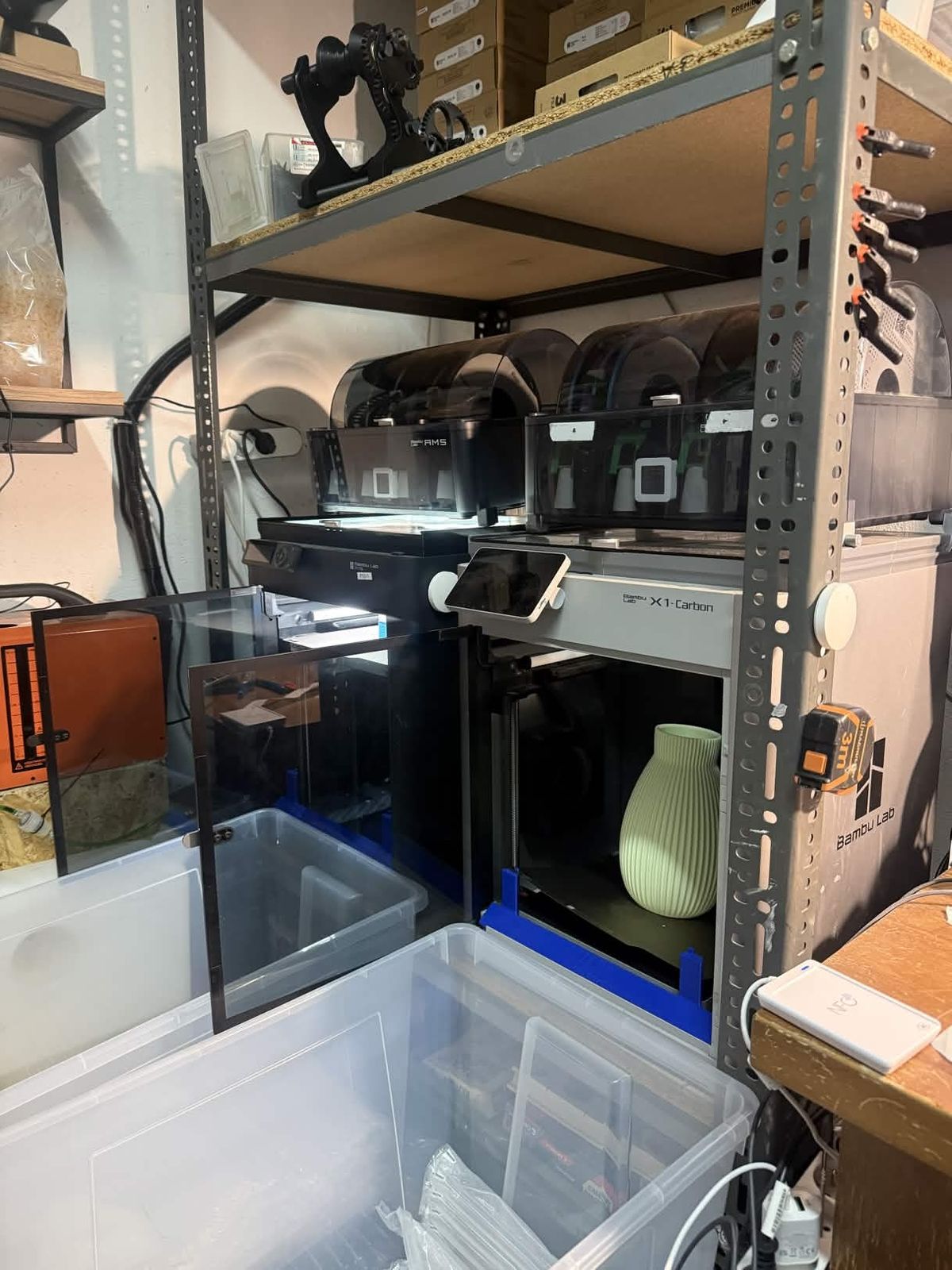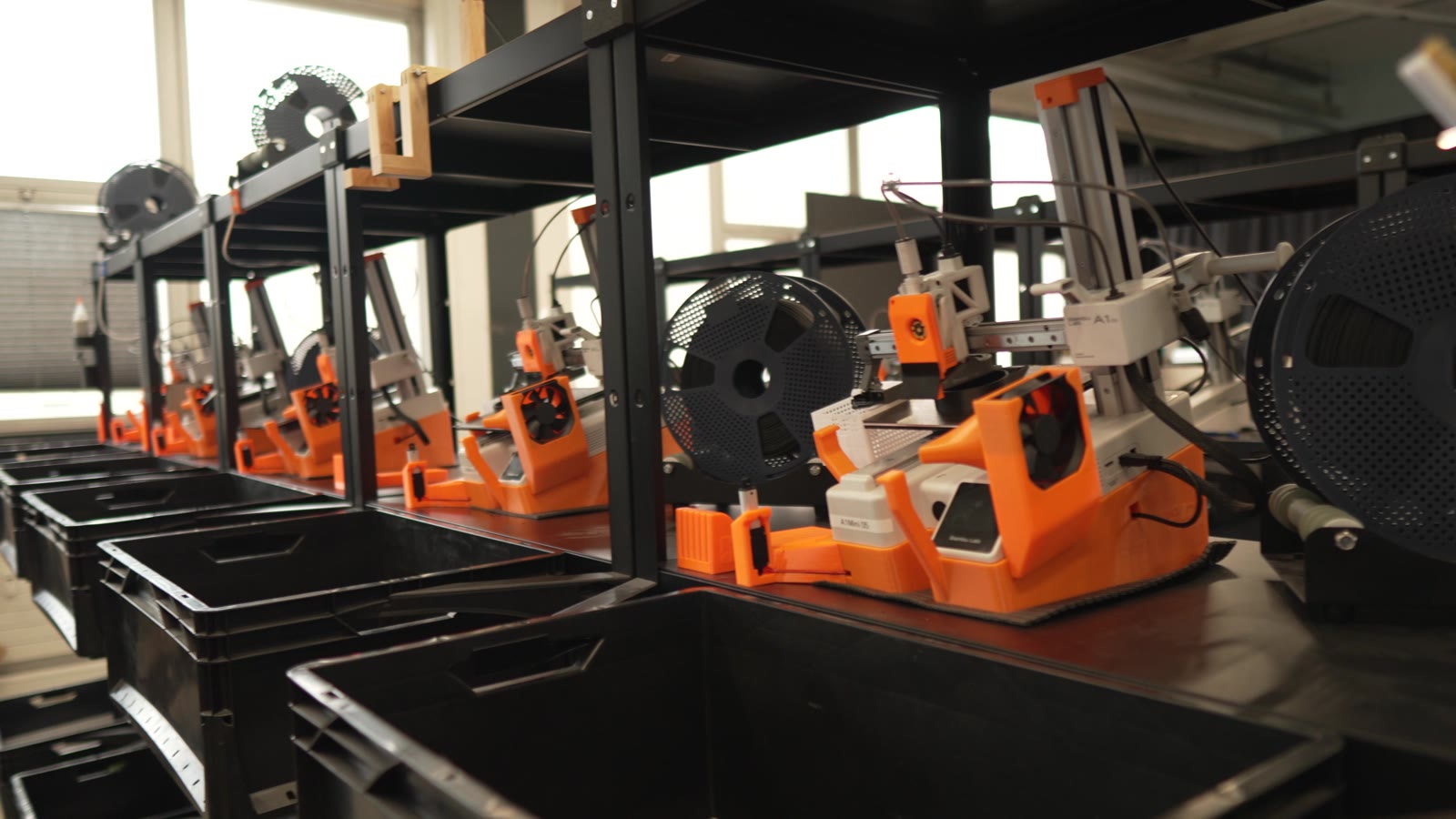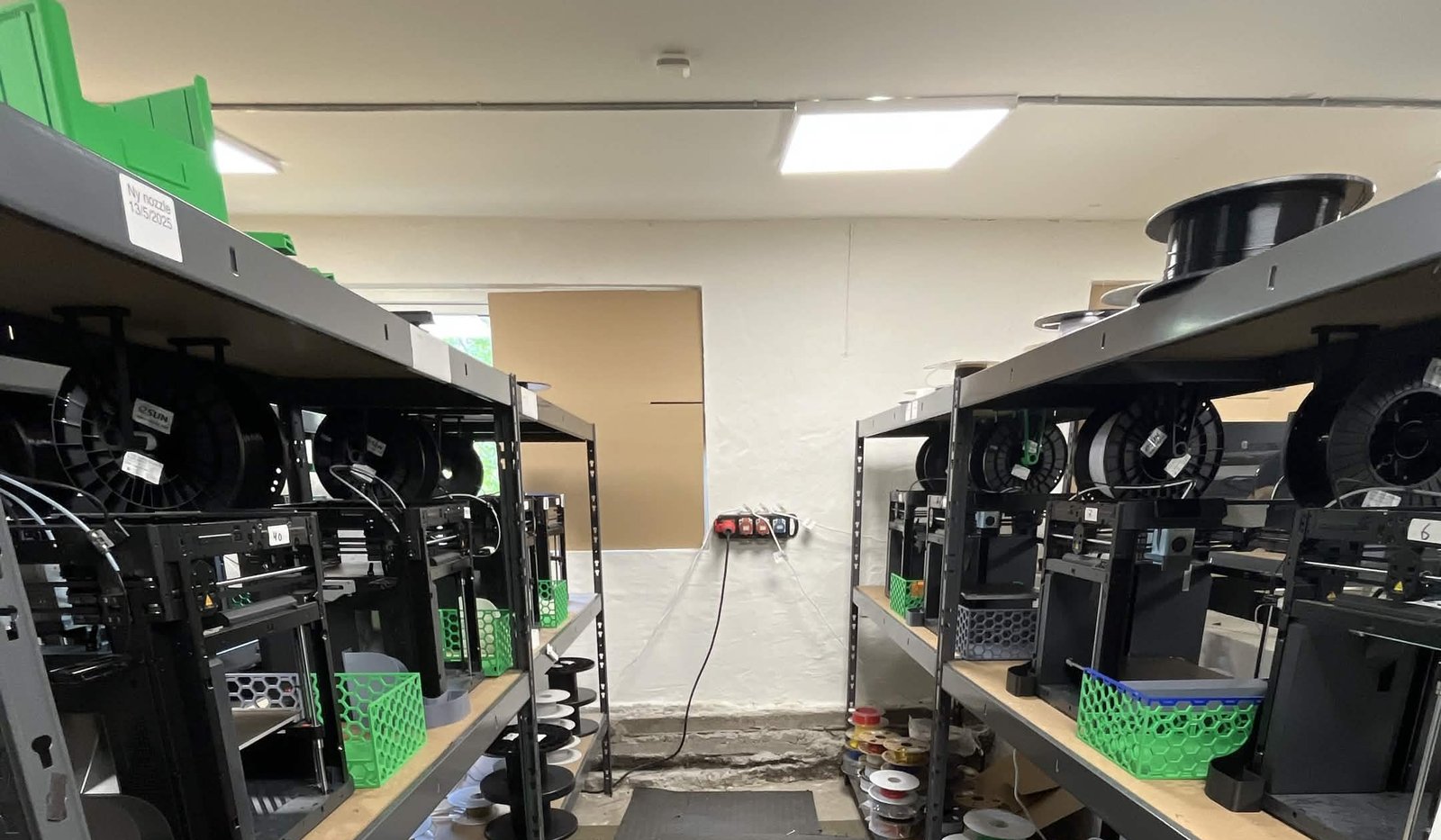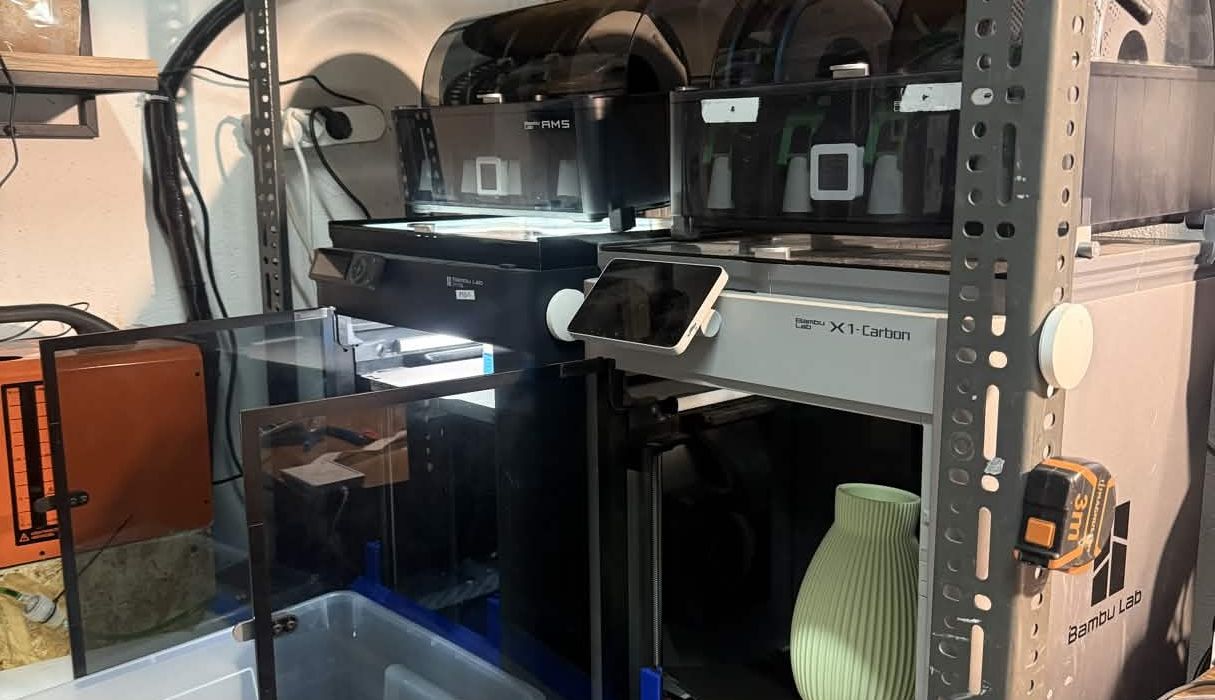
3D Forge is a two-person family print farm in Poland - Patryk runs the machines day to day, with his wife as his business partner. It started with a single printer and a simple itch: to make useful things with it, not just print for fun. There was no business plan, because Patryk did not think 3D printing would sit still long enough for one to survive.
There was never a set business plan. 3D printing changes too quickly, with materials, machines, markets, and trends always shifting. 3D Forge grew by trying new ideas, learning from each order, and getting better after setbacks. "Figuring it out as you go" means staying flexible, not being disorganized.

What stuck and what flopped#
He has tried a lot of directions - practical accessories, collectibles, decorative pieces, more experimental home decor. The lesson was less about what prints well and more about what a customer instantly understands.
Figurines and small collectible prints found their audience because people understand them right away. Practical accessories can be useful, but they're often harder to build a brand around. Customers might buy one, solve a problem, and not return. The real lesson: a niche is about what people understand and want, not just what can be printed.
Presentation changes the value of the same print#
His biggest surprise was that the print stayed identical while its perceived worth did not. That reframed what "a good product" even means.
A vase can be just a vase. But when it's photographed well, shown in a real room, described as part of a home decor setup, and offered in good colors, people see it differently. The print time and material stay the same, but the value people see changes completely.

Not every technically good print is a good product. In 3D printing it's easy to get caught up in clever design, good tolerances, a nice fit. But customers care if they need it, if they understand it, and if it looks worth buying.
Sustainable, not scaling at all costs#
This is where 3D Forge deliberately parts ways with the grow-at-any-price story. For a small two-person shop, scale without strong basics just multiplies the chaos.
Scaling at all costs might sound impressive, but in a small 3D printing business, it can quickly become a trap. More printers, more products, more orders, more problems. If the basics aren't strong, scaling just makes the chaos worse. For 3D Forge, sustainability means moving at a steady pace. Test, learn, improve, and only scale what's really worth it.
The market is the best product manager#
So how does an idea become a product? It runs a gauntlet: does it explain itself, can it be made and shipped profitably, and then the only test that counts.
A listing is a very honest test. Customers either click, ask questions, buy, or ignore it. That gives better feedback than opinions from friends, because people vote with their money. In a small 3D printing business, the market is the best product manager.
Without software, the operator becomes the system#
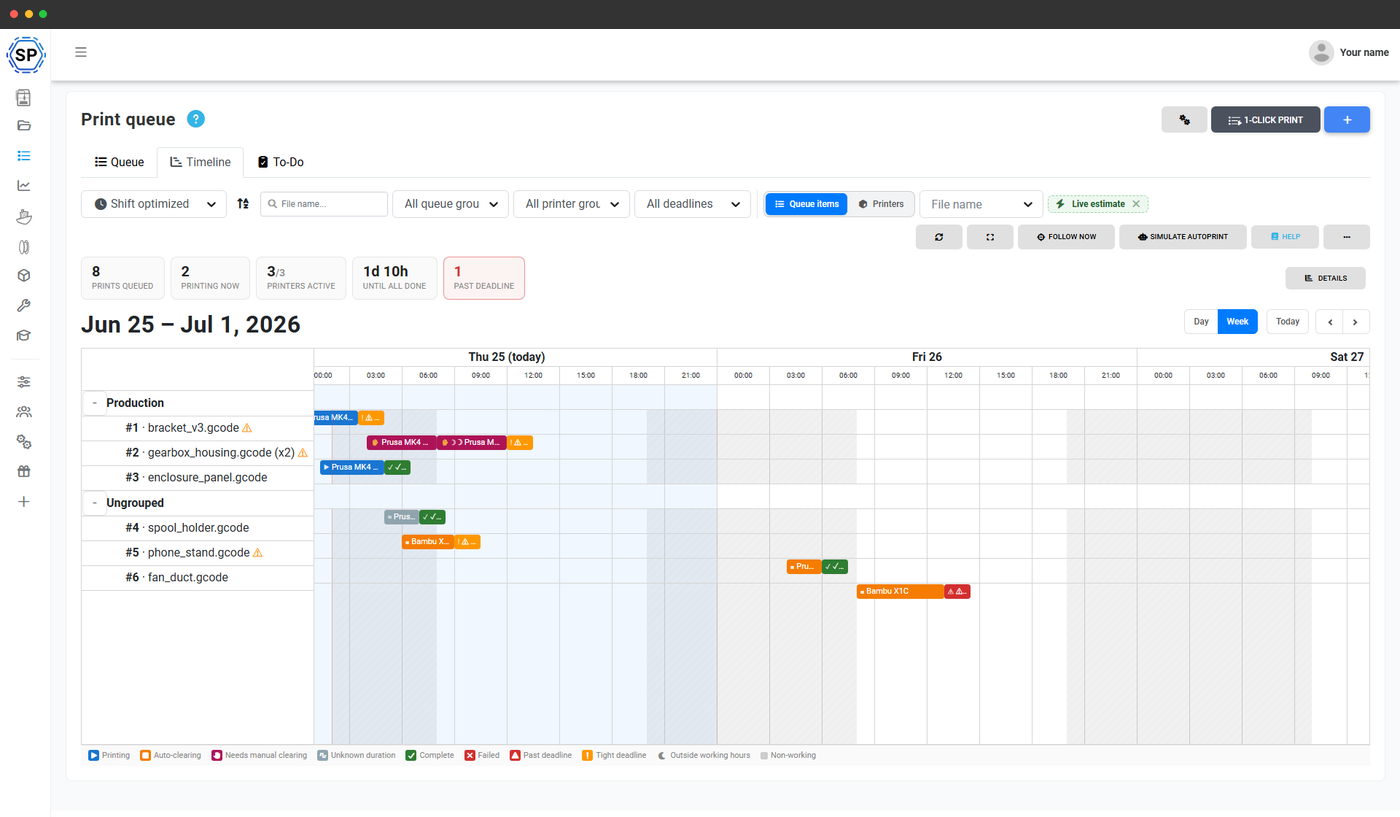
With one printer, you can hold the whole operation in your head. At fifteen, running a constant stream of experiments, the problem stops being printing and becomes knowing: what's printing, where, what's finished, what failed, what's next. That is the gap SimplyPrint fills - and it is why managing the whole farm as one system is the thing Patryk would least want to give up.
The most valuable thing day to day is visibility. Being able to see what's happening across the printers without walking around and checking everything by hand saves a lot of time. What I'd hate to lose most is the ability to manage the farm as one system instead of separate printers. Once you get used to that, going back to manual control feels like a step backward.
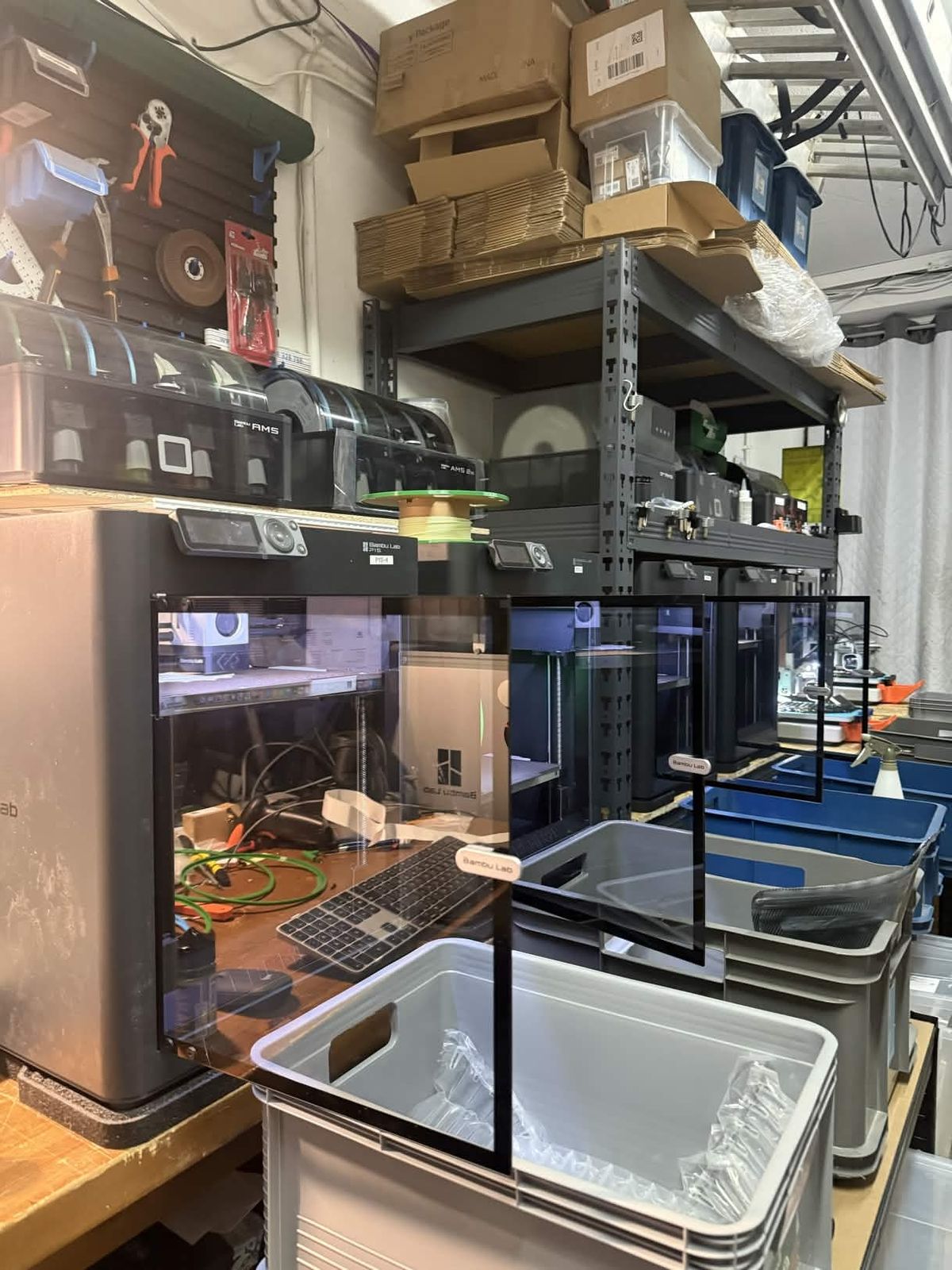
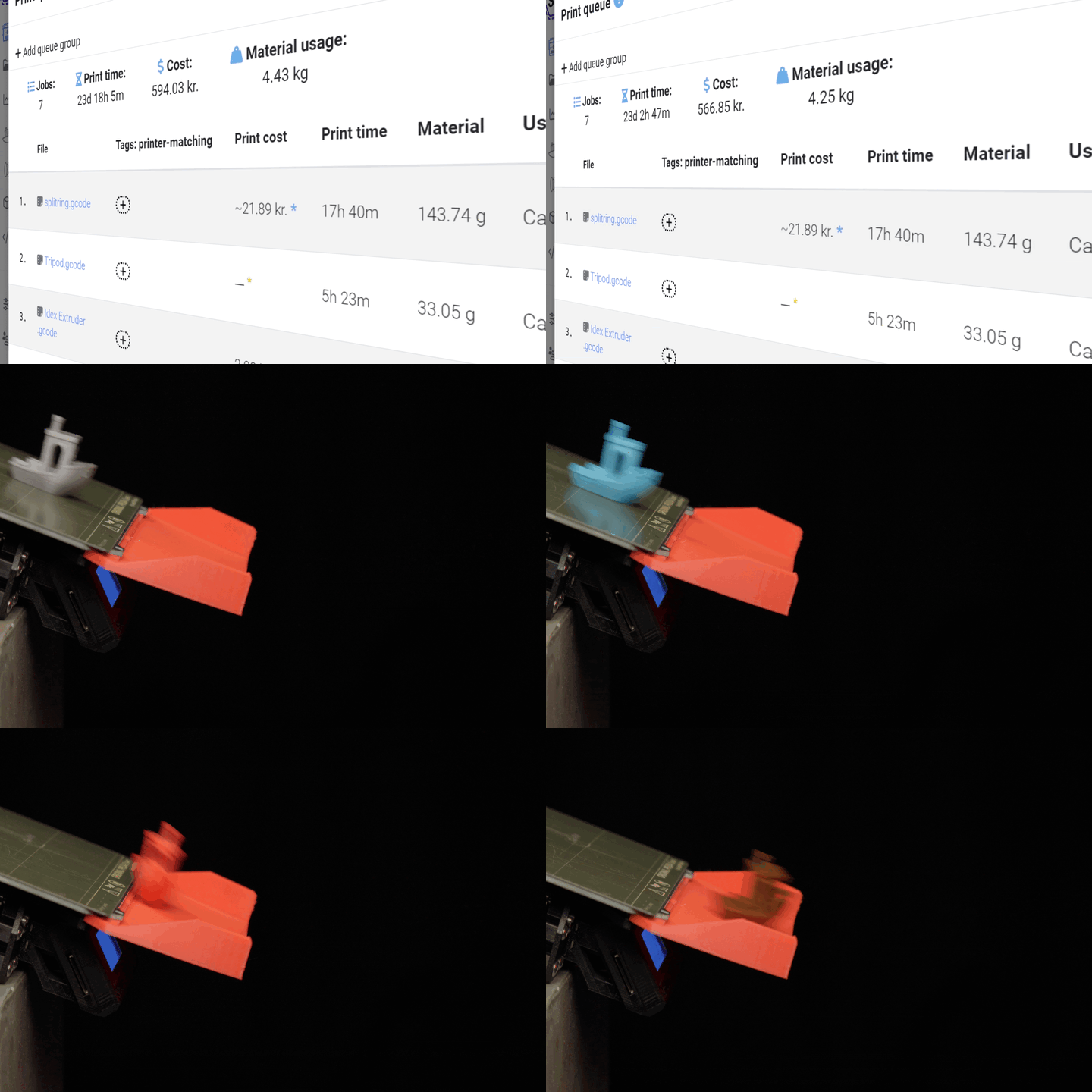
That hands-off instinct runs all the way to the hardware. 3D Forge pairs SimplyPrint with FarmLoop through AutoPrint: when a print finishes, the bed is cleared and the next job starts on its own, so the farm keeps moving even when Patryk is not standing over it. For a two-person shop, that automation is how he gets more out of fifteen printers without adding more hands - it is the whole "sustainable, not scale at all costs" idea in practice.
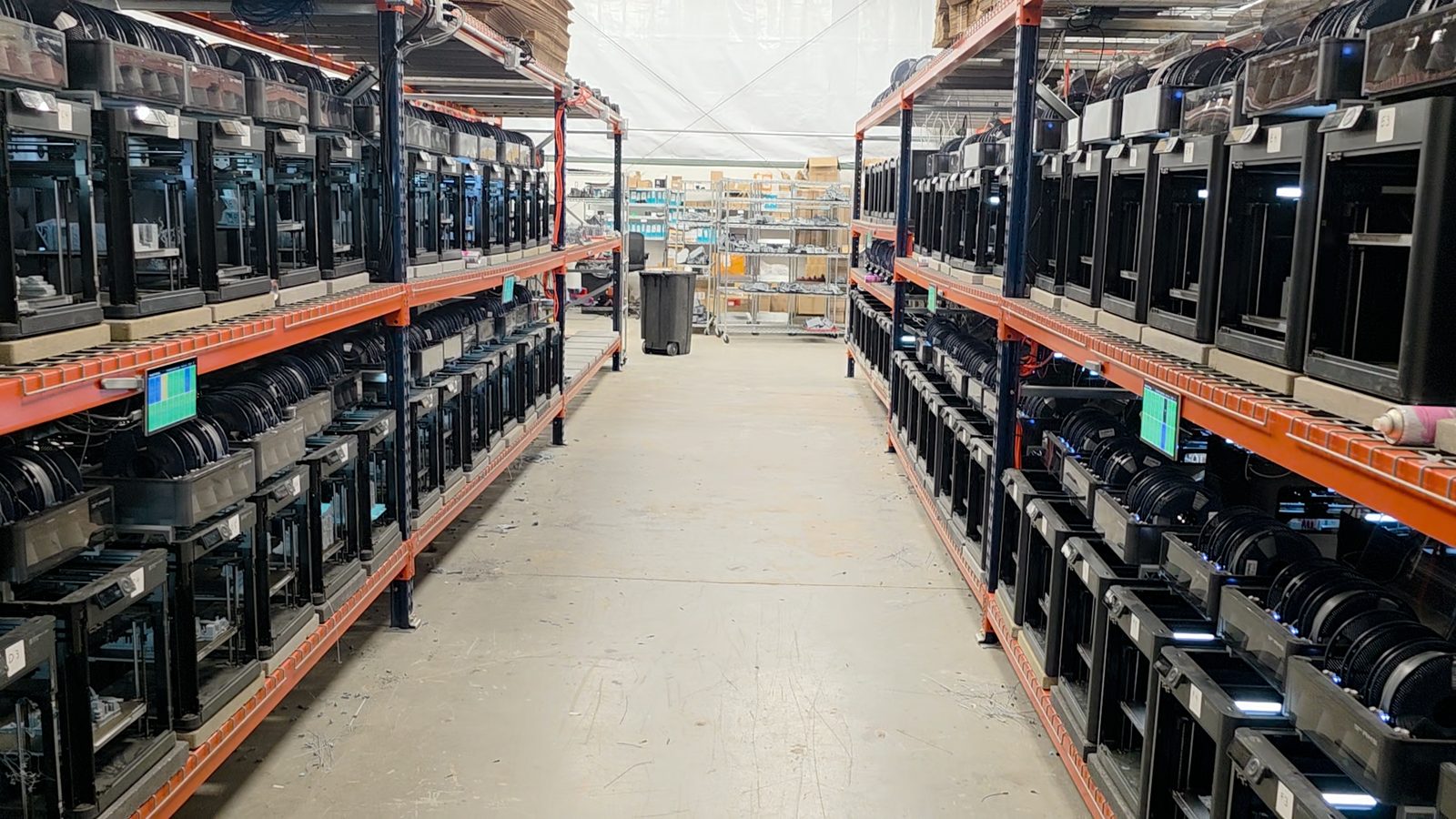
It also pulls a mixed fleet together. He runs different printer models, and standardising them into one workflow is half the value.
When you use different printer models, each one can have its own interface, behavior, settings, and quirks. SimplyPrint helps bring them into a single, more consistent workflow. Instead of treating every printer as a separate island, the farm can be managed more like one production system.
Because the business is always changing what it makes, the print queue is what lets him pivot a whole run without losing the thread - vases one day, lamp parts the next. And the tinkerer in him is eyeing the API: a way to wire print management into orders, stock and planning so the system grows with the business, without becoming a huge operation.
My background is technical, so I naturally think about automation, data, and connecting systems. The goal isn't automation for its own sake. It's to remove the small manual steps that repeat every day. Even if everything isn't fully automated from the start, having an API means the system can grow with the business.
His pitch to another small farm#
A small farm can get messy very quickly. It's not because the owner is disorganized. It's because 3D printing has so many moving parts: files, printers, materials, failures, orders, queues, maintenance, and new product tests. SimplyPrint helps turn that mess into a workflow. If your business depends on experiments, you need to spend your energy choosing the right experiments, not manually checking printers all day.
TL;DR#
3D Forge is a small family print farm in Poland that grew from one printer to about 15, mostly Bambu Lab, making home decor and giftable prints - vases, table lamps, figurines. Patryk builds it by experimenting rather than scaling at all costs: test a product in the market, keep what people understand and want, drop the rest. SimplyPrint - with FarmLoop automation clearing beds and starting the next job - gives him the visibility to run the whole fleet as one system instead of separate islands, switch products run to run, and grow the workflow into the rest of the business through the API.