Hvad det er, og hvorfor det findes
Open Filament Database er et open source-katalog over filament til 3D-print, der vedligeholdes af fællesskabet. Det hostes af Open Filament Collective med SimplyPrint som driftsansvarlig. Det er et selvstændigt projekt med flere partnere og mange bidragydere, ikke noget ét firma ejer. Dataene er MIT-licenserede, så de må bruges, videredistribueres og indlejres frit, også kommercielt.
Filamentdataene var spredt overalt
Filamentdata levede tidligere i brudstykker. Slicere leverede en del af profilerne, farveprøvesider sporede en anden del, og producenters datablade var spredt over hundredvis af produktsider. Ingen enkelt åben kilde samlede det hele, mærket, materialet, farven og hex-koden, spolestørrelsen, butikken du køber det i, og de slicerindstillinger, der reelt binder en spole til dens printprofil. Open Filament Database samler det fragmenterede billede ét sted, som alle kan læse, genbruge og bygge videre på.
Databasen i tal
Aktuelle tal, der genberegnes automatisk hver dag, efterhånden som bidragene kommer ind.
Hvad databasen faktisk indeholder
Dataene er struktureret efter den måde, du faktisk køber og bruger filament på. Hvert mærke har navn, logo og website. Hvert materiale dækker en type som PLA, PETG, ABS eller TPU. Hvert filament er en produktlinje for en kombination af mærke og materiale, og hver variant tilføjer et bestemt farvenavn og en hex-kode samt massefylde, diameter og printtemperaturer. Hver størrelse angiver en spolevægt eller filamentlængde og linker til de butikker og købslinks, hvor det faktisk kan købes. Hele kæden, fra mærke til materiale til farve til størrelse til butik, gør det muligt at knytte en enkelt spole entydigt til dens slicerprofil.
Bidrag på minutter, ingen kode nødvendig
Du behøver ikke at vide, hvordan man koder, for at forbedre databasen. Log ind i webeditoren med GitHub eller SimplyPrint, og tilføj eller rediger derefter mærker, filamenter, farver, størrelser, butikker og købslinks direkte i din browser. Dine ændringer valideres og gennemgås af vedligeholderne og går live ved næste daglige genopbygning, når de er godkendt. De vises som forudindstillinger i SimplyPrint og tredjepartssoftware, der bruger databasen. Avancerede brugere kan i stedet indsende GitHub-pull requests.
Åbn webeditorenÅben, MIT-licenseret og forvaltet, ikke ejet
Dette er en helt open source, MIT-licenseret filamentdatabase. Den hostes af Open Filament Collective og driftsforvaltes af SimplyPrint, men det er et fælles projekt. Flere partnere og et stort fællesskab af bidragydere holder den præcis. MIT-licensen betyder, at du frit kan bruge dataene, videredistribuere dem og indlejre dem i dine egne produkter, også kommercielt, uden at bede om tilladelse.
Det driver SimplyPrint, og meget mere
Rigtige integrationer, ikke bare en statisk liste
Inde i SimplyPrint driver databasen filamentpresets: når du tilføjer en spole, søger du efter mærke, materiale og farve, og forbindelsen mellem den spole og dens slicerprofil kommer direkte fra disse data. Den bruges også af tredjepartsværktøjer og er tilpasset Prusas OpenPrintTag-økosystem, så de samme åbne data følger dit filament på tværs af den software, du allerede bruger.
Se SimplyPrints filamentstyring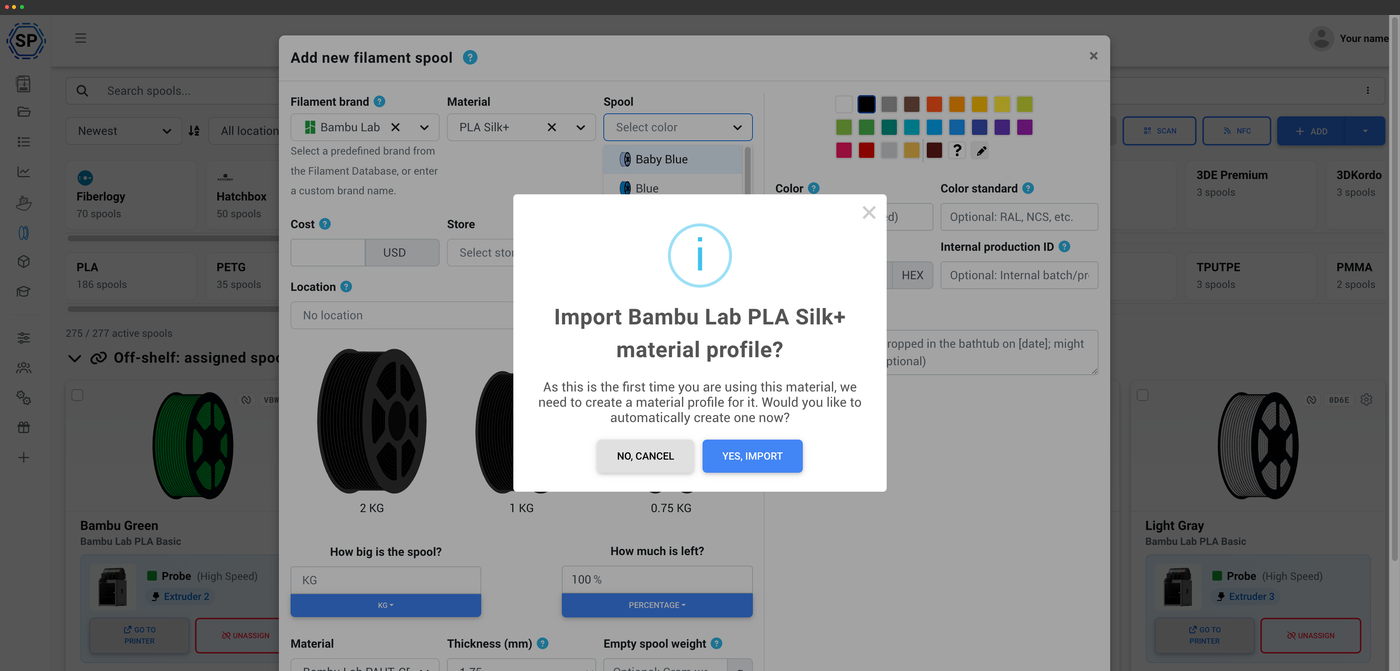
Også bygget til udviklere
Fordi dataene er åbne og MIT-licenserede, kan du hente dem direkte ind i din egen app, slicer, butik eller spoletracker. Der er en dokumenteret JSON-API og komplet dokumentation om datamodellen, og hvordan du bidrager. Ingen API-nøgler, ingen adgangsbegrænsninger, kun åbne filamentdata.
Læs API-dokumentationenOfte stillede spørgsmål
Hvad er Open Filament Database?
Er Open Filament Database gratis og open source?
Hvordan bidrager jeg med et filament?
Hvordan relaterer Open Filament Database sig til SimplyPrints filamentprofiler?
Kan jeg bruge API'en i min egen app?
Hvem driver Open Filament Database?
Hjælp med at opbygge den åbne filamentdatabase
Hvis et filament, du bruger, mangler eller er forældet, kan du rette det på et par minutter. Åbn webeditoren, lav din ændring, og den slår igennem for alle, i SimplyPrint og alle andre værktøjer bygget på databasen, ved næste daglige opdatering.
Bidrag