The best 3D printer for beginners in 2026 is the one that works on the first evening and keeps working. Ten years ago a first printer meant a weekend of assembly and tuning; today most printers level their own bed, calibrate themselves and print a first model the evening they arrive. That makes the choice less about specs and more about price, ease, multi-colour and how much freedom you want later. The same picks make the best home 3D printer, whether you are new to it or one of the hobbyists who already own three. Our picks below are ranked when you open the page, from what our printer catalog knows today.
Our picks: the best 3D printer for beginners in 2026
The best first printer overall, then the best for each budget and the best for multi-colour. Every reason under a printer is read from its data and our assessment of it for home use, and the score is out of 100.
联盟披露:本页面的部分链接为联盟链接。如果您购买,我们可能会获得佣金,您无需支付额外费用。作为 Amazon 联盟会员,我们从符合条件的购买中获得收入。
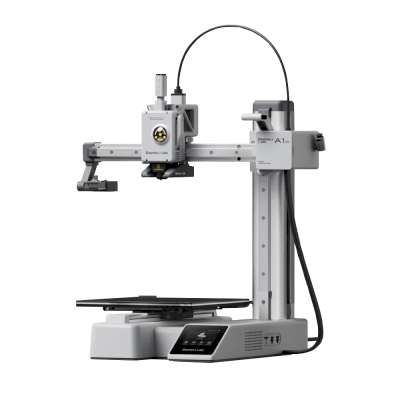
Bambu Lab A1 Mini
 中国
- 这里最便宜的机型之一,$199.00起
- 评测者:Tom's Hardware, TechRadar, Maker's Muse
- 1,000+台打印机使用SimplyPrint
- 使用Bambu Lab AMS Lite, Bambu Lab AMS, Bambu Lab AMS 2 Pro, Bambu Lab AMS HT实现多色,组合套装名称为Bambu Lab A1 Mini Combo
- 内置摄像头,可从任何地点查看打印情况
- 在我们的开放性评分中,Bambu Lab被评为“大多封闭”:请参阅下方品牌说明
- Bambu Lab在过去三年中遭遇过挫折:请查看下方品牌说明
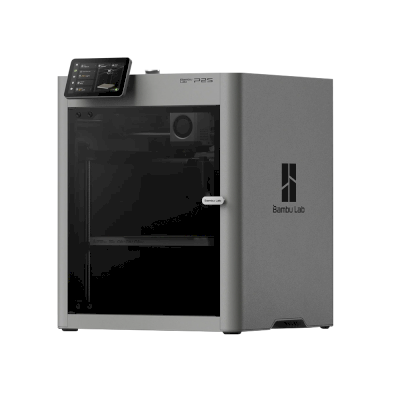
Bambu Lab P2S
中国
The P2S is Bambu Lab's enclosed CoreXY printer and the successor to the P1S, with a 5-inch touchscreen, a quick-swap nozzle, AI failure detection and a 256 mm build cube. It is for anyone who wants an easy, fast printer that handles ABS and ASA as well as PLA and PETG.
- Fast, polished and ready for multi-colour; Tom's Hardware calls it one of the best printers it saw that year.
- 这里最便宜的机型之一,$449.00起
- 评测者:Tom's Hardware, TechRadar, Wired
- 1,000+台打印机使用SimplyPrint
- 使用Bambu Lab AMS, Bambu Lab AMS 2 Pro, Bambu Lab AMS HT实现多色,组合套装名称为Bambu Lab P2S Combo
- By default it runs through Bambu Lab's own software and cloud, which some organisations' compliance rules don't allow; with SimplyPrint it can run without them and use SimplyPrint's European cloud, in Bambu Lab's LAN-only mode (with Developer Mode on current firmware, which Bambu Lab doesn't support).
- Multi-colour prints produce a lot of purge waste (TechRadar, Tom's Hardware, Wired).
- 在我们的开放性评分中,Bambu Lab被评为“大多封闭”:请参阅下方品牌说明
- Bambu Lab在过去三年中遭遇过挫折:请查看下方品牌说明
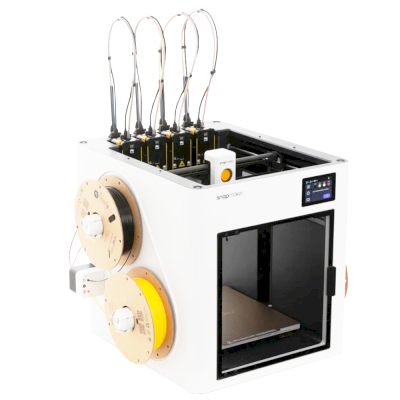
Snapmaker U1
中国
- 工具切换器,可在一次打印中使用多种颜色或材料
- 评测者:Tom's Hardware, TechRadar, Maker's Muse
- 发布于2025
- 500+台打印机使用SimplyPrint
- 内置摄像头,可从任何地点查看打印情况
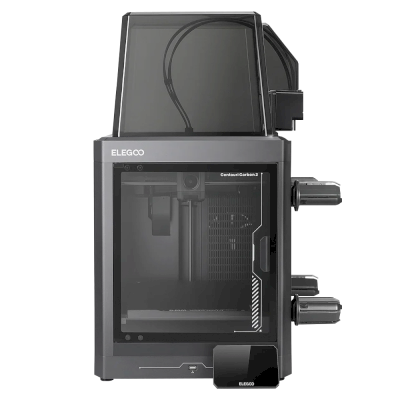
ELEGOO Centauri Carbon 2
中国
The Centauri Carbon 2 is Elegoo's second fully enclosed CoreXY printer: the original's 256 mm build cube with a 350 degree C hardened-steel nozzle, a 5-inch touchscreen and a better camera and lighting, and the Combo adds Elegoo's Canvas unit for four colours ($449 at launch). It is for hobbyists and small workshops who want an enclosed printer for engineering filaments, and multi-colour, on a budget.
- Four colours, engineering filaments and an enclosure for $449 at launch; Tom's Hardware, TechRadar and Aurora Tech all rate it highly for value.
- 评测者:Tom's Hardware, TechRadar, Notebookcheck
- 使用Elegoo Canvas实现多色,组合套装名称为ELEGOO Centauri Carbon 2 Combo
- 发布于2026年1月26日
- 100+台打印机使用SimplyPrint
- Elegoo's software lags the hardware: Notebookcheck had unreliable connections from ElegooSlicer and the Matrix app, print-time estimates were off by up to about 20% (Notebookcheck, Aurora Tech), and TechRadar calls the slicer locked down.
- Multi-colour prints waste a lot of filament in purge (Notebookcheck, TechRadar), and the spools sit outside the enclosure with no drying, so damp filament shows (TechRadar).
- ELEGOO在过去三年中遭遇过挫折:请查看下方品牌说明
The best 3D printer for home use, ranked
The top ten for home, and the best 3D printer for hobbyists who want room to grow. Open a printer for its specs, reviews and setup guide, or compare the top four on our printer comparison.
| # | 打印机 | 评分 | 起 | 使用SimplyPrint | 封闭式机箱 | 多色 | 品牌开放性 |
|---|---|---|---|---|---|---|---|
| 1 | Bambu Lab A1 Mini 180 × 180 × 180 mm |
80 | $199.00 | 已由SimplyPrint验证 | 开放式框架 | 附加组件 | 大多封闭 |
| 2 | Bambu Lab P2S 256 × 256 × 256 mm |
93 | $449.00 | 已由SimplyPrint验证 | 全封闭 | 附加组件 | 大多封闭 |
| 3 | ELEGOO Centauri Carbon 2 256 × 256 × 256 mm |
89 | - | 兼容 | 全封闭 | 附加组件 | 大多开放 |
| 4 | Bambu Lab X2D 256 × 256 × 260 mm |
87 | $589.00 | 已由SimplyPrint验证 | 全封闭 | 内置 | 大多封闭 |
| 5 | Snapmaker U1 270 × 270 × 270 mm |
85 | $699.00 | 兼容 | 半封闭式 | 内置 | 大多开放 |
| 6 | QIDI Q2 270 × 270 × 256 mm |
83 | $449.00 | 兼容 | 全封闭 | 附加组件 | 大多开放 |
| 7 | Bambu Lab A1 256 × 256 × 256 mm |
82 | $259.00 | 已由SimplyPrint验证 | 开放式框架 | 附加组件 | 大多封闭 |
| 8 | Bambu Lab A2L 330 × 320 × 325 mm |
81 | $439.00 | 已由SimplyPrint验证 | 开放式框架 | 附加组件 | 大多封闭 |
| 9 | Creality K2 Pro 300 × 300 × 300 mm |
80 | $599.00 | 兼容 | 全封闭 | 附加组件 | 大多开放 |
| 10 | Anycubic Kobra S1 250 × 250 × 250 mm |
80 | $349.00 | 兼容 | 全封闭 | 附加组件 | 混合 |
QIDI免费向我们提供部分新款打印机。
价格是我们过去两周在您所在地区商店中找到的最低价格,且经常变动。 并排比较前四名
What a first 3D printer needs
It sets itself up
Automatic bed levelling and calibration are what make a modern printer easy. Without them, most beginner trouble starts with the first layer. Each printer's page in our compatibility list says whether it levels its own bed.
Enclosed or open: where will it live?
An open-frame printer, where the bed moves back and forth, is cheaper, easier to repair and fine for PLA and PETG. An enclosed printer is quieter, safer around children and pets, and prints ABS and ASA. In a living room, the enclosure is worth paying for. In a garage or workshop it is optional.
Multi-colour: now or later?
A multi-material unit feeds four or more spools into one printer, so a print can change colour by itself. It is the most fun upgrade in home printing, and it costs more and wastes a little filament on every colour change. Many printers can add one later, so you don't have to decide on day one. Our picks list which unit each printer works with.
Software you can grow into
Your slicer turns a model into instructions for the printer. Most makers ship their own, often based on the open-source OrcaSlicer or PrusaSlicer; we compared the two most popular in OrcaSlicer vs Bambu Studio. SimplyPrint adds the rest: slicing in the browser, remote control from your phone, AI failure detection that pauses a print going wrong, and filament tracking so you know what is left on each spool.
What it really costs
The printer is the big cost, then filament. Budget for a few spools of PLA and PETG, a spare nozzle and, later, a second build plate. The best budget 3D printer is often a cheap one with a large community, not a pricier one few people own: every problem you meet has already been solved by someone.
Where to start printing
Your first prints don't need a 3D design program. Model sites such as Printables and MakerWorld have millions of free models, and most open straight in your slicer. When you want to make your own, free tools like Tinkercad run in a browser and are made for beginners: our guide to 3D printing from Tinkercad walks through the first model.
Before you buy: a checklist
- Where will it live? A living room or bedroom: enclosed and quiet. A garage or workshop: either.
- What will you print first? Toys, organisers and gifts in PLA need nothing special; tough outdoor parts want PETG or ASA.
- Colour now or later? If later, check the printer can take a multi-material unit.
- Who will help? A big community and a maker that answers matter more than a spec you won't use.
- Can you get spares? Nozzles and build plates wear out; check they are sold where you live.
Open or walled garden: how free you are later
Some printer makers work like Apple: the printer, slicer, cloud and spare parts come from one company, polished to work together, on its terms. Others work like Android, or a Linux PC: open firmware, any slicer, any filament, parts you can buy or print. Many beginners are happiest in the closed system at first. The question is what happens when you want to tinker, or the maker changes its mind about what your printer may do. We rate each brand in six areas from public sources.
QIDI
开放性:大多开放(5分制4.2分)
大多开放
封闭生态系统打开
QIDI
开放性:大多开放(5分制4.2分)QIDI Tech is a Chinese 3D printer maker formed in 2014. It sells enclosed, Klipper-based CoreXY printers such as the compact Q2 and the larger Plus4 and Max4, and develops the open-source QIDI Studio slicer and the QIDI Link app.
成立: 2014 · 网站: qidi3d.com
QIDI is mostly open: its printers are standard Klipper machines you can run fully on the local network, with published source and plenty of spare parts. The phone app and the store-only privacy policy are the weak spots.
| 固件和自定义固件 ●●●●● |
QIDI printers run QIDI's editions of Klipper and Moonraker with Fluidd. QIDI publishes them and per-model firmware packages on GitHub under GPL (for example the Q2 in January 2026 and the Max4 in August 2026) and answers issues there. [1][2][3] |
| 本地控制与集成 ●●●●● |
QIDI printers run Klipper and Moonraker with Fluidd on the printer, and QIDI Studio connects to them on the local network by IP without an account. QIDI publishes its Moonraker edition on GitHub, and other software can use Moonraker's documented API. Only the QIDI Link phone app needs an account and QIDI's cloud. [4][5][11][12] |
| 第三方耗材、切片软件和零件 ●●●●● |
Third-party filament works; QIDI Studio is open source, and as Klipper and Moonraker printers they work with other Moonraker-compatible software. Hotends and nozzles are QIDI parts made per model. [6][1][7] |
| 维修和备件 ●●●●● |
QIDI's store lists many individual parts, including motherboards, eMMC modules, fans, extruders, hotends and Wi-Fi cards, and its wiki has replacement guides such as the Plus4 hotend. [7][8] |
| 数据与隐私 ●●●●● |
Local use needs no account. QIDI Link requires one and says which server it uses (Aliyun in China, AWS elsewhere). The published privacy policy covers the online store, not the printers or the app. [5][9] |
| 社区和文档 ●●●●● |
Firmware is released and issues are taken on GitHub, and QIDI keeps a wiki per model with manuals, maintenance and troubleshooting guides. [1][4] |
- QIDI is one of the few printer makers we work with directly: they occasionally send us new printers, and put us in touch with their developers when we need them.
- Runs fully on the local network through Fluidd, with no account needed.
- Klipper and Moonraker sources and firmware updates are published on GitHub.
- Many individual spare parts, down to motherboards and eMMC modules.
- Open-source slicer and open filament choice.
- The QIDI Link app needs an account and QIDI's cloud.
- The privacy policy covers only the online store, not the printers or app.
- Hotends and nozzles are QIDI-specific parts.
- 八月 2026: QIDI published the firmware repository for the Max4 on GitHub under GPL-3.0. [2]
- 一月 2026: QIDI published the Q2's Klipper-based firmware on GitHub under GPL-3.0, with update packages and an issue tracker. [1]
基于12个来源整理,最后核查于2026年10月18日。 显示来源
- QIDITECH/QIDI_Q2 on GitHub github.com
- QIDITECH/QIDI_MAX4 on GitHub github.com
- QIDITECH/klipper on GitHub github.com
- Connect device and Fluidd | QIDI Wiki wiki.qidi3d.com
- QIDI Link | QIDI Wiki wiki.qidi3d.com
- QIDITECH/QIDIStudio on GitHub github.com
- Accessories | QIDI Online Store qidi3d.com
- PLUS4 Replace Hot End | QIDI Wiki wiki.qidi3d.com
- Privacy policy | QIDI Online Store qidi3d.com
- QIDI | 3D Printer Manufacturer Since 2014 qidi3d.com
- github.com
- moonraker.readthedocs.io
本指南内容: QIDI Q2
Snapmaker
开放性:大多开放(5分制4.1分)
大多开放
封闭生态系统打开
Snapmaker
开放性:大多开放(5分制4.1分)Snapmaker is a Shenzhen company founded in 2016, built around machines that swap tool heads; its Original, 2.0 and U1 machines were launched on Kickstarter. It sells the U1, a CoreXY printer with four tool heads that change in about five seconds for multi-colour printing, and the Artisan, which combines 3D printing, laser engraving and CNC carving. Its buyers are makers, hobbyists and small workshops.
成立: 2016 · 总部: Shenzhen, China · 所有权: Shenzhen Snapmaker Technologies Co., Ltd.; its main products were crowdfunded on Kickstarter · 网站: www.snapmaker.com
Snapmaker is mostly open: the U1 runs Klipper with a local Fluidd interface and published source, and nearly every part is sold separately. Its proprietary hotends and RFID system are the closed parts.
| 固件和自定义固件 ●●●●● |
The U1 runs modified Klipper, Moonraker and Fluidd. Snapmaker published its changes on GitHub under GPL-3.0 on 30 March 2026, about three months after Kickstarter deliveries finished. Firmware for the Snapmaker 2.0 and, since August 2026, the Artisan controller is also on GitHub under GPL. [1][2][3][4] |
| 本地控制与集成 ●●●●● |
The U1 runs Klipper, Moonraker and Fluidd on the printer and prints from Snapmaker Orca over Wi-Fi or from a USB drive, so other software can use Moonraker's documented API; Snapmaker publishes its Moonraker changes on GitHub. For the Artisan, Snapmaker documents its G-code commands and has Luban pass jobs from OrcaSlicer over the OctoPrint protocol. The Snapmaker app is for remote monitoring. [1][5][13][14][15] |
| 第三方耗材、切片软件和零件 ●●●●● |
Third-party 1.75 mm filament works and the U1 is supported in OrcaSlicer, but its RFID filament recognition is proprietary and only reads Snapmaker spools, and its hotends are proprietary one-piece units. Snapmaker documents using Cura, OrcaSlicer and PrusaSlicer with its older machines. [1][6][7] |
| 维修和备件 ●●●●● |
Snapmaker's shop sells most U1 parts on their own, including the main board, heated bed, extruder motor, toolhead board, belts, fans and touchscreen, and its wiki has replacement guides such as the U1 XY motor. Hotends can only be replaced as a whole unit. [8][9][1] |
| 数据与隐私 ●●●●● |
Cloud features need a Snapmaker account. The privacy policy says personal data is stored on servers in the United States, may be shared with affiliates and third parties in China for some functions, and some data is kept for three years. [10] |
| 社区和文档 ●●●●● |
Active forum and a wiki with detailed FAQs and guides, firmware and slicer sources on GitHub, and frequent public updates and livestreams during the U1 campaign. [1][2][11] |
- The U1's four-head tool changer wastes little filament on colour changes.
- Klipper-based U1 with a local Fluidd interface and published firmware source.
- Nearly every U1 part is sold separately, with replacement guides.
- Has delivered all of its Kickstarter campaigns, the U1 ahead of schedule by its own account.
- U1 hotends are proprietary one-piece units.
- RFID filament recognition is proprietary and only works with Snapmaker spools.
- U1 firmware source came after deliveries, at the end of a self-set deadline.
- Personal data is stored in the US and may be shared with affiliates in China.
- The U1 does not work with Luban, so owners of older machines need a different slicer.
- 八月 2026: Snapmaker published the Artisan's Marlin-based controller firmware on GitHub under GPL-3.0. [4]
- 2026年3月30日: Snapmaker published its modified Klipper, Moonraker and Fluidd for the U1 on GitHub under GPL-3.0, on the last day of the deadline it had set itself. [1][2]
- 十二月 2025: Snapmaker says all U1 Kickstarter orders shipped by 23 December 2025, ahead of its schedule. It says it delivered all three of its Kickstarter campaigns. [12]
- 九月 2025: The U1 Kickstarter raised $20.2 million from more than 20,000 backers by 30 September 2025, the most for any 3D printer on the platform. Snapmaker gives the final total as $20.6 million from 20,680 backers. [11][12]
基于15个来源整理,最后核查于2026年10月18日。 显示来源
- U1 | Snapmaker Wiki wiki.snapmaker.com
- Snapmaker/u1-klipper on GitHub github.com
- Snapmaker/Snapmaker2-Controller on GitHub github.com
- Snapmaker/Artisan-Controller on GitHub github.com
- Snapmaker Orca Quick Start Guide for U1 | Snapmaker Wiki wiki.snapmaker.com
- Third-party Software | Snapmaker Wiki wiki.snapmaker.com
- Snapmaker/OrcaSlicer (Snapmaker Orca) on GitHub github.com
- 3D Printer Accessories | Snapmaker Shop shop.snapmaker.com
- U1 XY motor replacement guide | Snapmaker Wiki wiki.snapmaker.com
- Privacy Policy | Snapmaker snapmaker.com
- Snapmaker U1 Becomes Most Funded 3D Printer in Kickstarter History - 3D Printing Industry 3dprintingindustry.com
- About Us - Snapmaker snapmaker.com
- wiki.snapmaker.com
- wiki.snapmaker.com
- moonraker.readthedocs.io
本指南内容: Snapmaker U1
ELEGOO
开放性:大多开放(5分制3.8分)
大多开放
封闭生态系统打开
ELEGOO
开放性:大多开放(5分制3.8分)ELEGOO is a Shenzhen company founded in 2015 that makes FDM and resin 3D printers, filament, laser engravers and STEM electronics kits. Its FDM range is the Centauri Carbon, an enclosed CoreXY printer, and the Neptune 4 series of open-frame Klipper printers, sold to hobbyists at budget to mid-range prices. DJI became a shareholder in 2025.
成立: 2015 · 总部: Shenzhen, China · 所有权: Privately held through its parent, Shenzhen Zhinengpai (SmartPie) Technology; DJI became a shareholder in 2025 · 网站: www.elegoo.com
ELEGOO is fairly open in daily use: its printers work over the LAN with open slicers and any filament, and it now publishes firmware source. Source releases have followed community pressure rather than launch, and spare parts for the newest printers are thin in its store.
| 固件和自定义固件 ●●●●● |
The Neptune 4 series runs Klipper. For the Centauri Carbon, which went on sale in February 2025, ELEGOO published its modified source on GitHub under GPL-3.0 in September 2025, saying it did so in response to user feedback. [1][2][3][4] |
| 本地控制与集成 ●●●●● |
ELEGOO's printers connect to its slicer on the local network by IP without an account. The Neptune 4 series serves Klipper's web interface and Moonraker, which OrcaSlicer reaches as an Octo/Klipper host. For the Centauri Carbon and Centauri Carbon 2, ELEGOO published Elegoo Link on GitHub in January 2026, an Apache-2.0 SDK for local discovery, status, file upload and print control. The Matrix phone app adds remote printing while the printer is online. [5][4][16][6][17] |
| 第三方耗材、切片软件和零件 ●●●●● |
Third-party filament works; ElegooSlicer is an open-source OrcaSlicer-based slicer, OrcaSlicer works with the Neptune 4, and ELEGOO published the data format of its RFID filament tags so others can use it. [7][8][4] |
| 维修和备件 ●●●●● |
ELEGOO sells hotend, extruder and nozzle kits and some boards for the Neptune 4, and its wiki has many replacement guides, including the Centauri Carbon motherboard. The store's Centauri Carbon parts list is short (hotend kit, touchscreen, upper shell). [9][10][11] |
| 数据与隐私 ●●●●● |
LAN printing needs no account; the Matrix app and cloud do. The privacy policy names the companies responsible for personal data in each region (Shenzhen, Hong Kong, United States) but is written mainly for the online store. [12][5] |
| 社区和文档 ●●●●● |
Active community and a wiki with guides per model; firmware and slicer sources are on GitHub, although the Centauri Carbon source came after users asked for it. [11][7][1] |
- Works on the local network with ElegooSlicer or OrcaSlicer, with no account needed.
- Open-source slicer and a published RFID tag format for filament.
- Many step-by-step replacement guides in its wiki.
- Offered owners compensation when the Centauri Carbon multi-colour add-on was delayed.
- Centauri Carbon firmware source came about seven months after sales began, after users asked.
- The Centauri Carbon's multi-colour add-on only became available in April 2026, after ELEGOO said in November 2025 it could not give a date.
- Few complete Centauri Carbon parts are listed in its store.
- The privacy policy is written mainly for the online store.
- 五月 2026: ELEGOO's parent closed a B+ financing round of over 500 million yuan (about $73 million) from investors including Meituan, Hillhouse Capital and Shenzhen Capital Group. It reported 2025 revenue of 2.3 billion yuan. [13]
- 2026年4月27日: CANVAS, the multi-colour system for the Centauri Carbon, became available, five months after ELEGOO said it could not give a release date. [14]
- 2025年11月18日: DJI and Hangzhou Jiangyu Technology became shareholders of ELEGOO's parent company, according to a business registration update reported by TechNode. The size of the stake was not disclosed. [15]
- 十一月 2025: ELEGOO said the multi-colour system it was developing for the Centauri Carbon did not yet perform as it wanted and that it could not guarantee a release date. It offered owners a choice of a $50 filament coupon, a 365-day warranty extension or $80 off a Centauri Carbon 2 Combo. [14]
- 2025年9月26日: In response to user feedback, ELEGOO published the modified source code of the Centauri series firmware on GitHub under GPL-3.0. [1][2]
- 二月 2025: ELEGOO opened pre-orders for the Centauri Carbon, its first enclosed CoreXY printer, on 17 February 2025. [3]
基于17个来源整理,最后核查于2026年10月18日。 显示来源
- Update Notice on Centauri Series | ELEGOO elegoo.com
- elegooofficial/CentauriCarbon on GitHub github.com
- Elegoo to Open Pre-Orders for Centauri Carbon on February 17 elegoo.com
- Networked Control with OrcaSlicer | ELEGOO Wiki wiki.elegoo.com
- How to Connect the Printer via LAN | ELEGOO Wiki wiki.elegoo.com
- ELEGOO Matrix App Introduces One-Click Remote Printing elegoo.com
- elegooofficial/ElegooSlicer on GitHub github.com
- elegooofficial/ELEGOO-RFID-Tag-Guide on GitHub github.com
- FDM 3D Printer Accessories | ELEGOO elegoo.com
- Accessories for Centauri Series | ELEGOO elegoo.com
- How to Replace the Motherboard (B0C001) | ELEGOO Wiki wiki.elegoo.com
- Privacy policy | ELEGOO elegoo.com
- Can Elegoo's Latest 500M Yuan Round Counter the "Bambu Effect"? - 3D Printing Industry 3dprintingindustry.com
- Update Notice on Centauri Carbon | ELEGOO elegoo.com
- DJI becomes shareholder in consumer 3D-printer maker ELEGOO | TechNode technode.com
- github.com
- moonraker.readthedocs.io
本指南内容: ELEGOO Centauri Carbon 2
Creality
开放性:大多开放(5分制3.6分)
大多开放
封闭生态系统打开
Creality
开放性:大多开放(5分制3.6分)Creality is a Shenzhen 3D printer maker founded in 2014. Its low-cost Ender series, launched in 2017, made desktop 3D printing affordable for many hobbyists. It now sells Klipper-based K-series CoreXY printers, Ender and CR open-frame printers, the Hi and SPARKX beginner lines, the CFS multi-material system, 3D scanners and laser engravers, and runs the Creality Cloud model platform. It listed on the Hong Kong Stock Exchange in 2026.
成立: 2014 · 总部: Shenzhen, China · 所有权: Listed on the Hong Kong Stock Exchange (3388.HK) since 2026; founder Jack Chen is chief executive · 网站: www.creality.com
Creality sits in the middle: its Klipper-based printers can be run locally with Fluidd and open slicers, and it publishes firmware source, but usually months after launch, and it dropped root access on its 2025 K1 revisions.
| 固件和自定义固件 ●●●●● |
Creality publishes Klipper firmware source for the K1, K2, Hi and Ender-3 V3 KE on GitHub under GPL, but after launch: the K1 source came about three months after the series launched in May 2023, the K2 and Hi sources in September 2025. Earlier K1 printers have an official root option with a published guide, but Creality's wiki says the 2025 K1C and K1 Max do not support root access. [1][2][3][4][5] |
| 本地控制与集成 ●●●●● |
Creality Print sends jobs over the local network with no account, and Creality Cloud is optional. The K2 series and Ender-3 V3 serve Fluidd on the printer, so other software can use Klipper's documented Moonraker API. On the K1 series, Creality's firmware notes treat Fluidd and Mainsail as add-ons owners install themselves, and Creality says the 2025 K1C and K1 Max do not support root access. The SPARKX i7 is set up through the Creality Cloud app. [6][20][7][21][4][8][22] |
| 第三方耗材、切片软件和零件 ●●●●● |
Third-party filament works; Creality Print is an open-source (AGPL-3.0) slicer and OrcaSlicer supports Creality printers. Creality sells nozzle, hotend and extruder kits per model; newer K2 parts such as its nozzle kit are Creality designs. [10][11][12] |
| 维修和备件 ●●●●● |
Creality's store sells extruder, hotend, heating-block and print-head kits per model, and its wiki has parts lists and replacement guides for current printers (for example the K2 Plus and SPARKX i7 hotends). [12][13][14] |
| 数据与隐私 ●●●●● |
Local printing needs no account; Creality Cloud and its app need one. Creality's published privacy policy is written for its websites and services, allows use of data for targeted advertising, and says little about printer data or where it is stored. [15][6] |
| 社区和文档 ●●●●● |
One of the largest user bases (second in consumer 3D printers by 2025 sales value, per figures in its listing), a public wiki with model-specific guides, firmware and slicer sources on GitHub, and an official forum. [16][10][6] |
- Klipper-based models can be run entirely on the local network through Fluidd, without an account.
- Firmware for most current models and the Creality Print slicer are published as source on GitHub.
- Wide range, from budget Ender printers to multi-colour K2 machines.
- Spare-part kits and model-specific replacement guides are easy to find.
- Very large user base, so community help is easy to find.
- Firmware source has usually appeared months after a model ships.
- Root access, offered on earlier K1 printers, is not supported on the 2025 K1C and K1 Max.
- The privacy policy says little about printer and cloud data.
- The SPARKX line is built around the Creality Cloud app and an account.
- 五月 2026: Creality listed on the Main Board of the Hong Kong Stock Exchange (3388.HK), raising about HK$1.27 billion net. Its prospectus showed 2025 revenue of RMB 3.13 billion and a net loss of RMB 182.4 million, after a profit in 2024. [16][5]
- 十一月 2025: Creality's wiki states that the 2025 revisions of the K1C and K1 Max do not support root access, which earlier K1 printers offered through an official option and guide. [4][17][3]
- 九月 2025: Creality published the Klipper source for its K2 series and for the Hi on GitHub under GPL-3.0. [2][18]
- 八月 2023: About three months after the K1 series launched, Creality published its K1 Klipper source on GitHub, followed by a repository with a root guide and Fluidd and Mainsail install instructions. [1][3][5]
基于22个来源整理,最后核查于2026年10月18日。 显示来源
- CrealityOfficial/K1_Series_Klipper on GitHub github.com
- CrealityOfficial/K2_Series_Klipper on GitHub github.com
- CrealityOfficial/K1_Series_Annex on GitHub github.com
- Root Disclaimer and Risk Warning | Creality Wiki wiki.creality.com
- New Creality IPO Prospectus Shows Record Revenue Alongside Competitive Pressure - 3D Printing Industry 3dprintingindustry.com
- LAN printing | Creality Wiki wiki.creality.com
- How To Control The Ender-3 V3 Using Fluidd Over A Local Area Network | Creality Wiki wiki.creality.com
- SPARKX i7: One-click printing with the Creality Cloud APP | Creality Wiki wiki.creality.com
- SPARKX i7: How to Print Using a USB Drive | Creality Wiki wiki.creality.com
- CrealityOfficial/CrealityPrint on GitHub github.com
- OrcaSlicer/OrcaSlicer on GitHub github.com
- 3D Printer Accessories | Creality Printer Upgrades & Parts store.creality.com
- Replace K2 Plus Hotend | Creality Wiki wiki.creality.com
- i7 Series Quick-Release Hotend Replacement Guide | Creality Wiki wiki.creality.com
- Privacy Policy | Creality creality.com
- Oversubscribed Creality IPO raises $177M, valuing desktop 3D printing company at $1.12 billion - 3D Printing Industry 3dprintingindustry.com
- Creality Root Disclaimer Explained: Risks, Impact, and 2025 K1 Changes | Makers101 makers101.com
- CrealityOfficial/Hi_Klipper on GitHub github.com
- About Us | Creality Official creality.com
- wiki.creality.com
- wiki.creality.com
- moonraker.readthedocs.io
本指南内容: Creality K2 Pro
Anycubic
开放性:混合(5分制3.0分)
混合
封闭生态系统打开
Anycubic
开放性:混合(5分制3.0分)Anycubic is a Chinese 3D printer maker founded in 2015. It sells the Kobra line of FDM printers, including the enclosed Kobra S1 and S1 Max, the large Kobra 3 Max and the low-cost Kobra X, the ACE Pro multi-material unit and Photon resin printers. Its printers are aimed at hobbyists and home users at budget to mid-range prices.
成立: 2015 · 总部: China (its global store is run by Hongkong Anycubic Technology Co., Limited) · 网站: www.anycubic.com
Anycubic is mixed: its printers work locally in LAN mode, take third-party filament and slicers, and have spare parts and guides, but its published firmware source leaves proprietary parts closed, custom firmware is unsupported, and its cloud had a security incident in 2024.
| 固件和自定义固件 ●●●●● |
The Kobra 3, 3 Max and S1 run Klipper-go, Anycubic's Go port of Klipper. Anycubic published its source with the kernel and U-Boot under GPL, for the Kobra 3 in October 2024 and for the wider family in October 2025, but says some proprietary features are kept closed, and that modifying the firmware voids the warranty. The community project Rinkhals adds Fluidd, Mainsail and SSH, and reports that the newer Kobra X only accepts signed updates. [1][2][3] |
| 本地控制与集成 ●●●●● |
LAN mode lets Anycubic Slicer Next send prints, show progress and stream video on the local network without an account, and the S1's firmware 2.5.9.9 added sending from OrcaSlicer. With LAN mode on, the cloud, the app and AI failure detection are off, and the S1 must leave LAN mode and be bound to an account to update its firmware. Anycubic documents no local API for other software; Moonraker, Fluidd and Mainsail come only with the community firmware Rinkhals. [4][5][3] |
| 第三方耗材、切片软件和零件 ●●●●● |
Third-party filament works. Anycubic Slicer Next is an open-source OrcaSlicer fork, and recent firmware accepts files sent from OrcaSlicer. Hotends, extruders and many other parts are model-specific Anycubic parts. [6][5][7] |
| 维修和备件 ●●●●● |
Anycubic's store sells hotends, extruders, motherboards, heated beds, motors and screens, and its wiki has replacement guides for current models, for example the Kobra S1 Max XY motors and the Kobra X Y-axis motor. [7][8][9] |
| 数据与隐私 ●●●●● |
LAN mode keeps data on the local network, but the app and cloud need an account. Anycubic's privacy policy allows broad collection, including product usage, device signals and nearby Wi-Fi access points, and storage in the United States. In February 2024 a flaw in its cloud MQTT server let a third party push a file to Kobra 2 printers; Anycubic apologised and patched it. [10][11][4] |
| 社区和文档 ●●●●● |
Active user community and a wiki with guides and error codes for each model. Source releases leave proprietary parts closed, and custom firmware is a community effort. [4][2][3] |
- Budget to mid-range prices, with multi-colour Combo bundles.
- LAN mode works without an account.
- Spare parts and replacement guides for current models.
- Open-source slicer, and third-party filament works.
- Published firmware source leaves some features closed; modifying firmware voids the warranty.
- LAN mode turns off the app, cloud and AI failure detection, and firmware updates need the cloud.
- The privacy policy allows broad data collection.
- Its cloud was used to push files to printers in 2024 (fixed).
- 十月 2025: Anycubic published Klipper-go, its Go port of Klipper, as a standalone project for the Kobra 3, Kobra 3 V2, Kobra 3 Max and Kobra S1, with the MCU firmware, Linux kernel and U-Boot sources, on GitHub under GPL-3.0. It says some proprietary features remain closed. [2][12]
- 十月 2024: Anycubic published the Kobra 3 firmware sources (Klipper-go, MCU firmware, Linux kernel and U-Boot) on GitHub under GPL-3.0. [1]
- 二月 2024: A third party used a vulnerability in Anycubic's cloud MQTT server to make Kobra 2 Pro/Plus/Max printers download a file named 'hacked_machine_readme.gcode'. Anycubic counted 237 affected printers and over 2,000 that received the file, apologised for its late response, tightened cloud authorisation and released a firmware fix. [11]
基于14个来源整理,最后核查于2026年10月18日。 显示来源
- ANYCUBIC-3D/Kobra3 on GitHub github.com
- ANYCUBIC-3D/Klipper-go on GitHub github.com
- jbatonnet/Rinkhals (community custom firmware) on GitHub github.com
- Kobra S1 Max-LAN Connection Guide | Anycubic Wiki wiki.anycubic.com
- Kobra S1- Firmware update guide | Anycubic Wiki wiki.anycubic.com
- ANYCUBIC-3D/AnycubicSlicerNext on GitHub github.com
- Anycubic 3D Printer Parts & Accessories store.anycubic.com
- Kobra S1 Max - XY Motor Replacement Guide | Anycubic Wiki wiki.anycubic.com
- Kobra X - Y Axis Motor Replacement Guide | Anycubic Wiki wiki.anycubic.com
- Privacy policy | Anycubic Store store.anycubic.com
- Security Issue of Anycubic Cloud store.anycubic.com
- ANYCUBIC-3D/rv1106-kernel-open-source on GitHub github.com
- Anycubic 3D Printer | About anycubic.com
- About Anycubic | Anycubic Global Store store.anycubic.com
本指南内容: Anycubic Kobra S1
Bambu Lab
开放性:大多封闭(5分制2.3分)
大多封闭
封闭生态系统打开
Bambu Lab
开放性:大多封闭(5分制2.3分)Bambu Lab is a Shenzhen company founded in 2020 by former DJI engineers. It makes FDM printers in four families (A, P, X and H), the AMS multi-material units, the Bambu Studio slicer, the Bambu Handy app and the MakerWorld model site, and designs them to be used together. Its printers are used by beginners, hobbyists, schools and print farms.
成立: 2020 · 总部: Shenzhen, China · 所有权: Privately held; founded by CEO Ye Tao and other former DJI staff, with venture investors (BGR, 2026) · 网站: bambulab.com
Bambu Lab works like Apple: printer, slicer, app, cloud and multi-material system come from one company and are made to work together. Filament and slicer choice stay open, but the firmware is closed and signed, and since 2025 third-party control needs Bambu Connect or the unsupported Developer Mode.
| 固件和自定义固件 ●●●●● |
The printer firmware is Bambu's own and closed; in 2022 Bambu said it would keep it in-house. Its security white paper describes secure boot that only runs verified firmware on X1, H2, P1 and A1 printers. Bambu publishes the GPL parts it uses (Linux kernel, U-Boot, BusyBox) but not the printer software. Rooting the X1 only became possible through a security flaw the X1Plus project used in 2024; Bambu then published a one-off rootable X1 firmware for owners who give up their warranty, and blocks rooting in later firmware. [1][2][3][4][22] |
| 本地控制与集成 ●●●●● |
LAN Only mode prints and monitors from Bambu Studio or Bambu Connect without internet or an account; the Handy app, printing from outside the network and print history need Bambu's cloud. Since the 2025 authorization firmware, other software can only read status in normal mode. Full control needs Developer Mode, which cuts the cloud link and which Bambu says it cannot support because the protocols are not official. Bambu documents no local protocol; it offers a file hand-off to Bambu Connect and a Local Server SDK on application. [23][24][6][7][5] |
| 第三方耗材、切片软件和零件 ●●●●● |
Third-party filament works, and Bambu publicly denied in 2025 that it would restrict it. OrcaSlicer and other slicers can be used, but since the 2025 firmware they send and control prints through Bambu Connect or Developer Mode. Hotends are Bambu's own designs, and Bambu says it cannot promise long-term support for accessories that control the printer unless it approved them first. [7][6][4] |
| 维修和备件 ●●●●● |
Bambu's store sells individual spare parts down to motors, belts, encoders and boards, and its wiki has step-by-step replacement guides for each model (for example the P2S hotend and the H2D/H2C AP board). Many parts, hotends included, are Bambu-specific, so spares come from Bambu. [8][9][10] |
| 数据与隐私 ●●●●● |
Cloud features need a Bambu account, while LAN Only mode keeps jobs on the local network. Bambu publishes a Trust Center and a 38-page security white paper, says it holds ISO/IEC 27001, ISO/IEC 27701 and TRUSTe certifications, and runs a paid bug bounty. In August 2023 a cloud outage made some printers start earlier jobs on their own; Bambu apologised. [2][11][5][12] |
| 社区和文档 ●●●●● |
Very large user community, the MakerWorld model site, a detailed wiki and a blog where Bambu explains its policy changes. Bambu Studio is developed in public on GitHub with an open issue tracker. The printer protocol is not documented, and Developer Mode is unsupported. [13][5][7] |
- Printer, slicer, app and AMS come from one company and are designed to work together, which makes a first setup simple.
- Step-by-step repair guides for each model and individual spare parts sold in Bambu's store.
- LAN Only mode works without internet or an account.
- Bambu Studio is open source, and third-party filament works.
- Publishes security certifications and runs a public bug bounty.
- Firmware is closed and signed; current models have no supported way to run custom firmware.
- Since the 2025 firmware, third-party software and accessories need Bambu Connect or the unsupported Developer Mode to control the printer.
- Remote printing, the Handy app and print history depend on Bambu's cloud.
- Hotends and many parts are Bambu-specific, so spares come from Bambu.
- In 2026 a US jury found the X1, P1 and A1 infringe Stratasys patents; Bambu is appealing.
- 九月 2026: A US federal jury in Texas found that Bambu Lab's X1, P1 and A1 printers infringe Stratasys patents on prime towers and bed levelling, and awarded Stratasys $27.6 million. No injunction was placed on the printers. Bambu told Tom's Hardware it disagrees with the verdict and intends to seek post-trial review and appeal. Stratasys had filed two suits in 2024; more patents are still to be decided. [14]
- 五月 2026: Bambu Lab pressed the developer of 'OrcaSlicer-bambulab', a fork that restored direct cloud printing from OrcaSlicer, to remove it, according to Manufactur3D. On 7 May Bambu said the fork impersonated the official Bambu Studio client to its cloud, which its user agreement does not allow, and that modifying and sharing its AGPL code remains fine. The developer disputed the claims. [15][16][17]
- 十月 2025: Bambu Lab opened a Trust Center with a security white paper and listed ISO/IEC 27001, ISO/IEC 27701 and TRUSTe privacy certifications. A year later it said its bug bounty had worked with over 100 researchers and that it had added a public security update log. [2][11]
- 2025年1月20日: After criticism from users and print farms, Bambu Lab announced an optional Developer Mode for X1, P1, A1 and A1 mini that leaves MQTT, FTP and the live stream open for third-party software in LAN mode, without official support. It also said LAN mode via Bambu Connect needs neither internet nor an account, and that third-party filament would not be restricted. [7]
- 2025年1月16日: Bambu Lab announced firmware with 'authorization control', first for the X1: starting prints, moving axes, changing temperatures and binding the printer now require Bambu-approved software, also in LAN mode. On updated printers, third-party slicers and accessories such as the Panda Touch could no longer control the printer except through Bambu Connect; reading status still worked. Bambu cited security and up to 30 million unauthorised cloud requests a day; older firmware stayed optional. [6]
- 三月 2024: After the X1Plus jailbreak, Bambu Lab published a one-off rootable firmware for the X1 series for owners who give up their warranty support. It said it does not support X1Plus, and that firmware after it would block rooting again. [4]
- 二月 2024: Bambu Lab extended its A1 heatbed-cable callback to a recall of all A1 printers and asked owners to stop using them. It reported electrical faults in under 0.1% of units and offered a full refund plus an $80 voucher, or a redesigned heatbed plus a $120 voucher and six extra months of warranty. The A1 mini was not affected. [18][19]
- 一月 2024: Community developers rooted the X1 series through a security flaw in its firmware (up to version 1.07) and released the X1Plus custom firmware. Bambu Lab closed the flaw in later firmware. [22]
- 八月 2023: During a Bambu cloud outage on 15 August 2023, some printers started print jobs without user action, because jobs stuck in the cloud were resent when service returned. Bambu apologised, took responsibility and said it would add checks before a print starts. [12]
- 五月 2022: Before its first printers shipped, Bambu Lab said its firmware would stay closed and in-house to remain competitive, and promised to open-source everything if the company ever could not survive. [1]
基于24个来源整理,最后核查于2026年10月20日。 显示来源
- To open, or not to open, that is the question blog.bambulab.com
- The Bambu Lab Trust Center for Complete Security and Privacy Transparency blog.bambulab.com
- Open Source Software | Bambu Lab Wiki wiki.bambulab.com
- Custom Firmware Plan and Our Principles on Ecosystem blog.bambulab.com
- How to enable LAN Mode on Bambu Lab printers | Bambu Lab Wiki wiki.bambulab.com
- Firmware Update Introducing New Authorization Control System blog.bambulab.com
- Updates and Third-Party Integration with Bambu Connect blog.bambulab.com
- 3D Printer Parts | Bambu Lab EU Store eu.store.bambulab.com
- Hotend Replacement Guide for the P2S | Bambu Lab Wiki wiki.bambulab.com
- Replace H2D/H2C AP Board | Bambu Lab Wiki wiki.bambulab.com
- One Year On: strengthening IoT Security through Global Certifications and Community Collaboration blog.bambulab.com
- Initial Investigation in the Bambu Cloud Temporary Outage blog.bambulab.com
- bambulab/BambuStudio on GitHub github.com
- Texas jury hits Bambu Lab with $27.6M verdict in Stratasys patent fight | Tom's Hardware tomshardware.com
- Bambu Lab OrcaSlicer controversy escalates | Manufactur3D manufactur3dmag.com
- Setting the record straight on Cloud Access and Community blog.bambulab.com
- jarczakpawel/OrcaSlicer-bambulab on GitHub github.com
- A1 Recall Update blog.bambulab.com
- A1 Heatbed Cable Callback blog.bambulab.com
- Who Owns Bambu Lab, The 3D Printer Manufacturer? | BGR bgr.com
- Bambu Lab A2L - Creative Playground. Extra Large. blog.bambulab.com
- X1Plus: Open Source Bambu Lab X1 Firmware | Hackaday hackaday.com
- wiki.bambulab.com
- wiki.bambulab.com
本指南内容: Bambu Lab A1 Mini, Bambu Lab P2S, Bambu Lab X2D, Bambu Lab A1, Bambu Lab A2L
Where they come from, and staying compliant
Most of the best 3D printers today come from Chinese companies, and this ranking reflects that: right now they give you the most printer for the money. That's no judgement of the people who make them. But for some buyers, where a printer comes from matters: some people would simply rather buy from a company closer to home, or keep a printer off its maker's cloud.
本指南排名前10的打印机中,有10台来自中国公司。 以下为欧盟公司中排名最高的:
 葡萄牙
 · 得分61/100 · $476.10
 捷克
· 得分55/100 · $269.99
捷克
· 得分51/100 · $539.00
Any printer, on your terms, with SimplyPrint
Whoever makes your printer, SimplyPrint decides what it talks to:
- Off its maker's cloud. Most printers connect through the SimplyPrint Client on your own network, or in their local-network mode (Bambu Lab's LAN-only mode, with Developer Mode on its newer printers), so they never need their maker's cloud. You can block them from the internet entirely and let only the SimplyPrint Client connect out.
- Your data stored in Europe. SimplyPrint's cloud is hosted in Frankfurt, Germany, under the GDPR. See how we keep it secure and who processes data for us.
- One place for access. Users, permissions, single sign-on and an audit log, for every printer, whatever its brand.
- On your own servers, if you need it. See cloud vs. on-premise.
How we choose
No brand pays for its place in this guide. The ranking is a formula over our catalog, the same for every printer, and it runs again each time the page loads. For beginners and home use it weighs our assessment, price, reviews and multi-colour most:
| 我们考量的因素 | 评分 | 衡量方式 |
|---|---|---|
| 我们对此用途的评估 | 22 | 我们针对这类买家的书面评估:优秀、良好、一般或较差。对于我们评为较差的打印机,不会列入其中。尚非所有打印机都已评估,对于这些打印机,将不计入此因素,其他因素权重会更高。 |
| 价格 | 13 | 您所在地区的当前最低价格,按对数刻度与指南中的其他打印机比较。没有当前价格按低价计算。 |
| 使用数量 | 12 | 该型号有多少台打印机在SimplyPrint上运行,以对数刻度显示,反映有多少人信赖它。较新版本的使用量至少按其所替代的最常用打印机的一半计算,因此不会因较新而被降低评分。 |
| 独立评测 | 10 | 有多少知名评测者(媒体和YouTube)评测过它,最多四位。 |
| 多色和多材料 | 10 | 是否随附或兼容多材料单元、换刀器或双挤出机。 |
| 与SimplyPrint兼容 | 8 | 已由SimplyPrint验证、兼容,或根据其连接方式预计可用。 |
| 新旧程度 | 8 | 今年或去年发布的机型计满分,之后每年递减。已有较新版本的打印机在此项不得分。 |
| 内置摄像头 | 5 | 内置摄像头,可查看打印情况并进行故障检测。 |
| 封闭式机箱 | 4 | 全封闭计满分,部分封闭计半分。 |
| SimplyPrint用户评分 | 3 | SimplyPrint用户的评分(如有) |
| 擅长打印的材料 | 3 | 根据温度、封闭式机箱及制造商列表,判断其能良好打印的耗材种类数量。 |
| 品牌开放度 | 2 | 该品牌在下方开放度至封闭生态系统量表中的位置。尚未评分按中等计算。 |
当打印机可与SimplyPrint配合使用(已验证、兼容,或根据其连接方式预计可用)、是制造商自有型号且仍在售时,便会纳入评选:制造商仍在销售、商店有当前价格,或在过去3年内发布。
本指南按最低售价不超过US$800的打印机进行排名,除非由我们的编辑推荐,否则价格更高的型号不会列入。
品牌的开放程度只占少量分数,绝不会让较弱的打印机成为最佳选择。每个推荐都会显示其过往记录,但不会改变评分:公司的新闻与其打印机无关。
评分决定入选的打印机,但有一个例外:如果我们亲自使用某台打印机的体验与其评分不符,编辑可以选择另一款,并会注明。
如果指南中已有某款较新版本的打印机,且已知可与SimplyPrint配合使用,则不会收录旧款。如果没有较新版本,旧款会保留,但不会因新旧程度获得分数,并会注明它有较新版本。
一些制造商会向我们寄送打印机或直接与我们合作,如有此类情况,指南会在其打印机旁注明。
发现问题?请告诉我们,我们会修正。 联系我们
开放性等级
每个品牌在六个方面按1分(封闭)至5分(开放)评分,评分依据为每项评分列出的公开来源。总体评分为加权平均值,将品牌置于从封闭生态到开放的范围内:
| 方面 | 重量 |
|---|---|
| 固件和自定义固件 | 30% |
| 本地控制与集成 | 30% |
| 第三方耗材、切片软件和零件 | 15% |
| 维修和备件 | 10% |
| 数据与隐私 | 10% |
| 社区和文档 | 5% |
打开 自4.25起 · 大多开放 自3.50起 · 混合 自2.75起 · 大多封闭 自2.00起 · 封闭生态系统 低于此值
Some buying links earn us a commission at no cost to you; they never change the ranking. We make SimplyPrint, which runs printers from every brand here, so "works with SimplyPrint" is one factor: it is a fair sign of how many people trust a printer.
今日基于我们的目录:在与SimplyPrint兼容的在售打印机中,共评选230台,其中147台已排名。 其中19个已有我们针对此用途的书面评估。 显示的6个品牌中有6个已评估开放性。