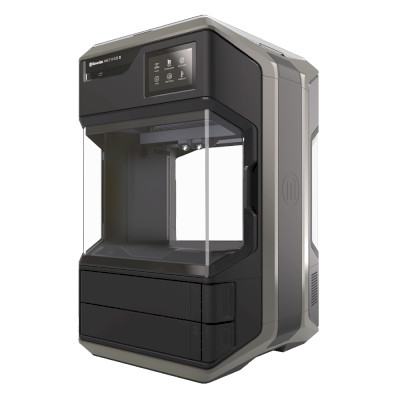
Does the Ultimaker Method 3D printer work with SimplyPrint, OctoPrint, Mainsail and Fluidd?
Each way of connecting it, what it needs, and how to set it up.
SimplyPrint
Not compatible
Klipper (Moonraker)
Not compatible
OctoPrint
Directly, over USB
Not compatible
No known way to connect it to SimplyPrint
Unfortunately, the Ultimaker Method is currently not, to our knowledge, compatible with OctoPrint, Mainsail, Fluidd, or SimplyPrint. For the best 3D printing experience, consider other 3D printers that are compatible with these softwares.
How we determine compatibility
We consider a printer compatible if it works with one or more of the following:
SimplyPrint custom integration for this specific model
OctoPrint support (requires the printer to support serial printing)
Klipper support (printer can run Klipper, either by flashing compatible firmware or using an external controller/pad)
OctoPrint compatibility is primarily based on whether the printer supports serial communication. If serial printing is not supported, we mark OctoPrint as not compatible.
Note: Some printers have third-party OctoPrint plugins that enable unofficial/custom connections. We don’t maintain a list of these plugins, so they are not reflected in our compatibility data.
We only list slicers you can use in the SimplyPrint cloud, so there may be others for the Ultimaker Method.
Cloud-Based Slicer for Ultimaker Method: Use Cura Online
Use Cura and other slicers - directly in your browser with SimplyPrint's online cloud slicer. No installation required. Slice your Ultimaker Method models from any device, anywhere in the world!
Automatic Profile Updates: Profiles are automatically checked and fetched from the slicer GitHub repositories every day, as well as from our own open-source community-driven slicer profile database. This ensures you always have access to the latest profiles.
Note: Other slicers, such as Simplify3D, ideaMaker, SuperSlicer and KISSlicer, aren't in our cloud, so we don't track their profiles. They may still work well with your Ultimaker Method: check the slicer's own documentation or forums for a profile. You can also contribute profiles to our open-source slicer profile database on GitHub.
Ultimaker Method specifications: bed size, print height and more
Its size, temperatures, multi-material and how it connects, from the maker and our own research.
Read more by the manufacturer
Size
Build volume
190 x 190 x 196 mm
Bed type
Square
Bed size
190 x 190 mm
Max print height
196 mm
Printing
Enclosure
Fully enclosed
Max extruder temperature
300 °C
Has heated bed
No
Number of nozzles
1
Toolheads
2
Direct drive
No
Probing tool / Auto Bed Leveling
No
Filament width
1.75 mm
Multi-material
Toolchanger or hotend changer
No
IDEX (independent dual extruders)
No
Connecting
Connectivity
Wi-Fi, Ethernet, USB
Supports serial printing
Yes
Shipped firmware
Marlin
Files and slicing
Supported file formats
G-code (.gcode, .gco, .g)
The printer
Printer manufacturer / brand
Ultimaker
Printer model name
Method
Made by a company from
Netherlands
Launched
December 2018
Still made
Yes
Disclaimer:
We strive to keep this information as current and accurate as possible, but cannot guarantee its completeness or reliability. Our data is based on user submissions and manufacturer references.
What filament can the Ultimaker Method print?
Filament compatibility for the Ultimaker Method: the materials it can handle, judged from its hotend, bed, chamber and enclosure.
Filament
Suitability
Notes
PLA
Great
The easiest filament to print. Works on almost any printer; a heated bed helps adhesion but is not required.
PETG
With care
Marginal - PETG prefers a hotter bed (~70-80C) than this printer reaches.
TPU & flexibles
With care
Possible, but a Bowden extruder makes flexibles harder - print slowly and prefer firmer (higher-shore) TPU.
ABS & ASA
Not ideal
Not recommended - the bed cannot reach the ~90-110C ABS and ASA need.
Nylon (PA)
Not ideal
Not recommended - nylon needs a hotter hotend (~250-270C) and ideally an enclosure.
Polycarbonate (PC)
Not ideal
Not recommended - PC needs very high hotend temps and an enclosed chamber.
Carbon-fiber & glass-filled
With care
Possible if you fit a hardened or wear-resistant nozzle - the abrasive fibers quickly wear a stock brass nozzle.
Tip: this is a general guide from the printer's specs - always check your filament's recommended settings. With SimplyPrint you can save a profile for each spool and track exactly what filament you have in stock.
Printers like the Ultimaker Method that work with SimplyPrint
Printers from the same maker, of a similar size, printing the same engineering materials or multi-material like it, that you can buy today and that we know work with SimplyPrint.
Who makes the Ultimaker Method, and how open Ultimaker leaves you: whether its printers run without its cloud, take any filament and slicer, and can be repaired. Each area is rated from public sources.
Openness: Mixed (2.9 of 5)
Mixed
Walled gardenOpen
UltiMaker is the company formed in 2022 when the Dutch printer maker Ultimaker, founded in 2011, merged with MakerBot. It sells professional desktop and industrial printers (the S series, Factor 4, MakerBot Method and Sketch) to businesses, engineering teams and schools, and develops the open-source Cura slicer and the Digital Factory cloud platform.
Founded:
2011 ·
Headquarters:
Zaltbommel, Netherlands, and New York, USA ·
Ownership:
Privately held; at the 2022 merger NPM Capital held the majority and Stratasys a minority stake ·
Website:ultimaker.com
UltiMaker is mixed: Cura and material choice are open, and printers can be used on the local network, but the printer firmware is closed and most management features sit in its Digital Factory cloud.
Firmware and custom firmware ●●●●●
The printers' own software is not published: UltiMaker's GitHub has its Linux kernel configuration and Cura, but no printer firmware. We found no documented way to run custom firmware on current S-series or Method printers.
[1][2]
Local control and integrations ●●●●●
Cura can add an S-series printer on the local network, by discovery or IP, without signing in, and start prints. UltiMaker says most features are only available through its Digital Factory cloud, and the API it documents publicly is that cloud API; we found no public documentation for controlling the printers locally.
[3][12]
Third-party filament, slicers and parts ●●●●●
Cura is open source and widely used with other brands, and UltiMaker lists over 300 materials, including third-party ones, for the S series. Print cores and the Material Station are UltiMaker's own parts.
[2][4]
Repairs and spare parts ●●●●●
UltiMaker publishes maintenance schedules for the S series and sells part bundles and maintenance kits, and gives an expected printer lifetime of five years at 1,500 printing hours a year.
[5]
Data and privacy ●●●●●
Local printing needs no account; Digital Factory needs one. UltiMaker's privacy policy says data is stored and processed in the EEA or the United States depending on the user's region.
[6][3]
Community and documentation ●●●●●
Cura is developed in public on GitHub with a large open issue tracker, and UltiMaker runs a community forum and support knowledge base. Printer internals are not documented publicly.
[2][3]
Pros
Cura is open source and works with printers from many brands.
Wide material choice on the S series, including third-party materials.
Printers can be used on the local network without an account.
Published maintenance schedules and maintenance kits for long service life.
Cons
Printer firmware is closed.
Most fleet and management features need the Digital Factory cloud, with paid tiers.
MakerBot CloudPrint was shut down in 2025, forcing users to move platforms.
Print cores and the Material Station are UltiMaker-only parts.
Track record
May 21, 2026: UltiMaker launched the Factor 4 Plus, an industrial printer up to twice as fast as the Factor 4, with TRACE print validation for production and defence customers.
[7]
February 2026: UltiMaker sold the Thingiverse model platform to MyMiniFactory and archived its Thingiverse forum.
[8]
December 2025: UltiMaker shut down MakerBot CloudPrint in early December 2025. Users had to reconnect printers to Digital Factory, with a free year of its premium tier offered to former CloudPrint users; the Replicator+ cannot be networked in Digital Factory.
[9]
May 2022: Ultimaker and Stratasys' MakerBot announced a merger backed by $62.4 million from NPM Capital and Stratasys, with co-CEOs from both companies and headquarters in the Netherlands and New York. The combined company took the UltiMaker name.
[10][11]
Researched from 12 sources, last checked October 18, 2026. Show sources
Is the Ultimaker Method compatible with SimplyPrint?
To our knowledge the Ultimaker Method is not yet supported. SimplyPrint works with 130+ brands and 600+ models via OctoPrint, Klipper and built-in integrations - check the compatibility list for a supported printer.
What slicer should I use for the Ultimaker Method?
We recommend Cura for the Ultimaker Method. You can run it, and 6 other slicers, directly in SimplyPrint's online slicer - no install, on any device, with profiles for the Ultimaker Method kept up to date automatically.
Can I use OrcaSlicer with the Ultimaker Method?
Yes, but OrcaSlicer has no built-in profile for the Ultimaker Method that we know of: start from a similar printer's profile and set the bed size, height and nozzle to match.
What filament can the Ultimaker Method print?
Based on its specs (hotend up to 300C, no heated bed), the Ultimaker Method handles PLA well. See the full filament guide above for ABS, nylon, PC and composites.
What is the Ultimaker Method's bed size and build volume?
The Ultimaker Method has a 190 x 190 mm print bed and prints up to 196 mm tall, a build volume of about 190 x 190 x 196 mm. See the full specifications table above for bed type, temperatures and more.
When did the Ultimaker Method come out?
Ultimaker launched the Method in December 2018.
Where can I buy the Ultimaker Method?
From Ultimaker's own store, which has shops for the US. The links on this page go to those stores; some are affiliate links, so we may earn a commission at no extra cost to you.
 Netherlands


 PrusaSlicer
 OrcaSlicer
 BambuStudio
 ElegooSlicer
 CrealityPrint
 Kiri:Moto


 Best for USA: Ultimaker's store for the US