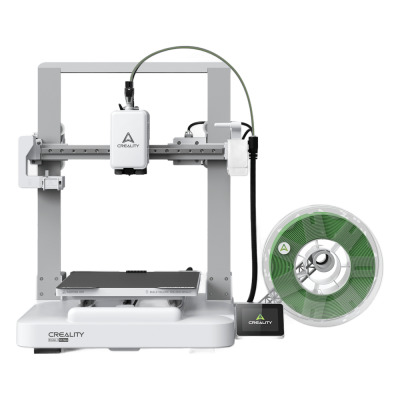
The Ender-3 V3 Neo is Creality's compact beginner printer: a 220 mm build volume with CR Touch auto-levelling, an extruder that handles PLA, PETG and TPU, and a Combo with the CFS nano for four colours. It is for first-time buyers who want a small, cheap printer.
La stampante 3D Creality Ender-3 V3 Neo è compatibile con SimplyPrint, OctoPrint, Mainsail e Fluidd?
Ogni modalità di connessione, requisiti e configurazione.
SimplyPrint Client
Non ancora confermato - aiutaci a scoprirlo
Wi-Fi and Creality Cloud, but which OS/protocol it runs is not stated, so the Creality integration is unconfirmed.
Origine
Le stampanti Creality usano CrealityPrint, lo slicer proprietario di Creality. Non è ancora disponibile nel cloud un profilo predefinito per Creality Ender-3 V3 Neo.
Sono elencati solo gli slicer utilizzabili nel cloud di SimplyPrint, potrebbero quindi essercene altri per Creality Ender-3 V3 Neo.
Slicing online non disponibile per Creality Ender-3 V3 Neo
Specifiche di Creality Ender-3 V3 Neo: dimensioni del piano di stampa, altezza di stampa e altro
Dimensioni, temperature, multi-materiale e modalità di connessione, secondo il produttore e le nostre ricerche.
Leggere di più dal produttore
Dimensione
Volume di stampa
220 x 220 x 220 mm
Tipo di piano di stampa
Square
Dimensioni del piano di stampa
220 x 220 mm
Altezza massima di stampa
220 mm
Stampa
Camera chiusa
Telaio aperto
Sistema di movimento
Stampante a piano mobile
Velocità di stampa massima
500 mm/s
Temperatura massima dell'estrusore
300 °C
Ha il piano di stampa riscaldato
Sì
Temperatura massima del piano di stampa
100 °C
Numero di ugelli
1
Teste di stampa
1
Direct drive
No
Sonda / livellamento automatico del piano di stampa
Sì
Larghezza del filamento
1.75 mm
Multimateriale
Unità multimateriale compatibili
Creality CFS Nano
Cambiautensili o cambiatore di hotend
No
IDEX (doppi estrusori indipendenti)
No
Connessione in corso
Connettività
Wi-Fi, USB
Fotocamera integrata
Sì
Stampe da
Chiavetta USB
Supporta la stampa seriale
Sconosciuto
Firmware fornito
Sconosciuto
File e slicing
Formati file supportati
G-code (.gcode, .gco, .g)
La stampante
Produttore / marca della stampante
Creality
Nome del modello di stampante
Ender-3 V3 Neo
Prodotto da un'azienda di
Cina
Lanciato
ottobre 2026
Ancora in produzione
Sì
Avviso legale:
Ci impegniamo a mantenere queste informazioni il più aggiornate e accurate possibile, ma non possiamo garantirne la completezza o l'affidabilità. I dati si basano su segnalazioni degli utenti e riferimenti dei produttori.
Quale filamento può stampare Creality Ender-3 V3 Neo?
Compatibilità dei filamenti per Creality Ender-3 V3 Neo: materiali indicati da Creality.
Filamento
Idoneità
Note
PLA
Ottimo
Nell'elenco dei materiali del produttore per questa stampante.
PETG
Ottimo
Nell'elenco dei materiali del produttore per questa stampante.
TPU e flessibili
Ottimo
Nell'elenco dei materiali del produttore per questa stampante.
ABS & ASA
Ottimo
Nell'elenco dei materiali del produttore per questa stampante.
Nylon (PA)
Con cura
Possibile con cautela, una camera chiusa e un filamento molto asciutto sono essenziali.
Polycarbonate (PC)
Con cura
Al limite, il PC richiede davvero una camera chiusa e calda per evitare deformazioni.
Con fibra di carbonio e vetro
Con cura
È possibile montando un ugello temprato o resistente all'usura: le fibre abrasive consumano rapidamente un ugello standard in ottone.
Suggerimento: questa è una guida generale basata sulle specifiche della stampante. Controlla sempre le impostazioni consigliate per il filamento. Con SimplyPrint puoi salvare un profilo per ogni bobina e tracciare con precisione il filamento disponibile.
Quando scegliere Creality Ender-3 V3 Neo
Choose the Neo for a first printer, a desk or a student project: Creality's store lists it at $239, or $329 as the Combo with the CFS nano. It is new and we found no independent review, and our facts do not confirm a SimplyPrint route yet. For a larger plate choose the Ender-3 V3 Mega; for ABS, ASA or a closed chamber, look at an enclosed printer such as the Creality K2 or Bambu Lab P2S.
Vantaggi
A compact 220 mm build volume for everyday projects and educational models (Creality).
CR Touch multi-point auto-levelling for a good first layer without manual levelling (Creality).
An extruder for PLA, PETG and flexible TPU (Creality).
The Combo adds the CFS nano for four-colour printing, at $329 on Creality's store (Creality).
Low price: $239 for the standalone printer (Creality store).
Svantaggi
Open frame with no enclosure, so it is best kept to PLA, PETG and TPU.
A small build volume, 220 mm.
We have not confirmed how it connects to SimplyPrint; Klipper, OctoPrint and the SimplyPrint Client are all unknown.
New, and no independent review found.
A chi è adatto
ScuolePuò funzionare
Small, cheap and easy to start, but open and without confirmed SimplyPrint support, so approval queueing is not assured.
HobbistiBuona compatibilità
A low-cost first printer with auto-levelling, plus an optional four-colour Combo.
AziendeNon adatta
A small, open, entry-level machine with unconfirmed SimplyPrint support.
Farm di stampaNon adatta
Small plate, no enclosure and no confirmed SimplyPrint route make it a weak fleet choice.
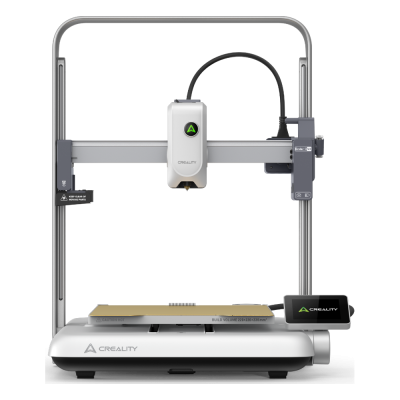
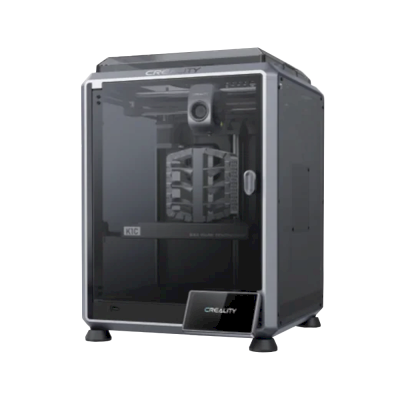
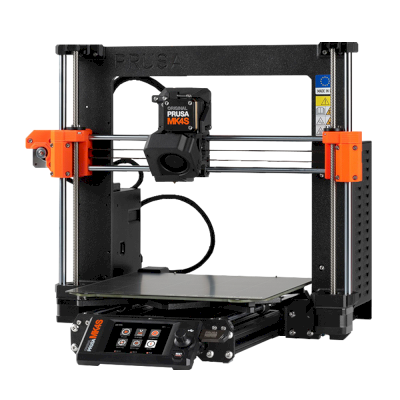
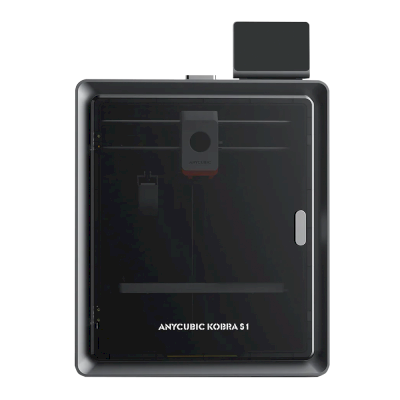
Stampanti come la Creality Ender-3 V3 Neo compatibili con SimplyPrint
Stampanti dello stesso produttore, di dimensioni simili, che stampano gli stessi materiali tecnici o multimateriale, acquistabili oggi e compatibili con SimplyPrint.
Chi produce Creality Ender-3 V3 Neo e quanto margine di libertà offre Creality: se le sue stampanti funzionano senza il suo cloud, accettano qualsiasi filamento e slicer e possono essere riparate. Ogni aspetto è valutato su fonti pubbliche.
Apertura: Per lo più aperta (3.6 su 5)
Per lo più aperta
Sistema chiusoAperto
Creality is a Shenzhen 3D printer maker founded in 2014. Its low-cost Ender series, launched in 2017, made desktop 3D printing affordable for many hobbyists. It now sells Klipper-based K-series CoreXY printers, Ender and CR open-frame printers, the Hi and SPARKX beginner lines, the CFS multi-material system, 3D scanners and laser engravers, and runs the Creality Cloud model platform. It listed on the Hong Kong Stock Exchange in 2026.
Fondata:
2014 ·
Sede centrale:
Shenzhen, China ·
Proprietà:
Listed on the Hong Kong Stock Exchange (3388.HK) since 2026; founder Jack Chen is chief executive ·
Sito web:www.creality.com
Creality sits in the middle: its Klipper-based printers can be run locally with Fluidd and open slicers, and it publishes firmware source, but usually months after launch, and it dropped root access on its 2025 K1 revisions.
Firmware e firmware personalizzato ●●●●●
Creality publishes Klipper firmware source for the K1, K2, Hi and Ender-3 V3 KE on GitHub under GPL, but after launch: the K1 source came about three months after the series launched in May 2023, the K2 and Hi sources in September 2025. Earlier K1 printers have an official root option with a published guide, but Creality's wiki says the 2025 K1C and K1 Max do not support root access.
[1][2][3][4][5]
Controllo locale e integrazioni ●●●●●
Creality Print sends jobs over the local network with no account, and Creality Cloud is optional. The K2 series and Ender-3 V3 serve Fluidd on the printer, so other software can use Klipper's documented Moonraker API. On the K1 series, Creality's firmware notes treat Fluidd and Mainsail as add-ons owners install themselves, and Creality says the 2025 K1C and K1 Max do not support root access. The SPARKX i7 is set up through the Creality Cloud app.
[6][20][7][21][4][8][22]
Filamenti, slicer e parti di terze parti ●●●●●
Third-party filament works; Creality Print is an open-source (AGPL-3.0) slicer and OrcaSlicer supports Creality printers. Creality sells nozzle, hotend and extruder kits per model; newer K2 parts such as its nozzle kit are Creality designs.
[10][11][12]
Riparazioni e ricambi ●●●●●
Creality's store sells extruder, hotend, heating-block and print-head kits per model, and its wiki has parts lists and replacement guides for current printers (for example the K2 Plus and SPARKX i7 hotends).
[12][13][14]
Dati e privacy ●●●●●
Local printing needs no account; Creality Cloud and its app need one. Creality's published privacy policy is written for its websites and services, allows use of data for targeted advertising, and says little about printer data or where it is stored.
[15][6]
Community e documentazione ●●●●●
One of the largest user bases (second in consumer 3D printers by 2025 sales value, per figures in its listing), a public wiki with model-specific guides, firmware and slicer sources on GitHub, and an official forum.
[16][10][6]
Vantaggi
Klipper-based models can be run entirely on the local network through Fluidd, without an account.
Firmware for most current models and the Creality Print slicer are published as source on GitHub.
Wide range, from budget Ender printers to multi-colour K2 machines.
Spare-part kits and model-specific replacement guides are easy to find.
Very large user base, so community help is easy to find.
Svantaggi
Firmware source has usually appeared months after a model ships.
Root access, offered on earlier K1 printers, is not supported on the 2025 K1C and K1 Max.
The privacy policy says little about printer and cloud data.
The SPARKX line is built around the Creality Cloud app and an account.
Esperienza comprovata
maggio 2026: Creality listed on the Main Board of the Hong Kong Stock Exchange (3388.HK), raising about HK$1.27 billion net. Its prospectus showed 2025 revenue of RMB 3.13 billion and a net loss of RMB 182.4 million, after a profit in 2024.
[16][5]
novembre 2025: Creality's wiki states that the 2025 revisions of the K1C and K1 Max do not support root access, which earlier K1 printers offered through an official option and guide.
[4][17][3]
settembre 2025: Creality published the Klipper source for its K2 series and for the Hi on GitHub under GPL-3.0.
[2][18]
agosto 2023: About three months after the K1 series launched, Creality published its K1 Klipper source on GitHub, followed by a repository with a root guide and Fluidd and Mainsail install instructions.
[1][3][5]
Basato su 22 fonti, ultima verifica 18 ottobre 2026. Mostrare le fonti
Creality Ender-3 V3 Neo è compatibile con SimplyPrint?
Non lo si sa ancora. SimplyPrint funziona con oltre 130 brand e oltre 600 modelli tramite OctoPrint, Klipper e integrazioni integrate; se si possiede una Creality Ender-3 V3 Neo, il controllo di compatibilità indica in poche domande come potrebbe connettersi.
Quale slicer usare per la stampante Creality Ender-3 V3 Neo?
Usare CrealityPrint, lo slicer di Creality, creato per le sue stampanti. Può essere eseguito nello slicer online di SimplyPrint; non è ancora disponibile un profilo preconfigurato per la Creality Ender-3 V3 Neo.
Quale filamento può stampare Creality Ender-3 V3 Neo?
Creality indica PLA, PETG, TPU e flessibili e ABS & ASA per Ender-3 V3 Neo.
Quali sono le dimensioni del piano di stampa e il volume di stampa della Creality Ender-3 V3 Neo?
La stampante Creality Ender-3 V3 Neo ha un piano di stampa di 220 x 220 mm e stampa fino a 220 mm di altezza, con un volume di stampa di circa 220 x 220 x 220 mm. Per il tipo di piano di stampa, le temperature e altro, consultare la tabella delle specifiche completa qui sopra.
Quando è uscita la Creality Ender-3 V3 Neo?
Creality ha lanciato Ender-3 V3 Neo nel ottobre 2026.
Dove acquistare Creality Ender-3 V3 Neo?
Dal negozio di Creality, con punti vendita in ovunque. I link in questa pagina rimandano a questi negozi. Alcuni sono link affiliati, quindi potremmo ricevere una commissione senza costi aggiuntivi.
Informativa di affiliazione: alcuni link in questa pagina sono link di affiliazione. Potremmo ricevere una commissione per gli acquisti, senza costi aggiuntivi. In qualità di Associati Amazon, guadagniamo dagli acquisti idonei.
 Cina



 PrusaSlicer
 OrcaSlicer
 BambuStudio
 ElegooSlicer
 Cura
 Kiri:Moto