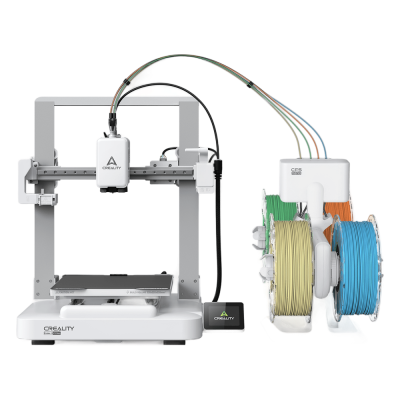
The Ender-3 V3 Neo is Creality's compact beginner printer: a 220 mm build volume with CR Touch auto-levelling, an extruder that handles PLA, PETG and TPU, and a Combo with the CFS nano for four colours. It is for first-time buyers who want a small, cheap printer.
Esto significa que comparte muchas características con el modelo base, pero puede tener modificaciones específicas, funciones adicionales o accesorios incluidos.
Conecta Creality Ender-3 V3 Neo Combo a SimplyPrint
¿Funciona la impresora 3D Creality Ender-3 V3 Neo Combo con SimplyPrint, OctoPrint, Mainsail y Fluidd?
Cada forma de conectarla, lo que necesita y cómo configurarla.
Cliente de SimplyPrint
Aún no confirmado, ayúdanos a averiguarlo
Wi-Fi and Creality Cloud, but which OS/protocol it runs is not stated, so the Creality integration is unconfirmed.
Origen
Las impresoras Creality usan CrealityPrint, el slicer propio de Creality. Aún no hay un perfil listo para la Creality Ender-3 V3 Neo Combo en nuestra nube.
Solo incluimos slicers que puedes usar en la nube de SimplyPrint, por lo que puede haber otros para la Creality Ender-3 V3 Neo Combo.
No hay slicing en línea para Creality Ender-3 V3 Neo Combo
Especificaciones de Creality Ender-3 V3 Neo Combo: tamaño de cama, altura de impresión y más
Su tamaño, temperaturas, multimaterial y cómo se conecta, según el fabricante y nuestra propia investigación.
Más información del fabricante
Tamaño
Volumen de impresión
220 x 220 x 220 mm
Tipo de cama
Square
Tamaño de cama
220 x 220 mm
Altura máxima de impresión
220 mm
Impresión
Cerramiento
Estructura abierta
Sistema de movimiento
Impresora de cama móvil
Velocidad máxima de impresión
500 mm/s
Temperatura máxima del extrusor
300 °C
Tiene cama caliente
Sí
Temperatura máxima de la cama
100 °C
Número de boquillas
1
Cabezales de impresión
1
Direct drive
No
Herramienta de sondeo / Nivelación automática de la cama
Sí
Ancho del filamento
1.75 mm
Multimaterial
Incluye multimaterial
Creality CFS Nano
Unidades multimaterial compatibles
Creality CFS Nano
Cambiador de herramientas o de hotends
No
IDEX (extrusores dobles independientes)
No
Conectando
Conectividad
Wi-Fi, USB
Cámara integrada
Sí
Copias de
Memoria USB
Admite impresión por puerto serie
Desconocido
Firmware incluido
Desconocido
Archivos y laminado
Formatos de archivo compatibles
G-code (.gcode, .gco, .g)
La impresora
Fabricante / marca de la impresora
Creality
Nombre del modelo de impresora
Ender-3 V3 Neo Combo
Fabricada por una empresa de
China
Lanzado
octubre 2026
Se sigue fabricando
Sí
Aviso legal:
Nos esforzamos por mantener esta información lo más actualizada y precisa posible, pero no podemos garantizar su integridad ni su fiabilidad. Nuestros datos se basan en aportaciones de usuarios y referencias de fabricantes.
Compatibilidad de filamento de la Creality Ender-3 V3 Neo Combo: los materiales que Creality indica para ella.
Filamento
Idoneidad
Notas
PLA
Genial
En la lista de materiales del fabricante para esta impresora.
PETG
Genial
En la lista de materiales del fabricante para esta impresora.
TPU y flexibles
Genial
En la lista de materiales del fabricante para esta impresora.
ABS & ASA
Genial
En la lista de materiales del fabricante para esta impresora.
Nylon (PA)
Con cuidado
Es posible con cuidado, una carcasa cerrada y filamento muy seco son imprescindibles.
Polycarbonate (PC)
Con cuidado
Al límite: PC realmente necesita una cámara cerrada y caliente para evitar deformaciones.
Con fibra de carbono y relleno de vidrio
Con cuidado
Es posible si instalas una boquilla endurecida o resistente al desgaste. Las fibras abrasivas desgastan rápido una boquilla de latón estándar.
Consejo: esta es una guía general basada en las especificaciones de la impresora. Comprueba siempre los ajustes recomendados para tu filamento. Con SimplyPrint puedes guardar un perfil para cada bobina y saber exactamente qué filamento tienes en inventario.
Cuándo elegir la Creality Ender-3 V3 Neo Combo
Choose the Neo for a first printer, a desk or a student project: Creality's store lists it at $239, or $329 as the Combo with the CFS nano. It is new and we found no independent review, and our facts do not confirm a SimplyPrint route yet. For a larger plate choose the Ender-3 V3 Mega; for ABS, ASA or a closed chamber, look at an enclosed printer such as the Creality K2 or Bambu Lab P2S.
Ventajas
A compact 220 mm build volume for everyday projects and educational models (Creality).
CR Touch multi-point auto-levelling for a good first layer without manual levelling (Creality).
An extruder for PLA, PETG and flexible TPU (Creality).
The Combo adds the CFS nano for four-colour printing, at $329 on Creality's store (Creality).
Low price: $239 for the standalone printer (Creality store).
Desventajas
Open frame with no enclosure, so it is best kept to PLA, PETG and TPU.
A small build volume, 220 mm.
We have not confirmed how it connects to SimplyPrint; Klipper, OctoPrint and the SimplyPrint Client are all unknown.
New, and no independent review found.
A quién va dirigido
Centros educativosPuede funcionar
Small, cheap and easy to start, but open and without confirmed SimplyPrint support, so approval queueing is not assured.
AficionadosBuena opción
A low-cost first printer with auto-levelling, plus an optional four-colour Combo.
EmpresasNo encaja bien
A small, open, entry-level machine with unconfirmed SimplyPrint support.
Granjas de impresiónNo encaja bien
Small plate, no enclosure and no confirmed SimplyPrint route make it a weak fleet choice.
Impresoras como la Creality Ender-3 V3 Neo Combo que funcionan con SimplyPrint
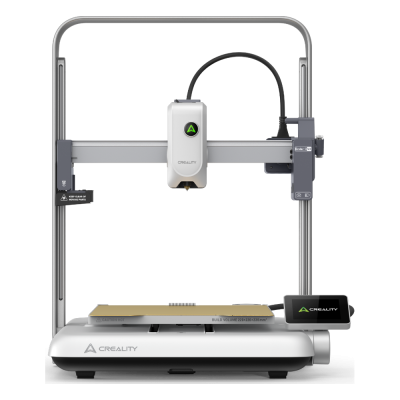
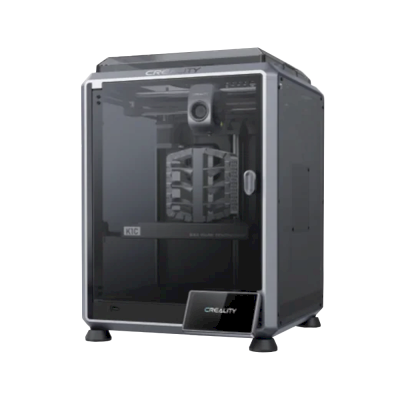
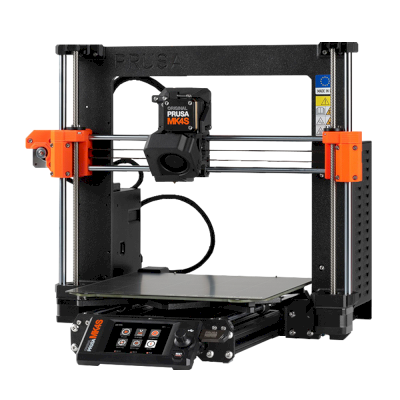
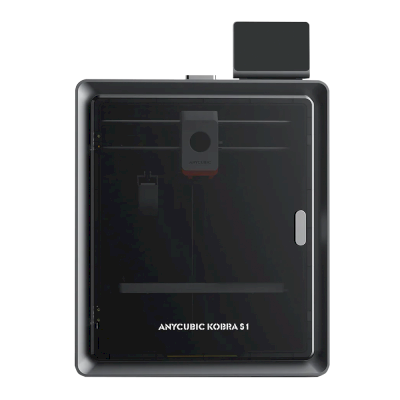
Impresoras del mismo fabricante, de tamaño similar, que imprimen los mismos materiales técnicos o en multimaterial, que puedes comprar hoy y que sabemos que funcionan con SimplyPrint.
Quién fabrica Creality Ender-3 V3 Neo Combo y cuánta libertad te da Creality: si sus impresoras funcionan sin su nube, aceptan cualquier filamento y slicer, y se pueden reparar. Cada área se valora con fuentes públicas.
Apertura: Mayormente abierta (3.6 de 5)
Mayormente abierta
Ecosistema cerradoAbrir
Creality is a Shenzhen 3D printer maker founded in 2014. Its low-cost Ender series, launched in 2017, made desktop 3D printing affordable for many hobbyists. It now sells Klipper-based K-series CoreXY printers, Ender and CR open-frame printers, the Hi and SPARKX beginner lines, the CFS multi-material system, 3D scanners and laser engravers, and runs the Creality Cloud model platform. It listed on the Hong Kong Stock Exchange in 2026.
Fundada:
2014 ·
Sede central:
Shenzhen, China ·
Propiedad:
Listed on the Hong Kong Stock Exchange (3388.HK) since 2026; founder Jack Chen is chief executive ·
Sitio web:www.creality.com
Creality sits in the middle: its Klipper-based printers can be run locally with Fluidd and open slicers, and it publishes firmware source, but usually months after launch, and it dropped root access on its 2025 K1 revisions.
Firmware y firmware personalizado ●●●●●
Creality publishes Klipper firmware source for the K1, K2, Hi and Ender-3 V3 KE on GitHub under GPL, but after launch: the K1 source came about three months after the series launched in May 2023, the K2 and Hi sources in September 2025. Earlier K1 printers have an official root option with a published guide, but Creality's wiki says the 2025 K1C and K1 Max do not support root access.
[1][2][3][4][5]
Control local e integraciones ●●●●●
Creality Print sends jobs over the local network with no account, and Creality Cloud is optional. The K2 series and Ender-3 V3 serve Fluidd on the printer, so other software can use Klipper's documented Moonraker API. On the K1 series, Creality's firmware notes treat Fluidd and Mainsail as add-ons owners install themselves, and Creality says the 2025 K1C and K1 Max do not support root access. The SPARKX i7 is set up through the Creality Cloud app.
[6][20][7][21][4][8][22]
Filamento, slicers y piezas de terceros ●●●●●
Third-party filament works; Creality Print is an open-source (AGPL-3.0) slicer and OrcaSlicer supports Creality printers. Creality sells nozzle, hotend and extruder kits per model; newer K2 parts such as its nozzle kit are Creality designs.
[10][11][12]
Reparaciones y repuestos ●●●●●
Creality's store sells extruder, hotend, heating-block and print-head kits per model, and its wiki has parts lists and replacement guides for current printers (for example the K2 Plus and SPARKX i7 hotends).
[12][13][14]
Datos y privacidad ●●●●●
Local printing needs no account; Creality Cloud and its app need one. Creality's published privacy policy is written for its websites and services, allows use of data for targeted advertising, and says little about printer data or where it is stored.
[15][6]
Comunidad y documentación ●●●●●
One of the largest user bases (second in consumer 3D printers by 2025 sales value, per figures in its listing), a public wiki with model-specific guides, firmware and slicer sources on GitHub, and an official forum.
[16][10][6]
Ventajas
Klipper-based models can be run entirely on the local network through Fluidd, without an account.
Firmware for most current models and the Creality Print slicer are published as source on GitHub.
Wide range, from budget Ender printers to multi-colour K2 machines.
Spare-part kits and model-specific replacement guides are easy to find.
Very large user base, so community help is easy to find.
Desventajas
Firmware source has usually appeared months after a model ships.
Root access, offered on earlier K1 printers, is not supported on the 2025 K1C and K1 Max.
The privacy policy says little about printer and cloud data.
The SPARKX line is built around the Creality Cloud app and an account.
Trayectoria
mayo 2026: Creality listed on the Main Board of the Hong Kong Stock Exchange (3388.HK), raising about HK$1.27 billion net. Its prospectus showed 2025 revenue of RMB 3.13 billion and a net loss of RMB 182.4 million, after a profit in 2024.
[16][5]
noviembre 2025: Creality's wiki states that the 2025 revisions of the K1C and K1 Max do not support root access, which earlier K1 printers offered through an official option and guide.
[4][17][3]
septiembre 2025: Creality published the Klipper source for its K2 series and for the Hi on GitHub under GPL-3.0.
[2][18]
agosto 2023: About three months after the K1 series launched, Creality published its K1 Klipper source on GitHub, followed by a repository with a root guide and Fluidd and Mainsail install instructions.
[1][3][5]
Investigado a partir de 22 fuentes, última comprobación: 18 de octubre de 2026. Mostrar fuentes
¿La Creality Ender-3 V3 Neo Combo es compatible con SimplyPrint?
Aún no lo sabemos. SimplyPrint funciona con más de 130 marcas y más de 600 modelos mediante OctoPrint, Klipper e integraciones integradas. Si tienes una Creality Ender-3 V3 Neo Combo, nuestra comprobación de compatibilidad te indica en unas pocas preguntas cómo podría conectarse.
¿Qué slicer debo usar para la Creality Ender-3 V3 Neo Combo?
Usa CrealityPrint, el slicer propio de Creality, creado para sus impresoras. Puedes usarlo en el slicer online de SimplyPrint; aún no tiene un perfil listo para la Creality Ender-3 V3 Neo Combo.
Creality indica PLA, PETG, TPU y flexibles y ABS & ASA para el modelo Ender-3 V3 Neo Combo.
¿Cuál es el tamaño de la cama y el volumen de impresión de Creality Ender-3 V3 Neo Combo?
La Creality Ender-3 V3 Neo Combo tiene una cama de impresión de 220 x 220 mm e imprime piezas de hasta 220 mm de alto, con un volumen de impresión de unos 220 x 220 x 220 mm. Consulta la tabla de especificaciones completa de arriba para ver el tipo de cama, temperaturas y más.
¿Cuándo salió Creality Ender-3 V3 Neo Combo?
Creality lanzó el modelo Ender-3 V3 Neo Combo en octubre 2026.
¿Dónde puedo comprar la Creality Ender-3 V3 Neo Combo?
Desde la tienda de Creality, que tiene tiendas para en cualquier otro lugar. Los enlaces de esta página llevan a esas tiendas; algunos son enlaces de afiliados, por lo que podemos recibir una comisión sin coste adicional para ti.
Aviso de afiliación: algunos enlaces de esta página son enlaces de afiliados. Podemos recibir una comisión si realizas una compra, sin coste adicional para ti. Como asociados de Amazon, obtenemos ingresos por las compras que cumplen los requisitos.
 China



 PrusaSlicer
 OrcaSlicer
 BambuStudio
 ElegooSlicer
 Cura
 Kiri:Moto